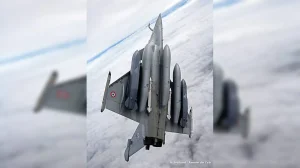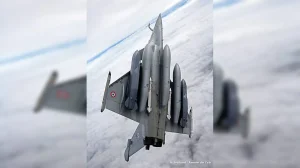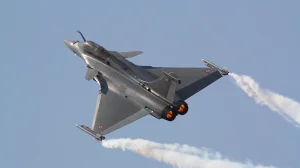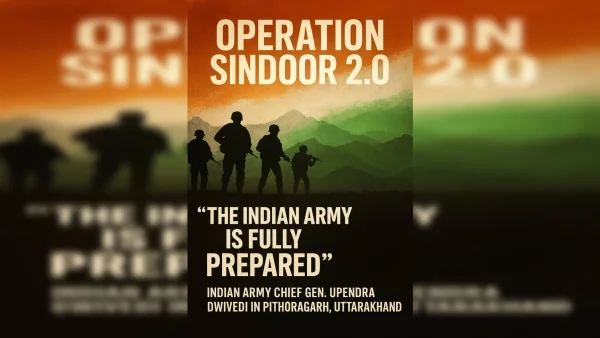
Operation Sindoor 2.0 is definitely a step toward India’s dream of becoming one of the major aviation powerhouses. India’s Defense Acquisition Council is about to clear the large deal of as many as 114 Rafale aircraft. If approved, the project will be one of the biggest defence offsets in history and significant push to modernize the Indian Air Force (IAF). The move has strategic implications for the balance of power in the subcontinent regarding domination in the air.
Scope and scale of the MRFA proposal
The Multi-Role Fighted Aircrafts (MRFA) project is centered on 114 Rafales and is estimated to cost approximately ₹3.25 Lakh crore. The program allows for the delivery of 18 aircraft in a fly-away condition and the rest, 96 aircraft, will be manufactured in India via a strategic partnership as per the ‘Make in India’ policy.
This plan would further increase the number of Rafale combat aircraft to the Indian Air Force (IAF), many more often than not figure at the frontline squadrons. Along with ordinary numbers of additional planes, an urgent issue is to tackle a situation when IAF currently constitutes about 29-30 squadrons out of 42 as a requisite strength to be maintained in case of a two-front battle.
Capacity for Battle and Force Enlargement
Rafale was developed to perform numerous functions including those of an air superiority fighter, a precision attack plane, an electronic warfare platform and an intelligence gathering aircraft. When equipped with its sensors, avionics and weapon integration, the Rafale enables pilots to operate to significant distances and to provide long range stike as required, thus becoming additionally advantageous to Expeditional and high alitutde operations.
Procuring additional Rafale Dassault aviation aircraft would boost the country’s ability to execute strategic missions, SEAD and more taxing Integrated missions. Considering that no one aircraft in itself guarantees air superiority, a squadron of 114 modern fighters would help significantly in to minimize enemy’s freedom of action and the costs of hostile operations.
Recommendations for regional air defense and implications thereof
There are many issues to consider when air defense planning, from the POL decision, to commander’s intent, to target selection and engagements to include coalition force integration and complicating timely called in reinforcements. The second level of air defense is the Army Air Defense (AAD). It becomes fundamentally important especially during conflict between countries and as such also became crucial in the operational plan.
Operational level defenses
The strategic intent underlying Operation Sindoor 2.0 calls for its employment to dissuade threats from sophisticated surface-to-air missile (SAM), anti-radiation missile (ARM) and artillery air defense systems and even to degrade or destroy them as and when found necessary. The Competition Is focusing on a greater number of NATO nations and the collaboration or even integration between national assets of these NATO nations will increase the number of Posture corrections made to the ABM.
Despite this, the efficiency of any group of vessels rests on communication, generally-maintain equipment, staff training and logistic support and regular undertakings. To implement the system of preparation closer to combat because a functionality of a potential defending enemy is not air where OAR turns out to be a main weakness, seamless C4ISR links must be complemented with stockpiles of arms and ammunition, as well as training.
Strategy document and the proposed table of contents as and onlinesession
Acquisition takes place in several steps, structured for conducting thorough analysis and coordination. The first article in the defense of an AoN is the Defense Acquisition Council. Dedicated defense acquisition laws to provide the same are the next.
Technical replies are requested through RfPs, Tenders come up with the commercial and technical details, and CSDs revert to the newly formed CNOCs, in all negotiations are made. To culminate the successful negotiations, CCS gives the finalization of the agreement its financial sanction.
This includes the following stages, which over time can drag on: Treatment and integration wherein, technology is involved. As the award and production arrangements are the critical immunity guarantees, these areas can be often time taking. Industrial benefits and technology transfer under the Make In India initiative and program requirements
The local production of 96 Rafales aircraft may serve as a booster to own airframers. The supplying indigenization channels to designing and producing avionics equipment, MRO activity has the potential to generate many such suppliers, occupations and make the region competitive for exports.
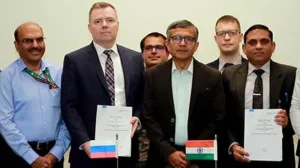
There is Trade & Technology Cooperation and Production partnership under which acquisition of technology and manufacturing of products are taken into consideration and over a period of time two countries may promote business. The deals made would also encompass maintenance and operational support subsequent to the acquisition, manpower development and even projects offering supply chain solutions. Whether this framework will be a success depends on clauses for technology transfer, quality control, and human resource development objectives.
Geopolitical context and strategic signaling
The timing in which the bidding has been initiated does not appear coincidental, as it is happening during the peak of diplomatic engagements, and in large part due to the dynamics of the defence pronouncements with regard to French interests. The offer shall be closely monitored by the authorities in the neighboring countries as it might change all balance of power considerations as far as the western and northern frontiers are concerned.
At the end of the day, Operation Sindoor 2.0 is equally much about displaying industrial aspirations, as it is about creating an image of strength. Should the MRFA program end up being implemented, it is expected to bring crucial changes in India’s air capabilities, thus highlighting emphatically the accouchement of self-sufficiency in defense’s production.
In the overall assessment, the 114-Rafale purchase proposal puts the goal quite plainly: modernize the armament quickly, localize production, and increase deterrence. The next few months will be an acid test for how soon this goal can be achieved regarding the capability, not just the vision.