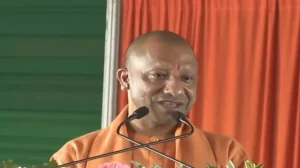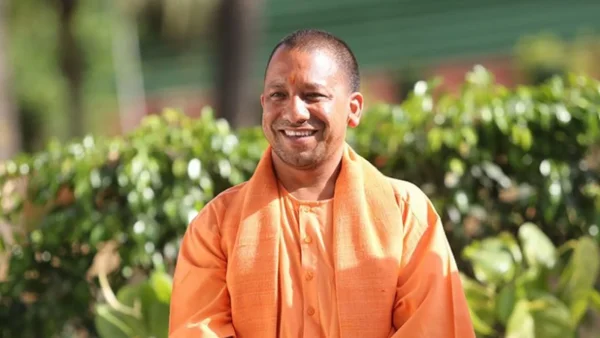
The statement of Yogi Adityanath, the Chief Minister of Uttar Pradesh, delivered at Barabanki concerning the Babri masjid in Ayodhya that it can never be rebuilt – even on the ‘Day of Judgment’, was, . Here is what he said in a discourse to a public audience: for us, the heightened assurance extends more to performing competently and keeping any chaos in check.
The statement from Yogi itself and its significant aspects
Of course, Yogi restated the position of the Bharatiya Janata Party concerning Ayodhya and emphasized that a large picture has to be considered in building the Ram temple, as it was built at the birthplace of Lord Ram and there is no going back on it. He lamented that stances of the Ram temple descendents came up only when it was convenient for some ‘political’ goal to do so.
The chief minister used both pitches, cultural inspired and law-and-order, together, and in one saying. As for those who ‘hope’ to rebuild the Babri masjid, let them do it, but while following the laws of the lands and let there be no illusions, because those like minded individuals are not immune to law enforcers either and transgressors of the law would be dealt within the law in a different manner rather than with a bribe.
Judicial and other relevant aspects relating to the Ayodhya problem
This conflicting claim is in fact a multifaceted one, encompassing arguments originating more than a century back, the consecration of 1949 and the subsequent disintegration of the mandir. It was only in 1992 that the mandir was pulled down post which the masjid was removed. The resolution of the Supreme Court in 2019 was a historical one, wherein the contentious property was awarded for the construction of the temple and a separate site was administered for the implementation of mosque.
Yogi said that the conclusion beneficially is the chieftain. The above-cited documents have scarcely gone outdated, with the 2019 judgment remaining foundational in Ayodhya jurisprudence yet again, courts and trusts have been given a prevalent role in resolving politically illograded conflicts.
The political narrative and the swirl over replica in West Bengal
The statement comes at a time when political situations have risen once again between central government and regional players. The election of a parliamentary candidate to build a replica of the Babri Masjid in Murshidabad will prompt anxiety not made to look like valid concerns when the entire state of West Bemgal, will be facing politically provoked behavior and institutions after all.
Regional competitions and dissatisfaction with voter listing processes have added to the stakes for political parties. His comments have been viewed as a conscious positioning of cultural issues as a part of people’s political makeup and the way messages are conducted in a campaign in the run up to the state elections.
Identity narrative / claims of power.
Yogi insists on the need for India and Sanatan Dharma to be constantly in unity as both of them are under attack by internal as well as external elements. He went further; however, he warned that some people are misguided or colluding to do the enemy’s biding, hence the need for all the Citizens to be always alert.
Suggesting that a return to sanity in UP after 2017 was not impossible, the Uttar Pradesh CM stressed that women, traders and peasants who were under compulsory curfew attack and repeated clashes in the past have now found a safety of sorts. He fought anti-incumbency tendencies through those governance claims assertively advocating his own government’s posture on issues of crime and law.
How people may respond, and the possible implications for community relations
Commitment and condemnation of certain sensitive historical facts can have the opposite effect by alienating certain people. Opposition members might interpret unambiguous explanations of the fate of a destroyed building as an instigation, while defenders treat it as a clear representation of the fulfillment of a pledge that was made.
Analysts opine that fostering peace between divergent social groups requires ‘rule of law’ and utilizing the clauses of a written constitution. Politicians, in their capacity as opinion leaders, play a role in determining public attitudes; keeping the language in control and following the legal limits help to quash tensions and thus maintain the functionality of the society.
With the Supreme Court verdict on the Ayodhya case, Yogi reiterated his commitment asserting that the Babri structure would not be reconstructed again. This also complicates the situation as there is another version of history/claims by the other political groups. Such affirmations will be inserted into the campaign approach, in a different style of communication, welcomed and opposed and the discourse of law, politics and identities in Uttar Pradesh.