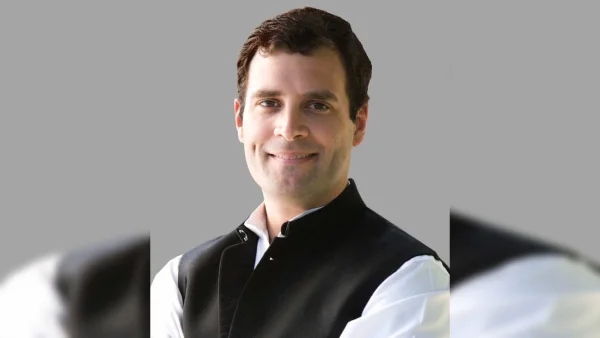
The Bharatiya Janata Party escalated their opposition to Rahul Gandhi, Lok Sabha’s leader of opposition, by presenting a substantive motion accusing him of misleading the public and demanding that his membership be canceled. They insisted Gandhi not be allowed to contest any future elections, sparking intense parliamentary wrangling.
Meaning and Significance of a Substantive Motion
A substantive motion is an independently standing proposition presented before the House, respectively ready for a formal debate followed by the House’s decision. Unlike a privilege motion, which finds a vantage in a perceived breach of parliamentary privilege, a substantive motion moots a wider motion open for House opinion or recommendation.
The admission of such a motion is not automatic, but if allowed, the very House will have to address it through speeches, ministerial responses, and a vote. Although theoretically the House could censure or even consider expulsion by resolution, permanent disqualification becomes a matter of law beyond a single parliamentary motion.
Government sources said no privilege motion against Rahul Gandhi was in the pipeline for the present. They are inclined instead to demand the erasure of any inauthentic appendages from his speech in the Lok Sabha.
Allegations and Demands Made by Nishikant Dubey
The notice filed by Dubey alleges that Rahul Gandhi had links with foreign agencies–specifically naming the Soros Foundation, the Ford and the USAID and traveled to many countries in order to propagate anti-India narratives. Dubey further claims that Gandhi was using the floor of Parliament to hurl unsubstantiated accusations against the Election Commission of India and the Supreme Court, thereby pushing the benchmark of institutional dignity lower.
“Loyalty piece of gangster flopped.” This is how the BJP MP expressed his displeasure with Rahul Gandhi labeling it as “a so-called ‘Thuggery gang to destabilise India’,” asserting that his gestures inside and outside the Legislature are “crew-cut” and “unfriendly” to national interests. So he canvassed for Gandhi’s membership annulment and a lifelong ban on any election.
Dubey elucidated before the House of the House that he is filing a substantive motion, not a privilege motion. In response to Hardeep Puri, the Minister of State (Independent Charge) of Housing and Urban Affairs, being referred to in Rahul Gandhi’s allegations, government sources allied that the minister would respond in Parliament.
Congress rebuttal and Political framing
The Congress termed the move a covet diversionary tactic. The party proclaimed that it was probably a self-protection strategy on the BJP’s part to shift the debate from the issues brought about by Gandhi vis-a-vis the Centre’s trade and economic policies. They suggest that the best reply to all political issues would be to sit and explain to the Opposition party in a constructive reply from the treasury benches.
To date, opposition members have, for the most part, chosen to avoid putting substantive motions before the House. Although there has been some great occasions, for instance, when a motion was admitted in which the political situation in Uttar Pradesh and the conduct of the then Governor were brought into a maddening number of arguments. If Dubey’s motion would be admitted this time, especially since it is the Lok Sabha where the votes would be decisive this time, a high-voltage Lok Sabha showdown will then be staged.
Inducing to the Series of Events: Comments of Rahul Gandhi in the Lok Sabha that have triggered the disagreement
For far too non pertinently, during his intervention in a debate on the Budget, Rahul Gandhi argued that India had conceded ground during recent negotiations with the United States. He said that the country had “buckled on tariffs, handed over our data, given up our control over digital trade rules,” and has been listening to external pressure on energy choices.
The global context was represented by him as turbulent, with the unipolar era coming to an end, geopolitics soaring, and with the energy and financial systems being weaponized. He suggested that instructions for oil purchases from the US question India’s energy security and accused Russia of disregarding national interest.
Gandhi jokingly said the average tariff rates had moved up from about 3% to about 18% and could rise as far as $146 billion on imports from the US. These figures came against the context of his substantial criticisms of the country’s trade strategy.
Contribution of Trade, Tariff, and Rules to Discussions
The diaspora reflects inherent policy clashes in tariffs, market access, and digital governance. The Opposition argues that full applied tariffs which do not bring reciprocal gains could unnecessarily escalate industry procurement prices, tainting industrial competitive equity and favoring select acquisitions. However, the government maintains that calibrated tariffs would incubate domestic manufacturing established strategic autonomy.
The debate now revolves around data and digital trade rules. The billing question is “where complete openness parallel’s with sovereignty?” Critics have conceived a warning that the leakage and/or movement of cross-border data would erode India’s bargaining power with respect to emergent digital markets; proponents, however, argue that an interoperable environment brings about jobs and technology partnerships, given there exist opportunities especially with the US.
Energy Security issues are at the heart of the argument. Geopolitics have been generating an external pressure on the crude sourcing diversification was the focus of India’s policies. Whether it flexes around strategic freedom or threatens it through undue foreign leverage is the question.
The Westminster road ahead and outcomes anticipated
The Speaker will deliberate the removal of the BJP’s substantive motion against Rahul Gandhi. If it is remanded, the House shall discuss and vote on this and hence confirm the formal test for designating political strength. If the motion is not admissible, the regime can still press for expungement of more remarks it claimed to be either unauthenticated or unparliamentary.
A ministerial reply with reference to Hardeep Puri would further define the political and governmental debate. The motion, regardless of what lies ahead, has strengthened the temptation to draw the repa-ration of the Budget session. This will be seen in terms of the dignity morepeatedly stressed proprium of institutions-record of the Lok Sabha-and the boundaries of speech of politicians prominently from here.
So far, the BJP maneuver is primarily squeezing the opposition procedural stance and placing political pressure on it, while Congress is at a deliberate move by shifting its defense to claim probable concessions in the government’s US trade policy. The immediate future will show whether this confrontation might help in censure, initiate a legal challenge, or even further complicate a very contentious Indian parliamentary session.