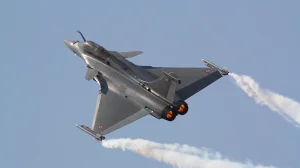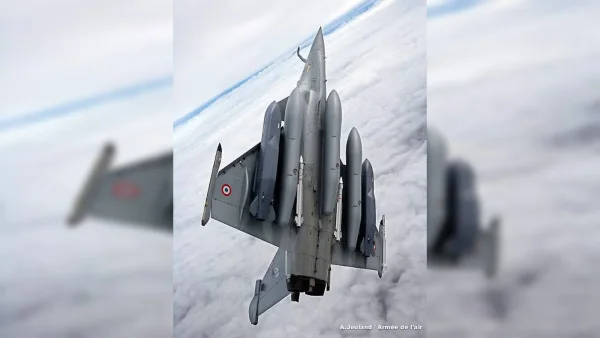
According to sources, DAC has cleared the acquisition of 114 Rafale fighters for the IAF and six P8i maritime reconnaissance aircraft for the IN. The announcement, made just days before the planned arrival of the French President may be seen as a major push to consolidate air-surveillance and maritime-surveillance capabilities.
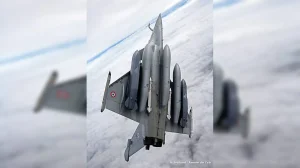
Major Details Concerning the Rafale acquisition
India is going ahead with the purchase of 18 Rafales in fly-away condition – all of them to be produced in the country under a government-to-government deal with France. Upon closure, the fleet of Rafales would be raise to nearly a 176-strong, comprising existing and naval variants currently on order.
Mixed single- and twin-seat configuration, up to a total of 88 and 26 aircraft respectively, have been proposed by the Indian Air Force in this tranche. News attributing these tranches to high values of procurement arose from the advanced capabilities being embedded in CADs as well as their weapon integration and lifetime support commitments to the manufacturer.
Indigenization, Transfers, and Integration of Systems
It is firmly the view of Delhi that there needs to be significant indigenisation within the agreement, with India hoping to have self-assembly or manufacture a considerable proportion of the aircraft. It is envisaged that the indigenous content be progressively increased from low initial levels to a target where most of the industry comes from India, with much better local supply chains established.
Despite expressing a great deal of ambition to forge its aircraft, weapons, and systems with Rafale, Indian ambitions stand grounded on the allocation of sensitive code sources and fundamental software to the OEM. This will very much determine how integration of domestic avionics, weapons etc. into the Rafale platform that takes place and to what extent this would be possible and needed subsequently.
P8i aircraft: Prosperous Maritime Surveillance and ASW reach
DAC finally signed a contract for six P8i Maritime Surveillance aircraft, which will be working for the Navy. These would ensure that the P8i fleet continues to carry out ASW, surface surveillance, and naval domain awareness along critical sea lanes.
Given the unique liaison opportunities with other forces, the P8i aircraft have successfully completed over 40,000 hours of accident-free operations. If the in-service capabilities of such aircraft can be exploited proactively, in mastering the otherwise elusive pursuit of persistent tracking of potential adversary submarines, one will be able to bind the Indian Ocean region effectively.
Operational Perspective: Squadron Strength and Capability Gaps
I have let communion with a clear vision for selecting the Rafale aircraft, appraising the overall situation in the Air Force due to the declining squadron strengths. The number of squadrons in the force stands short of the prescribed level, with the 114 Rafale jets to form six to seven new squadrons.
Even with these augmentations, the force will require more platforms to reach the approved number of 42 squadrons. Indigenous light combat aircraft to be inducted subsequently should make a crucial contribution, but production time frames as well as delivery schedules have mired the procurement process.
Procurement path and strategic implications
The DAC, led by the RM or Defence Minister, is the highest procurement in-charge body that gives nod to the buying plans. On receiving the nod from the DAC, these proposals shall be forwarded to the Cabinet Committee on Security to seek final endorsement and to receive the budget from the government-to-government framework.
Introducing a prospect of more comprehensive surveillance capability didn’t detract from the deterrent capability that naturally accrues with that surveillance. The acquisition of such technology and technology transfer by state-of-the-art armament firms in India along with its defence-manufacturing workstreams are a lively expression of some determined requirements of the decision makers. So the extent of operational autonomy and indigenous integration that could one day be achieved in inputs and outputs by India proportionally will depend on other considerations discussed in the software source code and phased indigenisation.
All these clearances will see a turnaround of fast-tracking upgradation in aerial and maritime capabilities. The pace at which these super assets start getting sourced into HAOR and can provide India with effective operational readiness and strategic defense policy priority support will be decided by the final signature, the production schedule, and the phasing of deliveries.