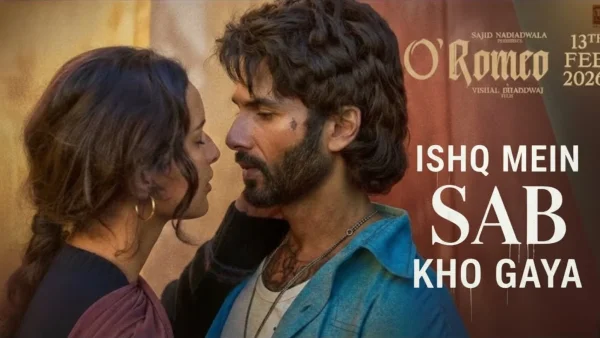
O’Romeo is boisterously acrobatic with Indian street-style lobbing heavily at the screen, with coolness as core motor. Shahid Kapoor juts out a wickedly slicing role; a knife-lovin’ lover. In another part of the ring, Triptii Dimri resounds the moves in step with him while the banner role doing justice to one and all will surely draw comparisons with Dhanush in Anand Vinod’s Maari. A gangster love story shimmering with style, recklessness, and the inevitable tendrils of love breaking to spirit in between.
Story, Setting, and Source Material
Situated in Mumbai in 1995, O’Romeo peers into the lives of Ustra, a dreaded gangster quietly working for the Intelligence Bureau and his handler, Khan, who plays him behind rival goats, making crime serve covert intelligence-strategy. Enter Afsa Qureshi, who sets Ustra off with a chilling plan: four marks, one complete strike-through.
Mirroring Hussain Zaidi’s Queens Of Mumbai and the tale of Husein Ustra and Sapna Didi, the script pays homage to the source while queering its form with zone-oriented thriller energy. The romance and revenge threads tangle well together skeins binding the duo across borders and into danger, lopsidedly almost ever infallible.
Performances with Firepower
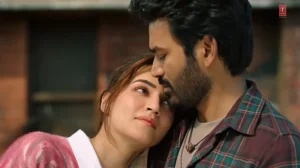
Shahid Kapoor incarnates Ustra with dangerously seductive magnetism, transforming lover, loner, and killer on the go. This becomes a performance that adheres to Bhardwaj’s rhythm-dramatized but carefully marked, flamboyant, yet human. If he calls himself a hero, he questions this very statement-heroism-in a good way over the course of two hours.
Triptii Dimri is the film’s biggest surprise. In her injured and incendiary part of Afsa, she may just render one tenebrous. Dimri steals the show along with Kapoor, never letting herself be overpowered by her dame. Their coupling fully acknowledges the fortuitous aspect the world only considers upon blinking.
The cast, as well, is quite deep. Nana Patekar is a heavyweight cop exuding menace and method, while Farida Jalal gives a touch of salt to some sweet-warm blood-mist. Aruna Irani also hits her moments with grace. Tamannaah Bhatia and Disha Patani spar vertly in smaller roles, adding texture rather than physical baggage.
Avinash Tiwary wrestles with his physique in a counterbalance to the villain’s full bluster. Rahul Deshpande puts on his police hat with a dash of music lover against a confidante in possession of crucial unwelcomed knowledge. Vikrant Massey nails the Special Appearance.
Bhardwaj’s Direction, Detail, and Music
This, unmistakably, is Bhardwaj’s world, occupied with songs and dance and drinks, so violent and so serene while different chapters show in-related hiccups of mischief. The film is replete with images-things: a glass gun that caresses booze in its belly, a bathtub on a terrace in the city lights enjoying some sun, and opulence with danger on a Spanish layover.
For the music-both his own and someone else’s-Bhardwaj sandwiches the powerful with the peaceful. The Madman Without Magic is cutthroat and lively, Gulzar’s lyrics are so brisk they seem to snap all over the screen, and the remarkable background score thrills the audience but does not kill a single line of drama. The sensation of almost sexy, apt use of popular film music gives an impression of becoming film-independent in certain moments, ‘Dhak Dhak Karne Laga’ rocking out in the theatre, ‘Ae Mere Humsafari’ and ‘Dil Hai Ki Manta Nahin’ in the background.
Action, Scale, and Cinematography
At a grandeur scale, the moving O’Romeo looks as bulky as an inflatable projection in an empty hall. With cameras joined deep into lanes while following figure crowds on Mumbai’s rivers and inside train coaches and flying to Spanish haciendas or bull rings, these sequences become open to noting only a certain silhouette, a scorching pace, and blinding splashes in life.
The grand finale lets Bothar and Boney show their contrapuntal duet by rallying for each other. The juxtaposition of catharsis and coherence is from the director who can still summon Olympus and the chaos of a poet. The film’s visual grammatical usage leans toward the bolder side of things and gives offscrub.
What works, what doesn’t
O’Romeo abhors about ambiguity. Not a one of its cast brags about morality; all are interesting. There is this moral complexity incorporated with robust textual performance that actually sustains the film. The tenor- part opera, part underworld mythology-manages to keep its fly even as the plot gets sort of events-oriented.
Herculean tales of sacrifice and sorrow mark the pulsing narrative hoopskirt that O’Romeo holds up so well, and it never, ever falls. Gallant Indian gangster boys emerge, building a fabulous throwback world of opulence. Shahid’s chemistry with Surpanakha, Deadmau5, and Julia aches. Surpanakha is perhaps at her most fleeting. Like Dimri, she has a way of standing in a nostalgic wonder. At its core, the film is about someone loving enough to screen-jump from their hearts or souls just to free the demons they have inflicted upon someone. This film shows an infinite reservoir of pathos—a rarely rainy passage of film making on Indian celluloid.
VERDICT
O’Romeo can be called a very filmic version of the classically Avant Garden screwed-to-the-wind deus ex machina film, while tributary to the two-duddy duo. Music in the background gives it the scale, but as viewers, we can say the jackpot could have burnt. On the other hand, it happens to be one for Valentine.