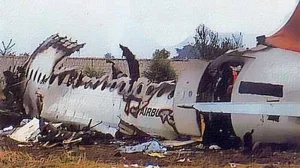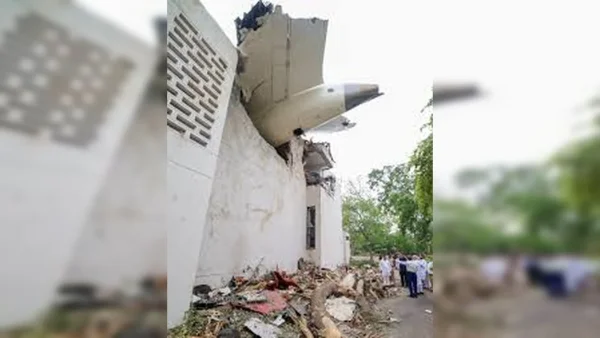
The Aircraft Accident Investigation Bureau – the AAIB – has said reports that its work on the June 2025 crash of Air India Flight AI-171 is done are ‘wrong and based on guesswork’. The bureau stated the inquiry is still going on and asked people to be careful what they say so as not to damage the investigation’s correctness and what the public thinks about it.
AAIB’s statement and what the law says
The AAIB made a formal, clear statement, repeating that it does its work according to the Aircraft (Investigation of Accidents and Incidents) Rules, 2025, and what ICAO Annex 13 requires. The bureau explained that so far, only facts have been given out, and no firm decisions have been made.
The bureau made the point that the first report, which came out in July 2025, only gave the factual information which was available at the time. The final report – with decisions and advice to make flying safer – will be published when the work of looking at the proof is finished.
The AAIB asked news groups not to guess too early, warning that claims which haven’t been checked can cause worry for the public and can damage the careful technical work being done. The bureau said that being open and following the correct steps are at the heart of keeping flying safe.
Main facts from the first findings
The official first findings showed that the Boeing 787 Dreamliner on Flight AI-171 lost power from both engines within a few seconds of taking off from Ahmedabad. Investigators discovered the fuel control switches had gone from ‘on’ to ‘off’ in the last moments which were recorded.
Parts of what was said in the cockpit voice recorder were in the first material and showed one pilot asking why the engines had been switched off, and the other answering ‘I didn’t do it’. The first report did not say who was to blame or how both engines had stopped almost at the same time.
260 people died in the crash, including people on the plane and people at a medical students’ boarding house nearby. Only one person on the plane lived. The AAIB repeated that technical work, getting data from the plane and proof to back things up are needed before any decisions are made.
How outside reports and the courts are reacting
A report in Italian, from outside the bureau, suggested that a person did something, rather than a technical fault, saying Western sources – who weren’t named – had said a fault could be ruled out. That publication said the final report would show that one of the pilots had done something on purpose.
Without naming that publication, the AAIB said such reporting was ‘wrong and based on guesswork’ and warned against claims being made too soon. The bureau said the investigation was still on, and investigators were still looking at all possible reasons – technical, to do with people, and to do with how things are done. The Supreme Court has, separately, asked for a report on what steps the AAIB has taken so far, and wants that report within three weeks. The court’s watchfulness shows how important it is to get a careful, open result which can stand up to legal and public examination.
Why investigations of plane accidents which are based on proof are important
Plane accident investigations try to find the real reasons for accidents, and make advice to make flying safer, so that future tragedies can be avoided. Investigations use flight data recorders, cockpit voice recorders, records of how planes are maintained, looking at what people do, and engineering tests – a many-sided, orderly process.
Saying what caused something too soon can hurt the families of the people who died, spoil public discussion, and damage the fairness of the steps taken. The AAIB stressed that only a final report, which has been looked at by experts, should be used to make rules, start legal cases, and for what the industry does.
The bureau again said it would publish the final report in line with what happens internationally, and would keep being open, while protecting the correctness of the process of looking at proof. At the moment, investigators are still getting and looking at data, before making firm decisions.