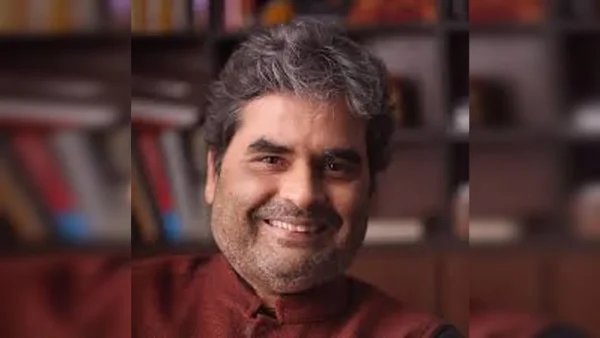
Vishal Bhardwaj shared a heartfelt post on Instagram the day before his much-anticipated O Romeo movie premiered, saying he was “deeply proud” of the project. In a long eulogy he thanked his key crew, characterizing the film as a raw, personal expression of love, anger, and revenge.
Bhardwaj’s public introspection and gratitude
Before reviews and box-office collections could write its destiny, Bhardwaj went on avidly exhibiting his pride. He felt indebted to the department heads, who were in his view the “real heroes.” They shared vision and integrity and asked the stars to drop their arguments when it came to abiding by his creative pull.
Critical elements being mentioned were Mustafa Stationwala, Meghdeep Bose, Mukesh Chhabra, Anl Arasu, and Priti Shahani. His associate producer Abhay Datt Sharma stands witness to every creative high, creative low. Without expressing his loyalty and trust—much of which got killed in the stands—he would not be able to make films without Priti Shahani.
Exploring revenge, love, and human contradictions.
Using the self-reflexive note, Bhardwaj engaged in tracing a number of recurrent themes in his oeuvre including revenge. To his mind, he is only just beginning to realize these drives at the age of sixty, with impunity and injuredness never ceasing to fuel them.
For him, O Romeo is about placing all of this pent-up anger in a new scenario and having the violence and the feeling of love there. He said he found these humans intriguing, who run between two large gears. In his view, it was the two sides driving the idea of the film.
Certification, errors and the final cut
The movie received a UA certificate from the censor board after producers found the required and suggested edits. Some of the dialogue had to be changed, while there were also a couple of other scenes where there were still a few words that had to be muted.
The cuts were suggested for a close-up of a throat being slashed. Brief shots of bloodshed and assault sequences were taken with the suggestion of reducing the duration of these two incidents. The anti-tobacco and anti-smoking disclaimers will be lengthened. The final length of the film was 177-178 minutes, that is, only a hair under 3 running hours.
Cast, release time, and box office early signals
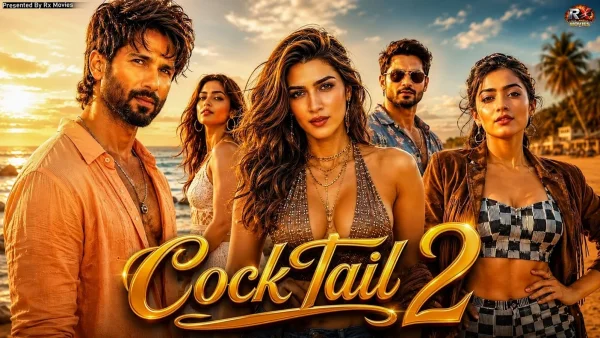
O Romeo, starring Shahid Kapoor and Triptii Dimri, was released on February 13. Early advance sales described the movie’s popularity in moderate terms, with approximately 33,000 tickets booked for the first-day showings at major national chains and one single large venue with a seating capacity of 27,000. Figures, however, fell in terms of expectations for a project this big-budget.
The industry projected an opening-day collection in the region of a few crores, say, Rs. 4 crore to Rs. 7 crore, with a near-pinpoint projection of approximately Rs. 6.5 crore. Given the costs of production and release reportedly in excess of Rs. 100 crore, the hope of theatrical momentum will be crucial, contingent on strongly established trade deals for non-theatrical rights.
Artistic Temperament and the Director’s Final Assertion
Bhardwaj embraced ‘O Romeo’ as both potentially massy and artistic, violent and poetic, loving and vengeful. The words from the movie say the movie is as much his sensibility as he could put on the screen, in a manner ending on a beautiful note he wanted to share with just about anybody, as needed of the critics or box office.
He says on the last line of a seemingly lighthearted Instagram post, “O Romeo.” This commentary can be a blessing and at the same time, a challenge to anyone who wishes to bespeak on the film in my presence merely on its own terms while great, heartfelt uncertainties drive through the air. Meanwhile, Bhardwaj says any pride
[or fondness for the film ministry]
would continue to exist merely as a part of the entertainment, only to pay for it at the box office.
The real test lies with the audience now. If O Romeo finds a connect with its viewerships, the film will build in the vein of a gradual- build petitions of some of Bhardwaj’s previous projects; and if not,
[considering the amount of]
verbiage and hue and cry, full-on pride of Bhardwaj and zest from the team would ensue, thereby becoming part of the movie, irrespective of the immediate fate the boxes of the office to bequeath.