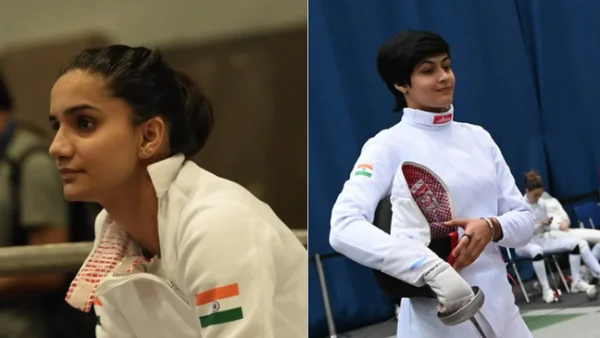
Indian fencing reached a historic milestone at the Senior World Fencing Championships 2026 in Hong Kong as Taniksha Khatri and Prachi Lohan became the first Indian women’s épée fencers to qualify for the prestigious Main Table of 64.
Their achievement is more than a sporting milestone—it is the story of perseverance, discipline, and years of overcoming obstacles in a sport that has often existed on the margins of India’s sporting landscape.
A Historic Breakthrough for Indian Fencing
Qualifying for the Main Table of 64 at the Senior World Championships places Taniksha Khatri and Prachi Lohan among the world’s elite épée fencers. No Indian woman had previously reached this stage of the competition, making their performance a landmark moment for Indian fencing.
The achievement reflects not only their individual talent but also the gradual progress of Indian fencing on the international stage. Taniksha Khatri: Rising Through Dedication and Determination
From Training Halls to the World’s Biggest Stage
Taniksha Khatri’s journey has been shaped by years of rigorous training, discipline, and unwavering focus. Competing in fencing—a sport that receives far less attention than cricket or badminton in India—required persistence and belief in a long-term goal.
Her rise through national and international competitions came only after countless hours of practice, balancing education, travel, and competition while constantly working to improve her rankings.
Challenges Along the Way
Like many Indian fencers, Taniksha has competed in a system where access to international exposure, specialized coaching, and funding has historically been limited compared with more established sports.
Traveling abroad for competitions, adapting to different opponents, and maintaining peak performance demanded consistent hard work and resilience. Prachi Lohan: Turning Challenges into Opportunity
Building a Career in a Niche Sport
Prachi Lohan’s journey reflects the determination required to excel in a sport that often operates away from the spotlight.
Years of disciplined practice, domestic tournaments, and international qualification events helped her steadily climb the competitive ladder.
Her breakthrough at the World Championships is the result of sustained effort rather than overnight success.
The Road Was Never Easy
Indian fencers frequently face challenges such as:
Limited public recognition.
Fewer sponsorship opportunities than athletes in mainstream sports.
Intense international competition from countries with long-established fencing traditions.
The pressure of balancing academics, training, and travel.
Prachi’s success demonstrates that persistence and preparation can overcome many of these barriers. A Sport That Demands More Than Physical Strength
Why Épée Is One of the Toughest Fencing Disciplines
Unlike some other fencing events, the entire body is a valid target in épée, making every movement and tactical decision crucial.
Success depends on:
Split-second decision-making.
Exceptional reflexes.
Mental composure under pressure.
Strategic patience.
Technical precision.
Reaching the Main Table of 64 means consistently outperforming highly ranked international competitors. Breaking Barriers for the Next Generation
A Victory Beyond Medals
For years, Indian fencing has worked quietly to establish itself on the global stage. The achievement of Taniksha Khatri and Prachi Lohan sends a powerful message to young athletes that success in niche sports is possible with dedication and support.
Their historic qualification could inspire more girls to take up fencing and encourage greater investment in coaching, infrastructure, and international exposure. The Challenges That Still Remain
Can Indian Fencing Build on This Momentum?
While the breakthrough is significant, athletes and coaches continue to highlight the need for:
Better grassroots development.
More international competitions.
Modern training facilities.
Increased financial and corporate support.
Wider public awareness of fencing.
Sustained progress will depend not only on exceptional athletes but also on strengthening the ecosystem around the sport. The Bottom Line Taniksha Khatri and Prachi Lohan have achieved something no Indian women’s épée fencers had accomplished before—qualifying for the Main Table of 64 at the Senior World Fencing Championships.
Their journey is a reminder that historic achievements are rarely built in a single tournament. They are forged through years of training, setbacks, sacrifices, and unwavering belief.
As Indian fencing celebrates this milestone, their success may prove to be more than a record—it could mark the beginning of a new era for the sport in India.