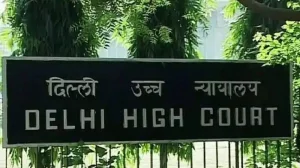
The Delhi High Court has scheduled a key hearing for March 9th, on the Enforcement Directorate’s appeal of a lower court’s decision not to begin proceedings on the agency’s complaint in the money laundering case connected to National Herald. The case involves Congress leaders Sonia Gandhi and Rahul Gandhi, and many others, and concerns difficult points of law under the Prevention of Money Laundering Act.
What the Delhi High Court will consider on March 9
Justice Swarana Kanta Sharma gave the people the case is about more time to submit their responses. The court will listen to the ED’s challenge of the lower court refusing to start the case, and will also consider a request to pause that decision while the entire case is heard. Solicitor General Tushar Mehta – representing the ED – did not agree with the request for more time, saying that notifications had been sent two months before. Describing the disagreement as a clear matter of law, he said the case ought to be settled on legal rules, not on what actually happened.
The ED insists the lower court’s reasons for refusing to begin proceedings were clearly wrong. The agency states those conclusions are now stopping other money laundering cases which depend on the same legal reasoning.
Background of the National Herald money laundering case
The ED has charged Sonia Gandhi, Rahul Gandhi, the late leaders Motilal Vora and Oscar Fernandes, and others – Suman Dubey and Sam Pitroda – as well as Young Indian, Dotex Merchandise Pvt Ltd, and Sunil Bhandari.
The ED says the accused plotted to launder money by way of deals with the assets of Associated Journals Limited. The agency claims around Rs 2,000 crore in property was, in effect, taken over through a financial arrangement with Young Indian.
Investigators claim the Gandhis owned seventy-six percent of Young Indian and that the organisation illegally took AJL’s assets in return for a Rs 90 crore loan. These claims are not accepted, and no court has made a final decision on them.
The trial court’s order and the FIR requirement under PMLA
The lower court would not begin proceedings on the ED’s complaint – which is much like an indictment in the PMLA. The court decided that, without a first information report for a listed crime, the money laundering case could not go forward.
The court stated that the ED’s investigation came from a private complaint, not an FIR. It also pointed out that, despite a complaint by Subramanian Swamy and an order to appear in 2014, the Central Bureau of Investigation did not file an FIR for the alleged original crime.
In its appeal to the High Court, the ED argues the lower court has effectively let a type of money laundering suspect off, simply because the listed crime started with a private complaint to a magistrate. The agency says this reading is not in the PMLA rules.
The ED says that once a court with the power to do so has begun proceedings on a private complaint about a listed crime, it is more important than a simple FIR. The agency believes the lower court got this backwards, and incorrectly saw a private complaint as less important than an FIR.
The agency also submits that, at the beginning of proceedings, the court should only look at what is in the complaint and decide if there is enough reason to start a process. The ED says the lower court went beyond this accepted rule. Why this case is important, even beyond itself
The High Court’s decision could make it clear if a prosecution under the PMLA is allowed to go on if the original crime it’s based on comes from a private complaint – not a First Information Report, or a complaint from an investigator with the power to do so. This question has come up in a number of cases across the country.
If the High Court agrees with the lower court, PMLA investigations built on a magistrate’s acceptance of private complaints might be open to being argued against. But if the High Court supports the ED, it might confirm the agency’s greater power to follow up on money laundering crimes that don’t start with an FIR.
The Solicitor General made the point that the lower court’s reasoning is already affecting other prosecutions. A High Court ruling that clearly states what the standard is would have widespread effects, and change how investigators, lower courts, and lawyers for the defense deal with the basic crimes needed for a PMLA case.
Notices, a request for a hold, and what has happened so far
On December 22nd, the High Court sent notices to the Gandhis and others in the ED’s main appeal. The court also asked for replies to the agency’s request to put a hold on the lower court’s decision to not accept the ED’s complaint.
That lower court decision – from December 16th – said that accepting the ED’s complaint was against the law, because it wasn’t based on an FIR. The High Court will now look at whether that opinion fits the law as it’s written and what previous rulings have said.
The notices went to Suman Dubey, Sam Pitroda, Young Indian, Dotex Merchandise Pvt Ltd, and Sunil Bhandari, as well as the Gandhis. Justice Swarana Kanta Sharma gave a time to reply, and set up a focused debate on how the PMLA should be understood legally.
Possible legal paths and what they mean
The hearing on March 9th could result in a temporary order on the ED’s request for a hold, or it could set a schedule for the final arguments. The court might keep things as they are, give a small amount of help, or allow the lower court’s order to stand while the legal question is being decided.
If the ruling goes the ED’s way, it would be able to continue its prosecution complaint without needing the FIR that the lower court required. If the respondents win, the lower court’s ruling would be strengthened, and would require a tighter connection between PMLA prosecutions and crimes based on FIRs.
Besides the people involved, the result will tell law enforcement how to start and keep going with money laundering cases where the original crime comes from a private complaint. It will also tell lower courts what the correct level of acceptance is under the PMLA.
What to expect before the hearing
The ED is likely to base its arguments on the text of the PMLA and court rulings on what scheduled crimes and acceptance mean. The agency will likely stress how important it is to be able to prosecute efficiently, and that there shouldn’t be a difference between acceptance of private complaints and investigations based on FIRs.
The respondents are expected to defend the lower court’s approach, stressing the need for legal protections and the danger of going too far in enforcing financial crime laws. They might argue that the PMLA can’t be separate from the legal structure around the crimes it’s based on.
How the High Court deals with the difference between FIRs and private complaints will be the most important thing. However the court decides, it will shape how money laundering prosecutions happen, and make it clearer how criminal procedure fits with the PMLA’s power to enforce the law.
As March 9th gets closer, this case remains a major legal test, with political and institutional importance. The High Court’s decision will either confirm or change how authorities connect supposed money laundering to the criminal acts it is based on, under Indian law.