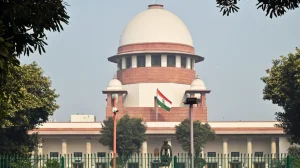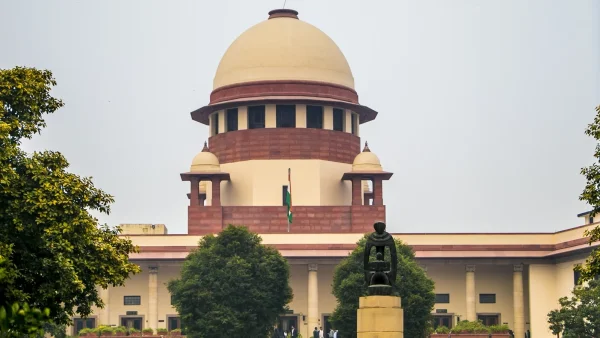
On Monday, the Supreme Court refused to take up the public interest petition questioning the methodology adopted for enumeration, categorization and authenticity verification of caste data in the 2027 general census. The Supreme Court, however, requested the Centre and the office of the Registrar General and Census Commissioner, India to peruse the suggestions of the petition presented by the PIL Petitioner Aakash Goel relating to equity and reliability.
Introduction of the 2027 census concerning Caste Enumerations
The 2027 Census is the 16th national exercise and brings with it two major changes: the first caste wise enumeration after 1931 and the first digital census in India. These alternatives open up the doors to many technical, administrative and policy questions on how to capture and process caste identities.
It is the Law to Conduce a Census – A Few Observations in the Context of the 1958 Act
Certainly, the procedures of the census are regulated by the Census Act, 1958 and The Census (Amendment) Rules, 1990 Constituted therein, at the same time it puts on the particulars and the enumeration in the hands of the authorities. The design of questionnaires and classifications should be performed by users together with subject matter experts, data analytics and statistics professionals.
The Request for Public Litigation and Requisition of Transparency
A request brought before Justice Padmanabhan, which hoped for a release the presently inquiry before this vital office including; the forms that will be employed and commingled categories and is addressed to the District Census Headquarters, which is the public authority in this regard Deriving the revenue comes to the revenue which is the centre of liquidity and the hub of transparency.
A perusal of the petition endorsed with the name of Aakash Goel and delivered by Pil, demanded that the questionnaire and the classification criteria the Census Directorate would employ be made public. Goel, assisted by Gupta, vehemently contended for publication of a transparent questionnaire on the premise that no purpose would be served by an article that is designed to confront ambiguity.
The maximum attention was paid on the necessity to enumerate marginalised communities except scheduled castes and scheduled tribes. This has taken the petitioner to the ‘cost/identify’ issue to avoid and correct mistakes and maintain the accuracy of this data when it comes to a paperless environment.
Adding to the response of the Supreme Court and the legal basis of it
The Court declined to entertain the PIL on its merit, as it felt that the arguments were important, but was nevertheless dismissed. The court reiterated the importance that ‘’such wrong decisions should not happen’’ of the courts because there turn out to be -no predetermined data- ‘entries made under different castes’ and advised the parties that such decisions regarding collection of caste based census data was statutory duty.
Reference to the Census Act and Rules and further reliance on it, the court expressed optimism that the respondents along with expertise from professionals will create effective methods to eliminate errors. The Bench requested the authorities to go through the concerns aired in the petition and a legal notice before it, and then left it pending before the Bench.
Quest Analysis of the Problem and Technical Solutions Related to Caste Data Gathering
Collecting data on castes involves categories, encodes, and creates standard definitions. Since many versions of caste enumeration are being conducted officially with questionnaire and fast computer process, obviously olid representation could get some errors. Moreover, relying considerably on digitization could lead to poor quality data and subsequent inaccuracies that can be costly to rectify and in worst-case scenarios result in loss of human life.
Many stakeholders are against the idea that people, prior to the start of data gathering exercise, have to reveal information about the caste or religion they belong to.
Stakeholders worry about how self-identification, historical names and local variants will map to standard caste categories. Transparent questionnaires, open metadata and clear verification rules can reduce disputes and improve the reliability of analysis used for policy making and resource allocation.
Next steps for authorities and stakeholders
The court’s instruction states that the responsibility should be shared between the Center and the Registrar General to use the recommendations of experts and civil society organizations. On the other hand, distributing the description of the questionnaire and the classification protocol before the fieldwork would be regarded less suspicious and will allow demographers and social scientists to provide feedback.
Also, make sure to conduct public hearings, introduce digital technologies at the experimental stage, compile cartography bindings and very soon publish the results of test surveys in a coded manner. Legal protection, strict criteria for the use of data, and the existence of redress mechanisms would be factors that will effect/prevent behavior.
The next Indian census will be conducted in 2027, and it assumes the significance for social policy frameworks, for allocation of resources and for a range of social science studies through FPC. The Chairman on the FC asked that whether all procedural matters be adjudicated upon today? The answer is in the negative. The Supreme Court in its order has insisted on transparency and participation and has called for an open led and low procedurally technically stringent policy for the caste count by the Government.