The 2026 Indian Budget centred on promoting a new approach towards policy making, a key policy change seen was the outright support and expropriation of foreign providers of cloud services entity in India, What this offer means is simple: if an every nation depends on its citadel for services that run on the public cloud then that nation is prone.
Scope and purpose of the tax holiday.
The incentive which is being pushed even further suggests actually obtaining any exemptions for all companies in the country regardless of the system of service delivery. Indian data centers are, however, the albatross in this cage. They have managed to tailor the
[progovernment]
design to the national Currently this policy includes imperatives such as redirecting.
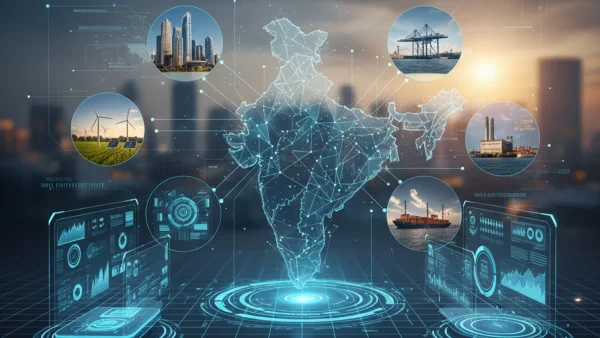
The purpose of this move is to ensure India’s visibility as an international hub for Data Centers and Solution, where intense of capital are long drawn. Instead of suggesting business models, this strategy concentrates on the prerequisites, essential for safeguarding the necessary computing facilities as the use of AI and consumption of data accelerate within India hastily.
Suddenly: safe habor and related presentaions
Given there are uncertainties such as slim profit margins and lack of transfer pricing documentation, the Budget suggests that there should be a safe harbor of 15% with regard to the cost aspect in the case where data center services are being provided from India by a related entity. This also focuses on reduction of risks linked to controversies over transfer pricing and the potential for multilayer taxation to increase risks of inward MNE’s investment discouragement.
Businesses which are non-resident have been offered a dispensation which is a profit cap of 2% of the bill value for electronic spares which are stored in a bonded warehouse. Combining these put in place frameworks provides the procedures for cloud providers and also makers of hardware and its components in India.
How likely it is that global providers of cloud service around the world are such bound to react
Hyperscale datacenter providers, public clouds and extensive cloud environments call for incarnations of an immense number of local latency-intelligent target sequences for training, attention, and impulse service. Few commercial capital and other stipulations may be a matter of concern: A proposed large data center park for artificial intelligence with an announced $15 billion cost for the base in Andhra Pradesh, with 1GW of the initial capacity, and other players also announcing multi-billion commitments and projects taken by conglomerates.
According to the sources of nasscom gigantic data which attributes to 19% of the total world data output, yet in the present context, the data centers present in India contribute only 3% of the Total global data centers and the gap is quite huge. Electric power especially in the Data Center space in India is still very relatively cheap, there is also plenty of engineering skills and expertise in this sector, AI & cloud services are on the rise in the country and therefore in the long-term potential of IT infrastructure investment in this market.
The economic effects and how different groups participate in the process of advancement are highly relevant.
Implications of economic development and national integration.
In addition to its primary goal of drawing in foreign investment, this particular policy is likewise configured to advocate the substantial participation of domestic investors. As such, the need for domestic rerouting of Indian resellers for local service consumers becomes a useful mechanism in building local intermediaries, directing tax revenues and enforcing the rationale of the economic reward for the local cloud and data centre ecosystem.
In addition to this, the consoles are likely to contribute to employment both in the construction and operational stages, improve other sectors such as energy and cooling, and transportation services, as well as promote current level of investment in the hardware component of ICT, specifically procurement and installation of data centers.
Risks, implementation challenges and policy considerations
The realization of massive investments in data centers is not only dependent on tax incentives in many cases. Factors that discourage the establishment of data centers in many areas such as: land constraints, existence of reliable and cheap power, presence of water for cooling, and simplification of licensing processes will remain problematic. There is a need for the policymakers to create a common interest on the need for infrastructure development in order to prevent bottlenecks from any form of investment.
In addition, the impact of the laissez-faire attitude of the permanent establishment definition, data privacy and cross-border information flow regulators also needs to be taken into account. The provisions for safe harbor helps, but the true long-term calm comes from consistent enforcement and cooperation of tax, commerce and communications authorities
Indian Budget 2026 proposes zero percent tax for the period until 2047 and use of safe harbour rules reflecting Investment into socio infrastructures for AI and Cloud growth. It is a strategic gamble believing in the possibility of the conditions being met excellently with upscale of global and domestic investments, the development of nearby user markets and completion of India’s image expansion in the world information market.