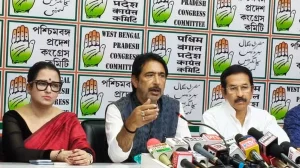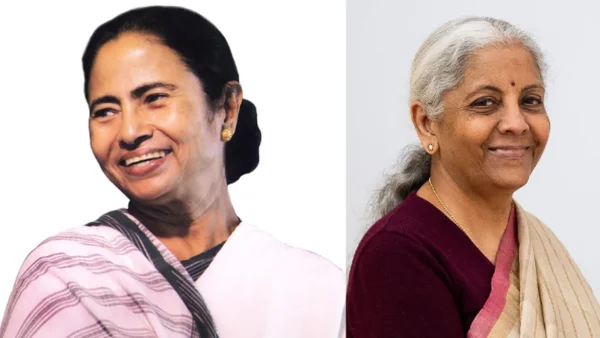
West Bengal’s Chief Minister, Mamata Banerjee, on Sunday said the 2026-27 Union Budget was a ‘Humpty Dumpty Budget’, and blamed the central government for not mentioning Bengal at all, and for ignoring common people. Before leaving Kolkata airport for a trip to New Delhi, she said the budget had no clear direction, and the government favoured words over actual help.
First responses and what she said
Banerjee used powerful words, describing the Budget as ‘a trick with words’ and ‘against women, against farmers, and against education’. She said the plan contained no proper steps for helping people socially, and that it damaged the constitutional and economic systems which protect those who are at a disadvantage.
She made it clear Bengal hadn’t been given ‘a single penny’ in new money, and pointed to GST as the only way money came to the state. For Banerjee, the numbers in the budget were less important than the political point: she considered the Budget proof of the centre’s lack of care, with the state elections coming.
Roads, projects and what different people want
A major part of Banerjee’s disapproval was the news of new goods and fast rail lines. The Finance Minister put forward special goods lines from Dankuni to Surat, and seven fast passenger lines – including Varanasi to Siliguri.
Banerjee replied that the lines claim didn’t show what was really happening, and said West Bengal had already organised six economic lines covering Dankuni, Bardhaman, Bankura, Durgapur, Purulia and Kalyani. She called the centre’s three-line headline ‘rubbish of lies’ and gave stress to local projects like the Jangalmahal Jangal Sundari plan.
She stated the Purulia line had attracted private money, and the projects that were planned involved around Rs 72,000 crore. Her point was that central news should respect what states are doing, and admit money the state government has already got.
Money given to states and problems between centre and states
Banerjee put her objections in terms of how the centre and states share money, saying transfers were late or being stopped, and that West Bengal should have more than Rs 2 lakh crore. She insisted money collected from the state by the centre was being kept by the centre, instead of being given back to the state as help.
Her criticism was a mix of policy and politics. By pointing to cuts in education, fertiliser help and social safety, she showed the Budget as making people who are at risk even worse off. This argument works with voters who think welfare and public services are the most important thing.
When the elections are and the political situation
West Bengal will have Assembly elections later this year. Banerjee’s strong answer fits with a wider opposition view that central budgets should give money to areas in a balanced way before elections.
The exchange also shows how budget speeches are also political signs. Leaders of states often use central financial papers to put forward claims about being self-governing, what is important in development, and who is responsible, and problems get worse as election dates get near.
How the market reacted and what happened right away
The markets reacted strongly after the Budget, with main numbers falling, and investors being unsure. Banerjee linked the fall to what she called a broken economy, and showed market movements as proving her criticism.
Outside of words, the event shows longer-term dangers: people thinking the centre and states are divided can affect how sure investors are, how long projects take, and how big building plans are put into practice. Clarity about money and working together between the centre and states are important for turning budget plans into things that actually happen.
Conclusion
Mamata Banerjee’s ‘Humpty Dumpty Budget’ criticism shows a mix of policy objections and a plan for the elections. Her claims of 'no Bengal mention‘ start a discussion on how budgets balance what the country needs with what areas need, and test if news about lines and industry will turn into money and things being done for states.