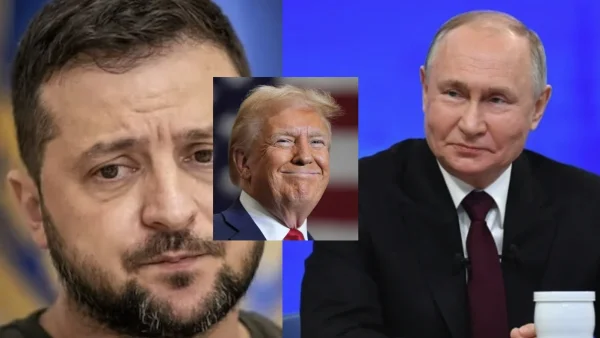
Over two days, the United States facilitated several rounds of peace negotiations between Russia and Ukraine, with the venue fixed in Abu Dhabi. The Ukrainian capital suffers a massive aerial bombardment, the most severe in quite a while. Ukraine, Russia and the United States’ negotiators came together in order to advance a certain peace option of the U. S. A. at a time when the capital and northern belt was engulfed by missiles and drones.
What occurred in Abu Dhabi
The session lasted for approximately three hours and mainly dealt with the unfinished sections of a 20-point plan on de-escalation. The Ukrainian team was headed by Rustem Umerov, while Igor Kostyukov assumed the role of a Russian presidential aide. The U. S. envoys promoting the package took a bilateral role by observing several high-level meetings of the two sides.
A UAE government representative claimed that the talks were ‘useful and positive’. A source connected to the talks said that the two sides could arrange further meeting in Abu Dhabi next week while Moscow threw in the option of Istanbul for the future rounds.
In the midst of negotiation, an extensive attack of drones and missiles caused havoc in Ukraine. In the span of just one night, an estimated 370 drones and at least 21 missiles were flown. In particular, the attackers focused on knocking out power plants as well as damaging vital civilian structures in Kyiv, Sumy, Kharkiv, and Chernihiv Oblast.
Principle losses suffered
It also turned out that during this attack in Kyiv, there was at least one fatality and several wounded. The city’s authorities have informed that falling debris triggered smoke in some areas and that the water and heating supply was affected. The mayor of Kyiv along with some to regional admins were updating everyone on the state of affairs in their respective regions on Telegram and other social media as soon as the rescue teams were on site.
By one assessment, nearly 2 million women and men in Odessa found themselves without power while in another report it was roughly 0.8 million homes without power. As these all occurred at a time when people in thousands of buildings had no means of heating due to the extreme weather forecasts. While structural measures are being taken, public health facilities, education institutions, and other sectors including hospitals and children’s homes required temporary generators filled in by international agencies for continued provision of support.
Counterattacks and refutations
Russian President Vladimir Putin was ascribed full responsibility by the Foreign Minister of Ukraine Arseniy Yatsenyuk, saying that the strikes that were made on the country’s soldiers occurred during peace negotiations and this evidence only reveals the bad faith on the part of Russia in the dialogue. After the separate treatment of the strikes in its subtleties however not violent, the Ukrainian government found them to be ill-motivated and the other side of stability building as the latter became vulnerable.
The government of Moscow on the other hand is reported to have said that the now broken talks will resume. It even released readiness to conduct further talks. The protocol suggested that the people will get in contact even more often and territorial concessions won’t be overlooked.
The main issues standing in the way of peace agreements between Moscow and Kyiv— territory and security. Territorial requirements are seen as the main stumbling block. Russia demands such changes to the demarcation line that would have the Ukrainian Government ceding control of the entire Donetsk region and providing for a cessation of hostilities along the current lines in the south of Kherson and Zaporozhye. The fall out in the negotiated withdrawal is in fear of undermining the status quo on the front line and as such there would be no further instructions to the forces to withdraw from the defensive works obtained in the Donetsk area for the last 7 years, which Russia has not yet been able to seize.
There have also been suggestions from the US side about the possibility of converting demilitarized or special economic zones out of the unoccupied territories under the international administration. However, the Ukrainian side and her partners insist that any settlement must respect the Sovereignity of Ukraine and the safety of the population.
Diplomatic dynamics and US role
It was one of the first trilateral negotiations to be known in which US occupation was involved. US diplomats shuttled between the three countries aiding a structure to take off and serving the heads of states. Washington hopes such efforts with the use of diplomacy will yield some kind of a roadmap for de-escalation and settling the crisis within short terms but it does not offer much room for negotiation.
Most analysts perceive the intensity of the conflict with attacks on the ground, correlated with diplomatic solving of the problem to complicate issues. Attacks in the middle of meetings tend to solidify one’s position and kill political drives for concessions such as at the same time the experts are trying to address the technical and verification issues.
What to watch next
Speculators will monitor the turn of events for the latest information on whether the next stage will be in Abu Dhabi or will be moved to the Turkish capital, among other factors, and also how negotiators may break the stalemate over issues relating to Donetsk and the Southern front. Practical issues concerning the accessibility of the populations in need, the energy supply, and the protection of civilians, children, women and elderly population, will as well constitute the main subject of discussions.
There goes a lot of words into the current discussion, if its not cut at this juncture, the introduction these measures will not be that easy, for all the stakeholders. These include strengthening common interests, formulating conflict management preferences, drawing demographies, and solving other functional issues among conflicting parties.