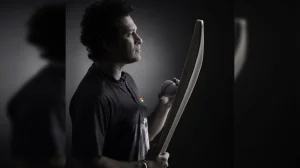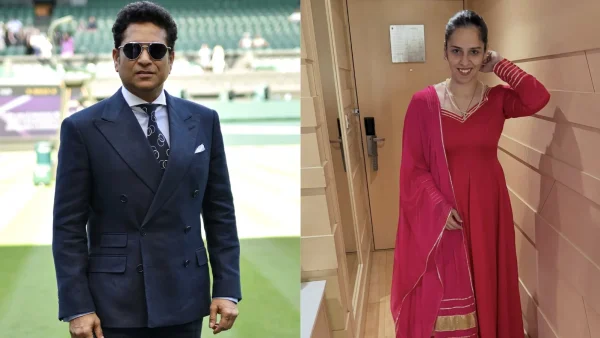
Tendulkar praised Nehwal – who had just announced her retirement – on X, saying she ‘took Indian badminton to the world’. Tendulkar wrote of Nehwal’s patience, bravery and steadiness in making a career that altered the sport in India.
‘Saina, dear, your career proves that being great is made up of daily work,’ Tendulkar wrote. ‘You took Indian badminton to the world stage, and showed that if you have faith, and work at it, you can change a sport.’
Nehwal’s retirement came after two years away from competing, because of a long-term knee problem. She said that her knee had got so badly worn, it made training impossible, and forced her to stop.
‘I didn’t think it was a huge thing to tell people I was retiring. I just felt my time had gone, because I couldn’t push very hard, and my knee wasn’t able to push like before,’ Nehwal stated on a podcast.
Her knee problems began with a serious problem at the 2016 Olympics in Rio – a moment that changed her career. Despite this, she made a well-remembered return, and went on to win important prizes.
After the Rio injury, Nehwal came back well to win bronze at the 2017 World Championships. Then she took gold at the 2018 Commonwealth Games, which strengthened her position as a world badminton player.
She also got to world number one in April 2015, the first Indian woman to get that place. This success helped change how India was seen in international badminton.
Nehwal’s international record shows 446 wins and 234 losses – showing how long she played, and how well she competed at the top level. She has medals from the Olympics, World Championships and Commonwealth Games.
In 2012, Nehwal won Olympic bronze in London, the first Indian to win a medal in badminton at the Games. That win gave hope to a generation of players, and made the sport more popular in the country.
Her work for the sport earned her top national awards – the Padma Bhushan, Padma Shri and Arjuna Award – honouring both her skill and her part in making badminton well-known in India.
Nehwal has been open about the medical problems she has had. In 2024 she said she had arthritis in her knees, and that wear to the cartilage made hard training impossible.
‘You train eight to nine hours to be the best in the world, but now my knee was giving up in one or two hours,’ she said. ‘It would swell, and it became very hard to push on after that. So I thought it was enough.’
Tendulkar said that, more than the medals, Nehwal’s biggest achievement is giving young athletes the idea that being successful in the world is possible. He said her experience and love of the game will help a lot of people.
This effect can be seen in the line of Indian badminton players who came after her: players who learnt that world-class wins could come from India. Nehwal’s career helped build the sport’s structure and interest in the sport across the country.
Her retirement ends one part of her playing life, but also opens doors to new jobs. Coaching, giving advice and helping to develop sports could all benefit from her knowledge of top-level competition.
A lot of people will expect Nehwal to stay involved with badminton in an advisory or ambassadorial role. Her understanding of training, mental strength and getting better could be very useful to younger players who are finding their way in the professional game.
The talk about looking after athletes and their long-term health also becomes more important because of Nehwal’s story. Long-term injuries and arthritis show the need for better care to stop problems, and help athletes get better.
Fans, other athletes and sports officials will now think about how best to keep the careers and post-retirement chances of athletes who give so much to their sports.
For now, Tendulkar’s praise shows the nation’s thanks: a recognition that Saina Nehwal didn’t just win medals, but helped rewrite the story of Indian badminton on the world stage.
Her effect will be measured in prizes, but more importantly in the hopes of the next generation who saw in her a way to be successful in the world.