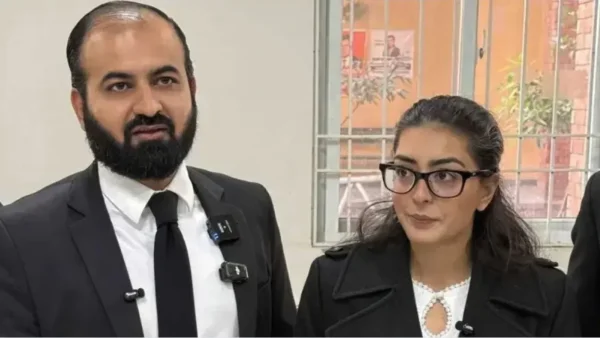
The court – with Judge Afzal Majoka presiding – sentenced the couple after they’d been arrested in Islamabad the day before. Mazari and Chattha briefly showed up by video, but then refused to take part in the trial; the court went on and finished the case without them. Family, friends and those who work with them said the decision was done for political reasons.
According to what the court said, lawyers for the government claimed Mazari used X, and other sites, to speak badly about government groups and to push views that matched those of groups that have been banned. Court papers mentioned posts which seemed to be saying the same things as a banned Baloch separatist group and the Pakistani Taliban.
The Charges, The Decision, and The Law
The case started in August 2025 when someone made a complaint to the National Cyber Crime Investigation Agency. In October 2025 the couple were charged under parts of the Prevention of Electronic Crimes Act. The court order said the government had shown its case under sections 9, 10, and 26-A, which together add up to 17 years.
Both of the people accused said they had not done what they were being accused of. The judge wrote that Mazari ‘repeatedly put out content that was very upsetting, not true and against the state’ – and that her husband had ‘knowingly helped’ her do this. The lawyers for the defense said the posts were political speech which was allowed.
The Arrest and What Happened in Court
Mazari and Chattha were arrested in the capital as they went to a court hearing. People who saw it happen said police used force to hold them and broke the car windows during the arrest. The authorities did not say publicly why they had been arrested at the time.
From jail, the pair joined the hearing through video, but asked why the media were not allowed in the courtroom. Mazari said she had been badly treated while in jail, and said she would not take part in the trial any more. The judge asked if they were going to take part, then went on to give the decision.
Court papers show arrest warrants were given after they had not turned up a number of times, and after their temporary bail had been cancelled. Before this, the couple had gone to a bar association office to avoid being held.
How People Reacted – Both in Pakistan and Elsewhere
Groups for rights, both in Pakistan and in other countries, criticised the arrests and the sentences. Amnesty International said the case was ‘the latest in a long line of using the courts to harass and scare people,’ and asked for them to be let out at once. People who work for rights warned the decision could make people afraid to speak, and stop people from doing work for rights across the country.
Bar associations in Islamabad said the arrests were wrong and announced strikes. Senior lawyers warned that a larger movement could happen if the authorities did not stop what they called an attack on basic rights.
Mazari’s mother – Shireen Mazari, who used to be a minister for human rights – said the decision was ‘completely illegal’ and said the pair had been taken to places that were not known after they were arrested. People who supported them also had worries about whether the law had been followed and how they had been treated in jail.
Attaullah Tarar, Pakistan’s information minister, said on X that he thought the decision was good, saying the accused had been sentenced under cyber laws. What he said showed how strongly the government feels about online speech it thinks threatens the country’s safety.
Speaking Your Mind, Safety, and Pakistan’s Cyber Laws
The case shows how much more there is between people speaking their mind online and the country’s safety policy in Pakistan. Authorities have used the cybercrime rules to control what people say online, especially things that seem to be against the army or to be for extremist groups.
Law experts have noted that PECA has very strong punishments for content that is linked to terrorist views, false information, and getting people to cause trouble. People who are against it say that because the rules are not clear and are used in a wide way, they are used too much – and that this catches activists, journalists and lawyers, as well as people who are really doing bad things.
For people who defend human rights, a lot is at stake. Mazari and Chattha have helped journalists, politicians and activists who are said to have been held without being charged. Those who support them say the case is to scare lawyers who question holding people without charge and people disappearing.
What Will Happen Now
The accused can appeal the decision and sentence to a higher court. An appeal would likely test whether the posts meet the legal requirements for being a crime, and whether the trial followed rules for a fair hearing.
People who support digital rights are asking for clearer rules around online speech, and better control of how cybercrime rules are used. They say that unless there is change, the online space for the public in Pakistan will keep getting smaller – and people will keep to themselves to avoid being given very strong punishments.
For now, the 17-year sentence sends a clear message about the risks of speaking your mind on social media in Pakistan. It also shows a harder line towards lawyers and activists who use their sites to question what the security services say and to point out abuses of rights.
As the legal fight goes to appeal courts, the case will be a test for speaking your mind, the rule of law, and the balance between keeping the country safe and civil rights in the country’s digital world.