For a significant period of time, India has had a visible market strategy that has been about free rides on top and angry customer dissatisfaction below. The drivers had complained about diminishing returns, the passengers refused to pay for surge and the system kept adjusting the artificial intelligence here and there with the aim of making profits. Now the waves of such a market bring its newest actor, the Bharat Taxi service. This service is an alternative based on the conduct of a cooperative that ensures that there are no surges, no commissions and where; moreover, the idea claims the driver will inch into ownership.
Successor to a decade of struggles
Bharat Taxi is a service launched by the Ministry of Cooperation and the Ministry of Home Affairs, and advocated by Union Cooperation Minister and Home Minister Amit Shah, after a two-month test period. It is announced as the number one driver-oriented national scale hail-ride app in the world. The development is supported by the Ministry of Cooperation and is structured by a Multi-State Cooperative Society of Sahakar Taxi Cooperative Limited.
The aim of the model is defined though easily priced and similar within radical structural bounds. Instead of contractors, these drivers are not so shareholders as militants. It’s the only political party which follows the teachings of Nath before any scripture. There is this word about headline in the BAP as lack of control by the aggregator implies the owner’s control which is the missing Sarathi. There are so many people who are becoming rich in this business and they are all Mills and Boon representatives.
The timing aptly reflects a market at an inflection point. A 2023 study by the driver groups center told of a lot of drivers who are taking advantage of the high popularity growth of the driversharing concept on – line hailing system players by complaining of numerous allegations of unfair treatment by the former, which was attributed to vague incentive policies compounded by falling incomes on the Incumbent platforms.
This results in Bharat Taxi talking about everyone’s interests, working zakad and zed, free of service fees and with a board.
Zero commission, surge free: How Bharat Taxi Works
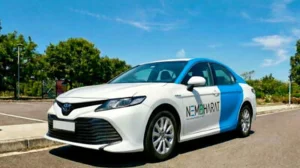
Bharat Taxi provides auto, bike taxi and cabs services under various categories like economy, sedan, XL and priority and so on. The app can be found in the Google Play Store and Apple App Store where urban taxis, last mile and even aiport transportation are all done in one’s mobile space.
Unlike other professional services such as travel agents or taxi drivers who charge from 20%-30% middlemen commission, Bharat Taxi charges zero commission. The drivers who own the company enjoy all of the benefits of good most revenue of its generating activities and any profits made are usually generously shared among its member. This is when the company takes a bold step and states that their prices will not fluctuate due to increase in demand which is a very common issue that makes clients uncomfortable.
Bus cooperative recently introduced new service called ‘Bike Didi’ which is concerned with recruiting and catering for women drivers. In addition to addressing gender disparities, it has a core purpose of adding safety prevention measure and as well as providing service classified as being only office vehicle by women.
Initial customer takeup of the product-and-safety design
Records from the government show that within the trial period for Bharat Taxi, there have been 3.3 million driver registrations and 6.7 million customer registrations in Delhi NCR and Saurashtra regions of Gujarat. It even traces the completion of about ten thousand trips per day which is evidence of economic thickness in the congested areas showing the onset of product-market fit quite early.
The federation communicated that a sum of about 10 million has been paid out to the taxi drivers directly. Quite apart from this, the Sarathis are also eligible for social security that covers their family’s health insurance, accident, and retirement plan related issues.
Safety and Guidance are especially catered for the passengers using the pattern. These features include a single button SOS which links up with police coordinates, Panic alerts to emergency contacts, an in app alarm that is loud enough and Live ride view information that can be shown with the people the passenger desires. To motivate better behavior, a fixed fare and simpler payment systems for drivers have been introduced in order to avoid cutting off trips and unnecessary conflicts.
Market context and competitive dynamics
The taxi market in India is estimated to move up from 21.07 billion dollars in 2025 and reach 44.3 billion dollars in 2032, thus achieving an upward trajectory with a CAGR of 11.2%. Much of this is expected to come from ride-hailing, emphasising the size of the opportunity for solutions that are not solely aimed at profitability but also trust and efficiency.
Already the new comers or startups are challenging remains formidable because as in the case of Rapido, it has stepped beyond bike business reaching many verticals and claimed to be in almost 450 cities with a target of touching 800 by March 2026. The other side of this equation, which is Namma Yatri, is a subscription-based driver leaning platform, already supporting close to 190,000 rides in a day and has seen more than 6,38,000 drivers earn over 175 million dollars.
Giants also appear to be changing their approach by more cognitive. As existing level of profitability reduces, it is a fact that the structure of the business starts paying attention to other self-sustainable but not for all infrastructure in the form of automatic transportation, even under active growth of the vehicle base in the market. This global switch in strategy will provide an area for discussing more about driver and pricing-centric approaches.
“Driver economics and user value”
Not only reasonable is the extreme extent in which Bharat Taxi’s zero-commission, surge-free approach could improve the cohort economics. Drivers make more money per trip which means being able to cover short distances and hours that are less popular. Customers will pay fixed amounts without incentives tied to a clock. If the business maintains sufficient extent of demand aggregation, both parties may benefit from longer subscription periods and lower lapse and potential of less cancellations of trips.
However, it is also found that the problem of sustainability does not allow the compensation and commission to be collected. In doing this, the platform’s earnings must be collected from the registration fees, service fees or other contingent fees to run its office, support maintenance and the technological advancement execution adhered to.
Taking into account the word –cost, there is execution discipline, route efficiency and dispute resolution.
The path to tread: scale, governance, and trust
As preserved under the Multi-State Cooperative Societies Act, 2002, Bharat Taxi is an organization that was legally established on June 6, 2027. A high ambition is said to be realistic at the moment by the Ministry of Cooperation, with the provisions for establishing support centres in each state and enhancing the exposure to digital public infrastructure of India.
Uttar Pradesh and Western part of India beyond the two states where the company currently operates, measures effective in relevant to location and quality of supply over demand, including theft and distortion shall be evaluated most critically. It will also be important to prevent such attitudes from reoccurring again as such, that is trust that was lacking in the earlier relative arrangements.
There is an increasing trend in the public sector integrations. For instance, the use of vehicle sharing services like Avis and bike taxis in Indian cities suggests that cities plan on changing those driver-centric models through legislations even though elements of such drivers first models are still evolving. Provided Bharat Taxi can traditions while adhering to standards, there is reason to believe that it shall reach a point of a sustainable segment
Indeed, the idea of people’s transport with a driver being the owner and the passenger getting to know in advance how much will be the cost is and safety is an integral part to the infrastructure is very appealing. After 24 to 36 months, we will be able to evaluate of it is possible to achieve a no scale without zero ‘surge d cut’ vise the no leverage approach.