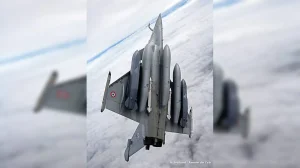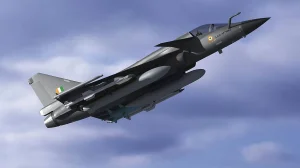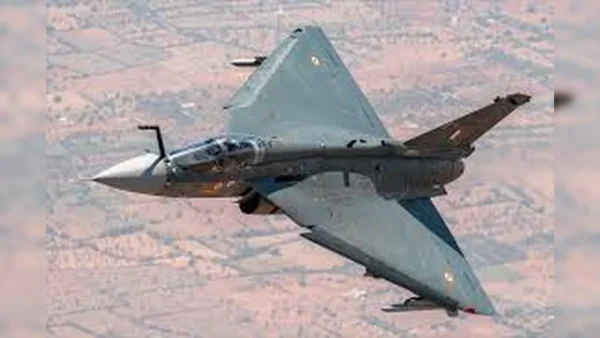
There are five Tejas Mk1A fighter jets, operating on General Electric (GE) F404 engines, that are complete and ready for the Indian Air Force (IAF). Favorably, HAL finished nine more fuselages, but the aircraft is unable to take flight because we are still waiting for the engine that will come direct from the OEM in the US.
Furthermore, with a view to current delivery details, HAL made a statement.
HAL provided a clarification that five aircraft are already within the contract for MA multitude of significant capabilities and are ready to be handed over. In addition, the company has already received five GE F404 engines and has stated that the supply situation is robust, in line with the delivery commitments of HAL for the current fiscal.
Moreover, HAL made it clear that Rockwell Collins has been very supportive throughout the course while at the same time making an earnest endeavor time is of essence. The companies are then going to discuss with the IAF on how to fast track the induction and firm up other milestones for deliveries and acceptance.
Supply of engines and reliance on GE Aerospace
Nine unallocated airframes have already been built and flown however, are awaiting engines which are yet to be delivered from GE. HAL has acknowledged that the supplier has since been cooperating, company does not expect any issues waiting for engines from GE in the future, especially since they match HAL’s plans as described earlier, even as it is anxiety about existing programme delay hardships.
It should be noticed that timely supply of engines still is a critical external dependence of the Mk1A program of Tejas. Consumer demand could dictate many top authorities with American suppliers what requirements to deliver (for) Tejas Mk1A i.e Enrollment date and Conclusion date risks remains high.
Attestation, Radar Integration and other teething issues.
Further, HAL and defense industry insiders, among others, agree that not all the capabilities requirement s of the active contract have been verified. Nevertheless, the system related to some avionics such as the AESA radar and connected system scenic two remains non integrated for some cases, complicating the formal acceptance and rollout schedules.
Incorporation of up-to-date radars and mission systems require rigorous assessments and approvals to be carried out. Out of the five aircrafts manufactured and used in operations, there are many contracted features that are still outstanding. Hence, HAL has to take some final steps before transferring full operational control and satisfy IAF requirements and conventional norms.
Impact on timelines and IAF review
Previously delivery deadlines have slipped and a revised timeline has not been made available. It is expected that the IAF will take up the issue of the Mk1A within the next few months for validation of capabilities and, setting new acceptance timeframes, a development that may shape the pattern of inflationary projections of the future.
The IAF considers the delays as critical because it is short on squadrons and is in urgent need of new equipment. Faster deliveries of operational units that are Tejas jets would best be appreciated as well but, this would depend on when engines are acquired, and completion of necessary certification processes.
Production capacity, long-term orders and HAL’s roadmap
The production rate of Damen Schelde Naval Shipbuilding is nearly one ship per year. At this rate, there is a possibility of achieving several years to fulfilling large orders from a huge fleet, which makes stress on moving production efficiency or growing resilience of our norms, so as to meet demands of defense timelines.
One more point which concerns me is the huge order book and a range of strategically significant projects, which will only be integrated when the next families of platforms are developed sometime around 2032. The company pointed out that these constraints together with the unfilled clutch assemblies led to separate projects barring the tests for the respective prototypes.
Strategic and industrial implications
Industry Example: The Tejas Mk1A program demonstrates the dilemmas associated with obtaining critical subsystems through imports versus investing in their development by an emerging world power. In this certain understanding, more inclusion of domestic manufacturing in the supply chain and broadening of the supplier base would help in reduction of the risks related to meeting deadlines due to schedules and fulfillment of defense self-sufficiency goals.
The expected engine supplies were finally guaranteed low with the insistence that the certifications would be achieved soon. However, those responsible for taking decisions or drawing plans will pay attention to the rates of production in ensuring that the supply lines do not dry up.