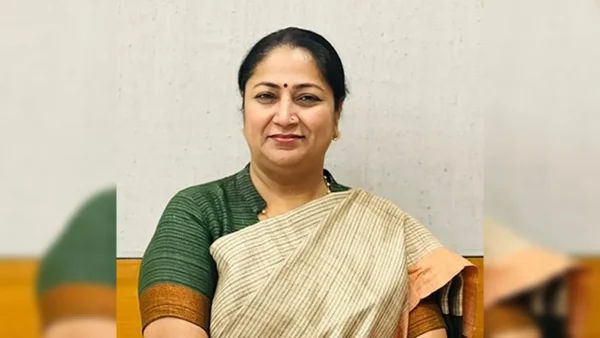
Delhi’s Chief Minister, Rekha Gupta, presented her government’s first-year report as a turning point – she said the successes were the start of Delhi moving in a new way. She stressed that, one year after the BJP came back to power in the Capital following 27 years, the administration had shown what it could do, had worked together between departments, and had moved away from just publicizing things to actually getting them done.
Health and Helping People
Rekha Gupta stated the government gave equal importance to helping people and to making changes in how services were provided. The first thing the Cabinet decided was to approve Ayushman Bharat in Delhi, which she said had been held up before. Almost 700,000 people have signed up to be covered, and in the first year, over 30,000 people got help through Ayushman Bharat and Vaya Vandana.
To deal with hunger in cities, the government opened 71 Atal Canteens, which serve around 71,000 people each day. Meals cost 5 rupees, and are meant for workers with low pay and people who are at risk. The project is seen as a way to make sure people get enough to eat, and to help families keep their budgets steady.
Regarding pay and making sure everyone is included, Gupta pointed to Delhi’s minimum wage of 22,411 rupees a month – the highest in the country, she said. The city also opened 500 Palna centers to help with childcare for women who work. Also, the government gave the go-ahead for 146 projects worth 85 crore rupees to improve local facilities and services in areas where Scheduled Caste and Scheduled Tribe people live.
The city has created 370 Ayushman Arogya Mandirs, and the aim is to have 1,100 by the end of the year. These places for basic medical care are part of a bigger system of public health which includes starting a Health Information Management System to put patient records on computers in all facilities.
Gupta said that hospital work which had been delayed a long time had begun again, including new sections at Guru Gobind Singh Hospital, Sanjay Gandhi Memorial Hospital, Acharya Shree Bhikshu Hospital, Bhagwan Mahavir Hospital, and Dada Dev Maternal and Child Hospital. To increase the amount of help available, 4,000 jobs in healthcare were approved, and a State Organ and Tissue Transplant Organization was started to arrange life-saving transplant operations.
The government joined health improvements with help for people’s debts for utilities. Under a one-time offer to cancel late payment charges, 352,000 customers paid what they owed, bringing in 484 crore rupees, while about 1,400 crore rupees in penalties were cancelled. Gupta said the scheme would be extended to businesses.
Infrastructure: Water, Sewage, and Roads
Infrastructure: Water, Sewage, and Roads
Concerning the water supply, the authorities replaced 13 km of main pipes and put in or improved 172 km of pipes. Work has been given out for an additional 37 km, and projects are going on for 833 km of secondary and distribution pipes. For sewage, 180 km of new pipes were put in, 110 km replaced, and contracts given for another 144 km. Work on the Chandrawal Water Treatment Plant is being sped up to solve shortages in nine or ten areas that send representatives to the Assembly.
The government also intends to build three new plants in Chhatarpur, Iradat Nagar, and Najafgarh to increase the supply and make the water pressure steady in areas which are not well served. For the Yamuna cleaning program, 28 of 37 sewage treatment plants which were not up to standard have been improved. The amount of sewage that could be treated went up from 700 MGD to 814 MGD, with a target of 1,500 MGD. Contracts have been completed for 35 small STPs at a cost of 2,400 crore rupees, with plans for 12 more costing 7,200 crore rupees. Around 2.2 million metric tonnes of silt were taken from drains, and biogas plants were put up in Nangli Sakrawati and Ghogha Dairy.
City roads have had attention once more. Of the 1,400 km of roads that the Public Works Department handles, 550 km have been given the go-ahead for full carpeting. One hundred and fifty km of work is done, and the goal is to get another 400 km finished before the monsoon season. Bids are currently being requested for the remaining 600 km. The plans also call for forty new pedestrian overpasses, and improvements to the appearance of forty-seven important intersections.
To deal with flooding, a new Drainage Master Plan, costing 56,000 crore rupees, has begun. The city has found seventy-two places which frequently have standing water, and is planning specific engineering answers for them – things like increasing capacity, removing silt, and improving where the water drains to.
Economic and Housing Actions
Concerning housing, the government has put aside 700 crore rupees for rebuilding slums. About 13,000 apartments are being made ready in Savda Ghevra, Bhalswa, Dwarka, and Sultanpuri to be given to people living in slums. People in the government state the plan gives first place to either rebuilding people in the same place, or close to it, so as to lessen problems with jobs and how far people have to travel to work.
Gupta presented these actions as a shift from not moving forward to doing something, and concentrating on essential services, how nice the city is to live in, and helping people who need it. While the numbers show what has been put in, and what has been done early on, the government thinks the all-in-one way of dealing with water, sewage, housing, and help will lead to lasting improvements in the next few years.
Political Arguments and Being Held Responsible
The opposing AAP party disagreed with the government’s statements, and produced its own report which called the first year a failure. Leading member Manish Sisodia said the BJP had not kept its promise of 2,500 rupees a month to women, and charged the government with doing nothing while pollution increased – even saying it was changing the numbers for the Air Quality Index, or moving the places where pollution was measured.
He said the law controlling fees at private schools wasn’t working, because fees were still going up, and there was never any action to make schools follow the law. He also stated the money for education had been cut, and pointed out that programs like the Happiness Curriculum, the Entrepreneurship Curriculum, and help with coaching for the IIT-NEET exams had been stopped.
Regarding housing, AAP accused the government of going back on its promise of “a house wherever there’s a shack”, and of doing demolitions that made people who lived there lose their homes. The party saw these as changing policy in a way that hurt people who were at risk, and made it harder for them to be financially secure.
Delhi BJP president Virender Sachdeva rejected the opposition’s accusations and blamed AAP for poor governance in the past. He set the supposed wrongdoing against the beginning of Ayushman Arogya Mandirs and other plans that were for the people, under the present government.
What to Keep an Eye On in the Second Year
Important signs will show whether the change in what is being done will result in continuing success. These are: getting Ayushman Arogya Mandirs up to 1,100, finishing 400 km of road carpeting before the monsoon, speeding up improvements to reach 1,500 MGD sewage treatment ability, and quickly carrying out the Chandrawal WTP and the planned WTPs in Chhatarpur, Iradat Nagar, and Najafgarh.
Progress on the Drainage Master Plan and the seventy-two places with waterlogging will also be very important, as will clear increases in how often people can rely on getting water, and how much sewer service there is. With housing, giving out the 13,000 apartments and how slum rebuilding goes will be looked at closely. For money matters and helping people, making the forgiveness plan available to businesses, and clearly reporting on how many people use it, will be important.
The public having trust will depend on clear, quick data that shows the truth of statements about cleaning the Yamuna, lowering the AQI, making sure people get the lowest wage allowed by law, and controlling school fees. If the government keeps up its energy and shares things it can prove, Gupta’s argument that the first year marks the start of a change in the way Delhi is going will become more believable.
The two sides arguing with each other shows a wider wish from people who live there: that things are done which people can see happening, are easy to check, and will last through all the seasons.