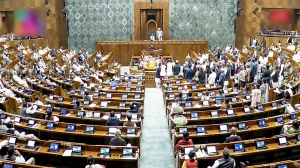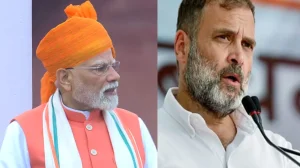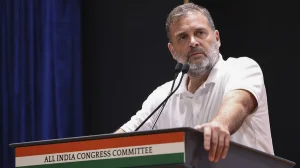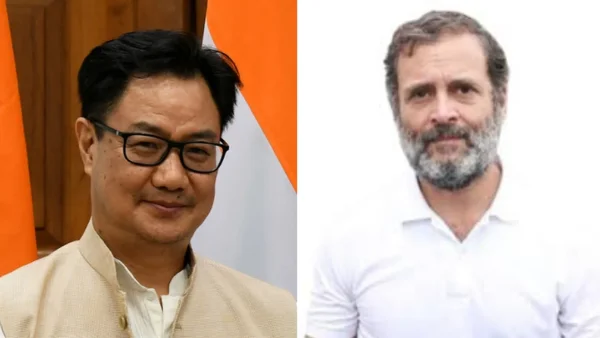
The government has given its decision not to bring a motion against LOP Rahul Gandhi. A BJP member submitted a private notice asking for an action on his alleged use of an unparliamentary expression. The Union Minister of Parliamentary Affairs, Kiren Rijju, mentioned in his comments that the speakers would deliberate as to whether the issue must be referred to the Privilege Committee or the full House.
Reviewing the incident
Rahul Gandhi has been accused of using unparliamentary expressions against the PM in the recent session of Lok Sabha. Rajya Sabha members, which called to him for stern action, have to take notice of Parliamentary propriety and privilege.
This political and, on the other hand, procedural content is as well. Opposition leaders decry the consequence as a political one, but those who say action must be taken cite parliamentary laws by rising above party ramifications.
The Statement of Rijiju and the Government’s Stand
Kiren Rijiju told journalists that the government would not move the motion because the speaker has already received notice from a private MP. The speaker would decide if the matter will be referred to the committee on privilege, the committee on ethics, or if a direct motion will be moved in the House.
He claimed that no concrete decisions had been made and that the government would follow the parliamentary process. The moment the executive stays out of the picture is when it demonstrates deference to parliamentary process only, maintaining a political pulse through party members.
Details on the private member’s substantive motion
BJP MP Nishikant Dubey brought forward an ex officio charge, which he termed a substantive motion, charging cancellation of Rahul Gandhi’s membership of the Lok Sabha and a lifetime ban on his contesting elections. In his charge, Dubey accused Rahul Gandhi of travelling to several foreign countries and offering his support to various international organizations and groups that were “anti-India.”
Dubey mentioned visits to countries such as Thailand, Vietnam, Cambodia, and exact NGOs and foundations. He posed the notice as an independent proposal seeking that the House express a decision or judgment on the matter.
Parliamentary options and procedural pathways
The ‘substantive motion’, that to say, stands alone for the House to debate and vote upon, is not the same as the privilege motion, which deals with breaches of members’ rights, or as with a referral to the ethics committee, where a breach of conduct can be examined under a code of conduct.
If referred to a committee by the Speaker, the committee could then conduct investigations and call witnesses and, if a breach is identified, recommend sanctions. Unless a committee proceeding was expedited, taking Dubey’s demands directly to the Lok Sabha could spur a debate and perhaps a vote, while misconduct committee deliberation could take weeks or even months.
Political implications and potential outcomes
By suggesting that a beautiful protest leader should take up the case, the government was also smartly avoided from appearing as if it was weaponizing procedure; but the opposition is faced with pressure even though; however, the move is illustrative of a scrutiny of the parliamentary institutions, i.e. committees’ exercise, the neutrality operated by the speaker, and the rules concerning the disqualification of members involved therein as a consequence.
The legal and political challenges could make it difficult to see drastic outcomes over the short term. For a member to be debarred at least from running in one election, if not for life, the matter must have strong backings, requiring evidence and a cross-party consensus. The notice only makes the political temperature a little warmer and may be setting the agenda for debates in upcoming sittings.
The way forward and what to look out for
One immediate question is whether the speaker passes the decision on where to send the notice to the privilege committee, ethics committee, or straight to the floor for debate. There are varied timelines for each route and other ramifications.
The respondent parties obviously needed to wait and watch how their party’s move unfolded; whether the Speaker would decide if the matter fell under the procedure or would go into full confrontation on the floor of the House, which would affect both the legislative work of the committees and the political narrative.