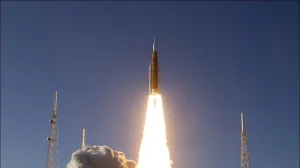
NASA and SpaceX have set a Crew-12 launch for the International Space Station on Friday, 13th February, for what will serve as an important crew rotation to bring the orbiting laboratory back to full crew capacity. With the astronauts aboard, SpaceX’s Crew Dragon Freedom on a Falcon 9 is all prepared for liftoff at 5:15 a.m. EST from the state of Florida. Docking is expected for Saturday afternoon.
Launch timeline and how to watch
The Crew-12 launch window is due to open at 5:15 a.m. EST on Friday, 13 Feb., from Space Launch Complex 40 at Cape Canaveral Space Force Station. Liftoff had the formal go from the joint NASA and SpaceX teams after a final weather briefing; all console operators took their places and were flight controller-ready ahead of countdown procedures.
Live launch coverage will begin at 3:15 a.m. EST on NASA+ Friday and shall provide prelaunch updates in discussion. Docking with the International Space Station is now arranged to occur at 3:15 p.m. EST Saturday, the 14th of February with coverage starting at 1:15 p.m. EST. During the mission, viewers can expect to hear in-orbit voice loops and space vehicle telemetry documentation as well as have a chance to witness the initial views of the arrival.
Weather at the beginning of the week did not favor NASA for the first two launch attempts. However, teams were able to take advantage of the downtime to perfect their procedures and go over the vehicle data. In addition, program managers commented on how crew training was the gating item in the schedule even while the rocket and spacecraft were slightly ahead of the timeline.
The Commission of 12 Astronauts and the International Partnership.
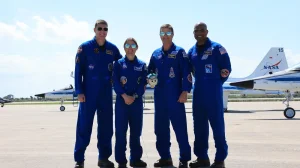
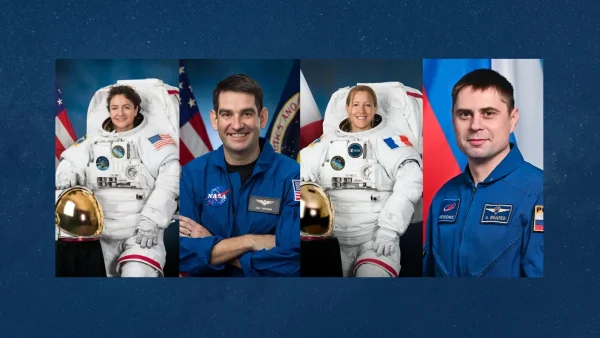
The four astronauts on this mission are Jessica Meir and Jack Hathaway of NASA, Sophie Adenot of the European Space Agency, and Andrey Fedyaev of Roscosmos. This quartet symbolizes the great outlook that is created through established international cooperation of what remains to be a clear human presence aboard the ISS in the outer limits of planet Earth.
The Twelve Crew will be absorbed by the standing Crew onboard Expedition and raise the total occupant count to seven for at least maintenance, science throughput, and spacewalk readiness. While the return of the expedition prior to Crew-12 was practical and explained, the Expedition-12 crew will not be able to properly hand over tasks. In-flight notes were exchanged ensuring a smooth startup for procedures and experiments once Crew-12 was on board.
A timely event in the ISS Operational Plan
The ISS has been functioning under limited staff for the past few weeks, slowing down the experiments and daily operational requirements. Basically, this scenario is unfavorable-NASA genuinely prefers a crew changeover for handing down lessons learned, maintenance transiting, and accelerating science.
NASA fueled the precursory activity of Crew-12 with three delicate determinants: vehicle readiness, ground systems availability, and astronaut availability for training. One aspect consistent during any human spaceflight mission is first readying the crew-just as important as the spacecraft. What this results in is a launch date with restored full staffing but respecting buffers for safety.
Another element pushed by benefits of research is resource utilization. With the station hosting seven crew members, there is greater capability for a denser schedule of scientific research and educational technology-some of which require uninterrupted data collection for limited-time investigations.
Scientific priorities of Crew-12
During roughly eight months aboard the station, Crew-12 will conduct a broad range of studies that promise to offer some benefits for exploration and others for life on Earth in general. Some of the studies are of direct importance for the imminently planned Moon and Mars trips and will lead many things from human physiology to medical logistics and autonomous systems on their behavior after being separated from Earth.
The subjects under the focal investigation include the bacteria that cause pneumonia, work highly relevant to the future methods of therapy and antimicrobial strategies. Typography Intravenous Fluid Generation whenever needed: the opportunity will eliminate the mass and shelf-life constraints for medical support in deep space.
During their stay, the astronauts will conduct ultrasound scans and other experiments to study the influence of microgravity on circulation in order to quantify changes in blood flow and vascular health. It is deemed crucial to comprehend these changes prior to conducting long-duration missions under varying gravity scenarios.
Areas of health, fluids, plants, human performance
Automated plant health monitoring is meant to improve the resilience of crops grown in space with experiments on plant interactions with nitrogen-fixing microbes. These investigations will also support inland mission possibilities where food production provides an advantage over risk and resupply reductions.
Crew-12 will also run a lunar simulation descent profile in order to study the impact of acute gravity shift on cognition and motor performance. These results will help in refining transition timelines, training options, and countermeasures for crews as they shift from microgravity environment to lunar and terrestrial gravity.
These two sets of studies, for medical and agricultural uses here on Earth, are together constituting the building of a playbook for sustainable exploration.
Spacecraft, launch site, and reuse profile
SpaceX’s Dragon Freedom will carry Crew-12 skyward, becoming its next mission to prove how highly reusable the capsule truly can be. Freedom’s flight history includes Crew-4 and Crew-9 missions for NASA and two private astronaut flights, Axiom Mission 2 and Axiom Mission 3. With Crew-12, the spacecraft was ready to roll again with a quick refurbishment ranging from regular life support checks to control and safety checks.
The Falcon 9 will launch from SLC-40, a multi-purpose launch pad that now hosts both cargo and crewed missions. After stage separation, the booster is going to target a drone-ship landing, with the goal of offering high-speed support for future launches. Inexpensive launches and the higher frequency of flight across NASA’s Commercial Crew Program are still the backbone of their program objectives.
Launching procedures involve familiar steps: a very brief chase into orbit followed by phasing burns to align with the ISS, then safely entering close approach to the space station within the scope of NASA and SpaceX shared safety oversight.
Docking, handshakes, and duration of the mission
Following one hour and fifteen minutes after docking-these shuttle slides home about 15:19 EST on Saturday-the crew will conduct pressurization and leak checks before they can finally crack the hatch open. They can finally move on to doing a brief and welcome ceremony to start this space portion of the crew’s task. In the first days come an orientation to their new home, transferring cargo, and reviving investigations put on standby.
With the crew comprising seven people, the mission operations will be worked at full science mode. Regular maintenance, Traverse Preparation likely spacewalks, will be interspersed with a steady diet of technology demonstrations to assist in space exploration programs. Following the eight month residency period of Crew-12, plans for a bridge between the two missions shall ensure the mansion is habitable throughout the stay of the new log-crews.
For viewers and spaceflight followers, this mission represents an established rhythm that leads to commercial vehicles and international crews. This-intersects with a laboratory that has driven the frontier farther and farther. On the occasion, as Crew-12 travels to the ISS, it shall serve to establish an influential phase in research and operation from low-earth orbit to future pathways toward the Moon and Mars.