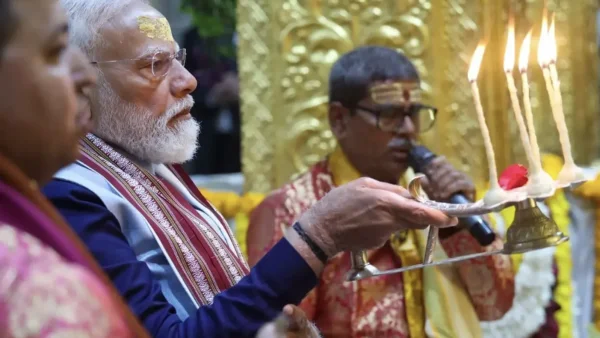
On Sunday, as part of the four-day Somnath Swabhiman Parv – marking 1,000 years since the first known attack on the temple in 1026 – the Prime Minister did puja at the Shree Somnath Mandir and performed ‘Abhishek’. The ceremony showed that worship goes on, and that the public remembers.
PM Modi’s Rituals and Abhishek
At the temple, the Prime Minister did the Shodashopachar Puja, in the Vedic order of steps that is set out. He poured holy water on the Shivling, gave flowers, incense and lamps, and listened to learned priests as they chanted. The ritual used verses from the Shukla Yajurveda – especially the Rudrashtadhyayi – and ended with Aarti and blessings.
Religious people who study the scriptures said the Rudra Abhishek is very lucky, and is linked to spiritual cleaning and peace. Priests said that the Prime Minister was involved in the whole ceremonial order, from asking Lord Shiva for help to finally giving what he did to the god. He then asked for Lord Shiva’s and the attending acharyas’ blessings.
After the worship, the Prime Minister greeted religious leaders, holy people and followers who had come to the shrine. Earlier that day he had put flowers on the statue of Veer Hamirji Gohil – who gave his life defending Somnath in 1299 – and on Sardar Vallabhbhai Patel, who worked to have the temple rebuilt in the 20th century.
Shaurya Yatra and Public Participation
PM Modi also was in the Shaurya Yatra, a show of a procession that brings to mind courage and giving up one’s life. He stood in an open car decorated with flowers, with the Chief Minister and Deputy Chief Minister of Gujarat, and greeted the people and blew a conch as they went along the route. The procession was meant to bring back to mind how the people as a whole had shown they would last.
Before the yatra, 108 horses from the Gujarat Police Mounted Unit came to take part in the ceremony, giving the event a ceremonial rhythm. The procession was more than a show: it was the public remembering the work of the people and institutions that had kept Somnath going through the centuries.
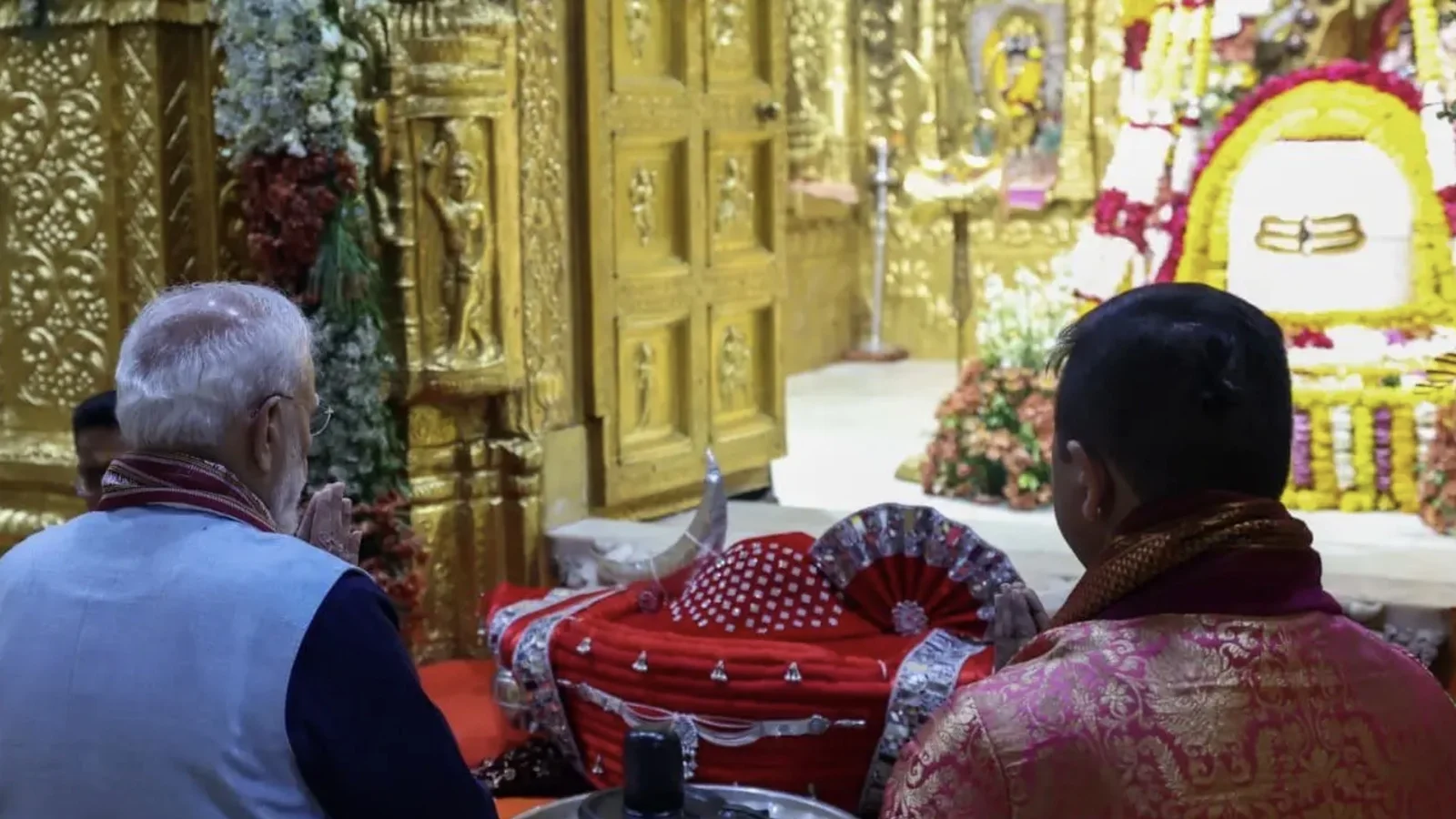
Somnath Swabhiman Parv: Historical Context
Somnath Swabhiman Parv, from January 8 to 11, 2026, marks one thousand years since Mahmud of Ghazni attacked in 1026, which started a long history of ruin and rebuilding. The temple stayed in the public mind as a real sign of belief, who people were and the pride of civilisation, getting through troubles and being rebuilt through the ages.
The modern getting back of Somnath goes back to Sardar Vallabhbhai Patel’s visit to the ruins in 1947, when he promised to rebuild the temple. That rebuilding by the public finished with the present temple being made holy on May 11, 1951 – an event that in 2026 will be its 75th anniversary. The rebuilt shrine is a sign of the resolve of all the people.
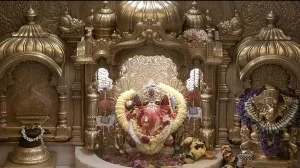
The temple, thought to be the first of the 12 Aadi Jyotirlingas, rises by the Arabian Sea and has a 150-foot shikhar on top. Its building and being by the sea make the place’s symbolic meaning stronger, and draw people who go on holy journeys, historians and people interested in culture going on.
People who study politics and culture note that the Prime Minister’s public worship makes stronger wider ideas of what has been passed down, national identity and what is said in policy about civilisation and how things go on. The ceremony put together religious practice with public signs, showing both personal belief and a political-artistic message about how people remember things as a whole.
As Somnath Swabhiman Parv came to an end, the rituals, respect shown and the Shaurya Yatra together said the same thing again and again: Somnath lasts. Pictures and accounts of the ceremonies went around on social media, speaking to many who see the temple as a sign of belief and how things last in India’s cultural story.