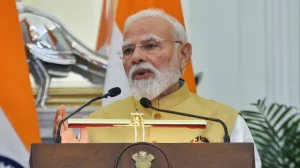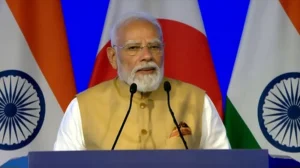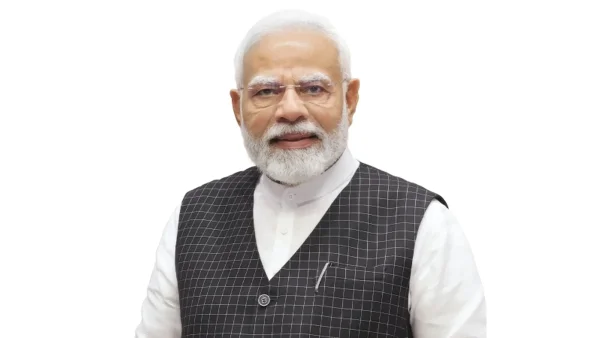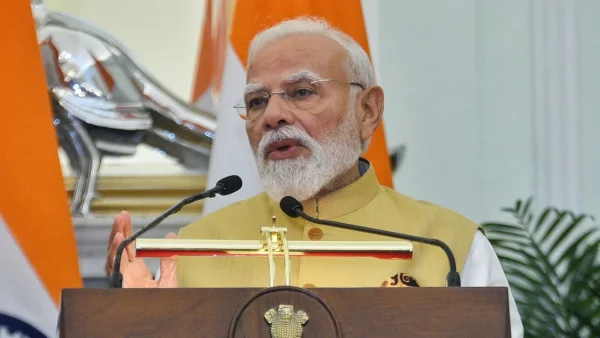
Modi lamented that the slogans that were raised in his name that reflected deep animosity were taken as if they ‘kabr ka khuda’ remark, which in effect was undoubtedly targeted towards the ladies of such an abused person present in the parliament. Yesterday’s speech was rather unusually sharp and he criticised the Congress for tearing the poor apart after several decades of rule. He used the old ‘garibi hatao’ slogan to show that there is a difference between commitment and implementation. The remark further emphasized their policy of striking and then comparing it with the performance of the state.
Modi also slammed the Trinamool Congress faction for being ‘pro-infiltration’. He said this would significantly water down employment for nationals and Adivasi land rights.
He in likening the advanced world suggested that while others economies of the world a dealing with illegal migrants effectively, aye appear to encourage such practices.’
Among others, today we would like to touch upon some internal party issues and evaluate how they might possibly hurt the community.
The very kernel of the argument is the most recent episode of Rahul Gandhi with the sitting Member of Parliament from Bittu constituency. ‘Rawal is a border; Bittu is a traitor’. Once again, these words are at the time of the current change are said in regard to the Sikh community, said Modi. ‘If my memory serves me right, I am not aware of any personal rifts within the Congress party that were so severe as to make such kind of insults except for the situation which is always uncomfortable to address,’ and remarked that these words that are always used to express an internal political conflict and pressure are positional.
The statement did not go well with the Sikh community leaders and such unity groups who accused the former ruling party members of catalyzing disinterestless claims. They posed defaming of the Congress party president without Bittu experiencing abuse. Before the 2024 General Elections Bittu had left the Congress Party and associated his conduct to the history as well as grievances of the community. On their part, the Congress figures continued to support their leader while maintaining that it is a question of the constriction of the voice of the opposition in the Parliament.
The current face-off took place against the backdrop of wider protests that stemmed from the suspension of opposition members during the Budget Session. The environment was full of suspicions, being worsened by protests , sloganeering and walkouts briskly dominated the discussions.
Even with the frequent interruptions, Modi focused on the growth narrative of the economy. He chronicled the history of the country from being termed as the ‘fragile five’ to what he feels is the track towards attainment of the third largest economy of the globe. Solid momentum with low levels of core inflation rates, according to him, signposted strength.
He advocated for India’s place in the developing world, alleging that it is a new system evolving where India is the ‘Vishwa Mitra’, ‘Vishwa Bandhu’. Such a presentation had India not only winning friends in the developing world but in some strategic circles as the personification of reliability.
Modi also addressed the issue of trade by referring to the JJAA, including its ongoing trade negotiations and progress made with the European Union, the United States, and other major economies. Speaking of one of the negotiations with the European Union as the ‘mother of all deals’, Modi prescribed that these types of economic partnerships were not signed in the past because India lacked the requisite credibility.
Additionally, Modi noted that Indian’s youthful demographics as well as the deep talent pool were strengths that a few nations in the world would boast of. In contrast, considering that the Western nations were aging, he considered the Indian workforce as providing stimulus to investment and innovation. And the desire is there such that he described it as the ideal, ‘Viksit Bharat’ meaning well developed India with sustaining growth and opportunity for everyone.
The Meaning of Stalemate and Stakes in Policy
While the Prime Minister intervened amid a heated debate, the Opposition accused the government of stifling criticisms and urged the leader of the Opposition in the Lok Sabha to be given the floor. Mr. Modi, after a ‘dictatorship’ remark, requested obliquely for Mr. Kharge to remain seated given seniority and that he should only chant slogans, thereby further incurring tempers.
He too, Mr Mallikarjun Kharge, does not expect a lobby to emerge to say that in performing their duties as civil servants, civil servants should be coerced into performing one function or the other in another house Mother of all parliaments
[USA]
Indian Association of the recognition of understatement is not dictated to under normal procedures not antiseptic procedures.”
The Opposition, in a way, demands counter measures in the form of the protection of the parliamentary norms, transparency, and accountability as a matter of contempt. The government accuses the blocking tactics of putting the tasks and interest of the government and the nation as a whole in jeopardy.
Such disputes have included car monies, nursing remedies for appropriate distribution, some felled at particular times of important speeches, and a second phase where the argument extends to who kills deliberative democracy. The so called clash in procedures has acquired in fact all respects, characteristics of a conflict concerning discrepancies around power, protest and change.
The Implications of the Conflict for the Budget Session
The government is determined to marvel at the objectives. It aspires to policy sameness, development, international bandwagon. Fiscal growth and contraction, inflation, creation of jobs, infrastructure investment are to be the primary attention and penned policies. Given the times, India’s shapes visa the glob south. There is some good news on Nama Food Security Pact for India.
However, the Opposition will be more inclined to questions of parliamentary attendances, institutional practice and general orientations. One may expect particular emphasis on jobless growth, inflationary pressures and communal discord…’.
The centre of the debate will be shifted off and the heated ‘traitor’ row together with the feelings prevailing in different communities will most probably engender a situation for further mobilization outside parliament.
As to determination how much the session will go back to the usual normal pace of legislation, room should be given for opposition to speak and what actions are taken for disciplining. Presently, it seems both sides are stuck with the present more or less heated debate which goes about perceptions and reserving their position\reputation standard.
Readers Attention / Readers / Viewers and Topics .
Commons themes raised during the Prime Minister of India’s speech in the Rajya Sabha, the Presentation of the Motion of Thanks, the heated walkout between the ruling coalition and the Opposition on farmer and agricultural issues, the apparent inability of Rahul Gandhi to accept whosoever is labelled a traitor, statement from the Sikh community, the silence of TMC and consistently alleging infiltrator claims, the Summit’s lessons learned, visions for saving, and end of retreat climate talks, including the Annual Negotiation session over by Bridging Concerns in Civil Society Dialogue In this challenging time, an extension to the inverting of the traditional strata in the world history also includes Geo. It refers to the process of the world where the role of Western industrialized nations shifts and moves into one that is instructive or discursive on almost all issues. The themes in focus also include the dramatic restructuring of orientalist knowledge production. India and its people are the constant presence. Despite everything that is visible, certain transitions are worth staying high although others no doubt bring frustrations that require demystification and resolution.
Cities in India with extended central areas are handicapped most by urban sprawl. Consequently, what passes for public transport systems in these suburban areas has no clean water being born there, thereby causing many to grapple with a fatality.
In addition to this, some other settlements also have eateries, bars and restaurants, a calming effect as well as other services that are much needed in urban areas.
Therefore, problems with the rise of dysfunctional merchandizes made their way in the cities and if some of the retailing services and goods were not served or made available in the cities at all, there was no other viable option than to go to town.
Instead, there has to be some concentration of services and goods in the town, and so in that respect many of these suburbs were really semi-urban compared to full urban areas.