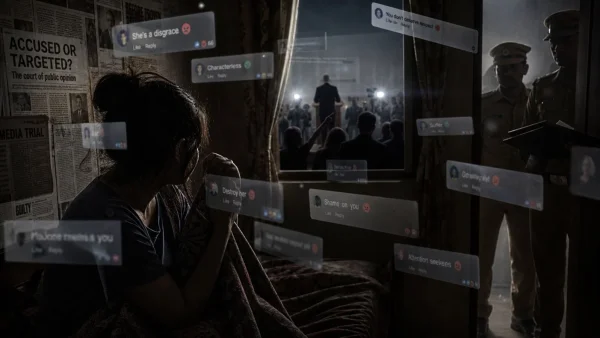
A fresh debate has emerged over the treatment of a 15-year-old girl who has found herself at the center of a national controversy. While Prime Minister Narendra Modi publicly chose to forgive the children involved in the incident and has since resumed his public engagements, including sharing social media content, critics argue that the young girl continues to bear the brunt of the fallout.
The episode has reignited discussions about online harassment, the responsibility of political leaders, and the protection of minors caught in high-profile controversies.
Critics Say the Girl Has Been Left to Face the Consequences
According to critics and several social media users, the Prime Minister’s decision to “forgive” the children may have helped lower the political temperature, but it has done little to shield the teenage girl from relentless abuse online.
They allege that the girl has become the target of coordinated trolling, with abusive comments and personal attacks continuing across multiple social media platforms.
For a 15-year-old, what began as a public incident has reportedly turned into an ongoing ordeal in the digital world.
Concerns Over Police Action
Critics have also questioned the conduct of the police, alleging that instead of ensuring the minor’s protection, authorities have subjected her to unnecessary pressure and questioning.
These allegations have not been independently verified, and the police have not publicly responded to the specific claims.
If accurate, the situation raises broader concerns about how law enforcement should handle cases involving minors who suddenly find themselves at the center of national attention.
The Internet Never Forgets—Unfortunately
Social media has a remarkable memory when it comes to controversy.
Today’s trending topic often becomes tomorrow’s meme, but for the individuals involved—especially children—the consequences can last far longer than a news cycle.
While politicians move on to the next rally, speech, or reel, those caught in the spotlight may continue to deal with harassment, threats, and unwanted attention.
The internet, after all, rarely asks for someone’s age before deciding to become a courtroom.
The Debate Beyond Politics
The controversy has evolved beyond political narratives and now raises fundamental questions:
Should minors involved in public incidents be shielded from online abuse?
Do public figures have a responsibility to appeal for restraint among their supporters?
Should social media platforms act more swiftly against targeted harassment of children?
How should police balance investigation with the welfare of minors?
These questions extend beyond any one political party or individual.
Children Should Not Become Political Battlegrounds
Regardless of political affiliation, child rights advocates argue that minors deserve protection from intimidation, online abuse, and public vilification.
Disagreements over politics are part of a democracy.
Turning a child into the center of a digital mob is not.
Conclusion
The controversy serves as a reminder that while political narratives often move quickly, the human impact can linger long after headlines fade.
Whether the allegations regarding online abuse and police conduct are substantiated remains a matter for authorities to examine. However, one principle is difficult to dispute: children should be protected from harassment, regardless of the political circumstances surrounding them.
In a democracy, criticism of leaders is legitimate, political disagreements are inevitable, but the safety and dignity of minors should remain above partisan battles.