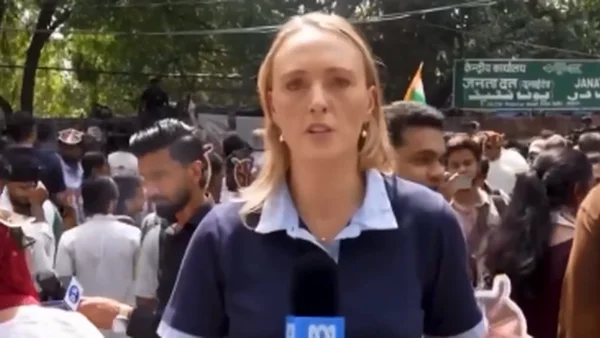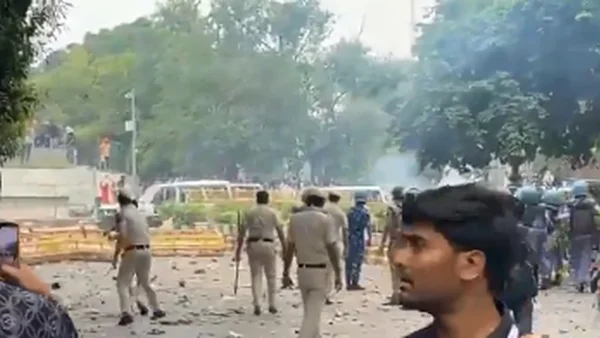
What began as a protest in the national capital soon escalated into one of the day’s biggest talking points, with reports of lathi-charge, tear gas deployment, stone-pelting, and Metro service disruptions dominating headlines and social media feeds.
Videos from the protest site spread rapidly online, showing chaotic scenes as demonstrators and security personnel confronted one another. While many clips have gone viral, not every aspect of what they depict has been independently verified, making official investigations and statements important for establishing the full sequence of events.
Viral Footage Sparks Debate Over Police Conduct
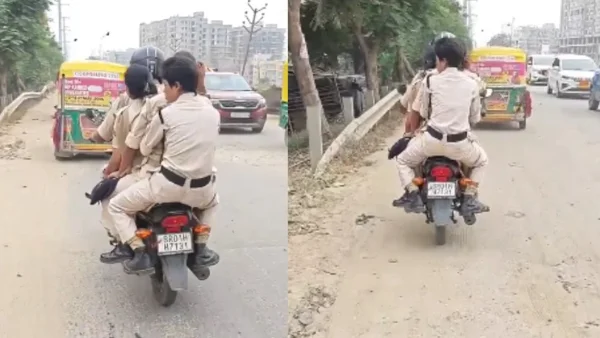
Among the most widely shared clips are videos that social media users claim show police personnel engaging in stone-pelting during the unrest.
The footage has triggered widespread debate, with many demanding a transparent inquiry into what happened on the ground.
Questions Being Raised
The viral videos have led many to ask:
What exactly unfolded during the protest?
What was the sequence of events that led to the clashes?
Were standard crowd-control procedures followed?
Will authorities release a detailed account or investigation findings?
At the time of writing, these questions remain central to the public discussion.
Protest or Public Order? The Competing Narratives
Large demonstrations often produce competing accounts of the same event.
Some participants allege excessive use of force by authorities, while officials may emphasize the need to maintain law and order. Viral videos can capture important moments, but short clips may not show the full context before or after an incident.
For that reason, a complete understanding typically depends on official records, eyewitness accounts, and independent reporting.
Why Verification Matters
In the age of instant sharing, dramatic footage can reach millions within minutes.
However, determining precisely what occurred—and who was responsible for particular actions—requires careful examination rather than relying on isolated clips alone.
Beyond the Clashes: A Test of Public Trust
The incident has reignited broader conversations about policing, the handling of public demonstrations, and communication during high-profile protests.
For many observers, the issue extends beyond one day’s events.
It raises larger questions about transparency, accountability, and the importance of timely official communication when controversial incidents occur.
Social Media Reacts
The internet responded almost immediately, with hashtags, eyewitness videos, and commentary flooding online platforms.
Some users expressed solidarity with the protesters, while others urged restraint and cautioned against reaching conclusions before all facts are established.
The intensity of the online debate reflects how quickly public opinion can form around fast-moving events.
The Bigger Picture
Delhi has witnessed large public demonstrations before, and each has underscored the challenge of balancing citizens’ right to protest with the responsibility of maintaining public order.
As more verified information becomes available, attention is likely to remain on both the conduct of the protest and the response of the authorities.
Until then, one thing is clear: the events have become not only a law-and-order story but also a public conversation about accountability, transparency, and the role of evidence in an era where viral videos often shape the first draft of public opinion.