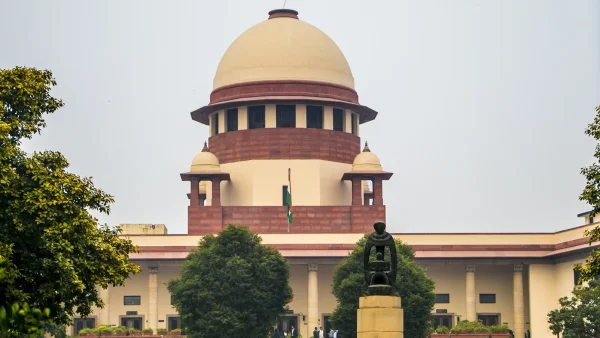
India’s Supreme Court has come down hard on the increasing habit of giving away ‘freebies’ – saying it could damage the country’s economic progress in the long run and the willingness of people to work. The court was saying this as it listened to a case from the Tamil Nadu Power Distribution Corporation Ltd, which was challenging Rule 23 of the Electricity Amendment Rules, 2024. The court wanted to know why all electricity would be given away for nothing, without checking who could really afford to pay.
The Court’s main worries about giving things away too freely
The court, with Chief Justice Surya Kant and Justices Joymalya Bagchi and Vipul M Pancholi, warned that giving too much to everyone risked being done to win votes. The judges said that help for people should go to the poor, and not pay the costs for people who are able to pay. They asked whether states were making a situation which would weaken the reasons for good financial and social policy.
The court saw this as a national problem, not one just for a particular state; it pointed out that most states already did not have enough income. It asked whether using limited funds for free things for all would mean fewer roads, hospitals, schools and other kinds of development. The court’s view was that giving things away for nothing was a policy which had big effects on the whole economy.
Good financial management and choosing between development options
The judges said that states were under financial pressure when they promised free food, bikes, electricity or direct cash payments, and did not plan their budgets well. If a large part of yearly income was put into schemes like subsidies, there could be less money for spending on building and improving things – and this would harm long-term growth.
The court also questioned whether this could go on: who would in the end pay for these costs if states continued to be in the red? The court stressed that regular subsidies needed dependable income, or governments would go into debt. This raised questions about sensible financial management, and whether it was fair to future generations.
Jobs, work and social goals
A key idea was how freebies affected people’s willingness to work and the work culture. The Chief Justice asked whether giving handouts to everyone might make people less keen to work, or make governments put less effort into creating jobs. The court urged governments to create chances for employment, rather than only giving people things in kind or money.
The judges stressed that social goals could go together with policies to help the labour market. Helping those who were in trouble, giving skills training, and investing in people would be better for those in need, and would help the economy to keep making progress. The debate in court showed that creating jobs was a better long-term option than giving regular subsidies.
The legal case about the Electricity Amendment Rules, 2024
The case brought by the Tamil Nadu power company is about Rule 23 of the Electricity Amendment Rules, 2024, and whether states can give away free electricity without financial or regulatory controls. The Supreme Court has told the central government and others about the case, and will look at whether the rule is legal, in the light of the constitution and the economy.
The court asked why the Tamil Nadu company had waited until prices were announced to offer help, and suggested that the timing and reasons might be looked at. The case is still being considered, and the court said it might give advice on how to balance social goals and regulations.
What to look for next in policy and politics
The legal case will probably start a wider debate about how much help should be given away at election time, and how it should be designed. Those who make policy may need to show how money is spent, using budget figures and who is eligible, rather than giving everything to everyone. Courts may insist on clearer differences between help for people who have suffered a loss, and giving things away to win votes.
People should watch for what the court decides, and any advice about checking who is eligible, how giving things away affects the budget, and what regulations should be used. What happens could affect how states design help programmes, give priority to creating jobs, and keep up public investment while respecting democracy.