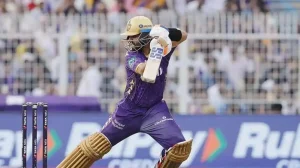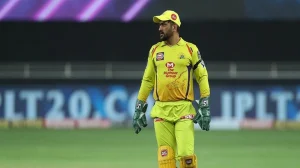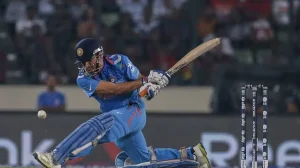
There has been a wide ranging transformation in the BCCI personnel contracts for the 2025-26 season. In this respect, the dynamics of Indian cricket have not remained untouched. This modification in the central contracts of Indian cricketers did not spare the A+ category. Instead, this has been wrapped up. Grade B has been reassigned to an enlarged base (please specify) and, in a surprising move, cricketers who used to be in A+ category such as Virat Kohli and Rohit Sharma have been moved to Grade B.
A reduction in elite class, policy modification and demotions
At this time, the BCCI has dismantled the classification system to three – Grade A, A, and C and an A+ category which was a premium category, has been axed. This new fee structure is effective for the term between 1st October 2025 till 30th September 2026.
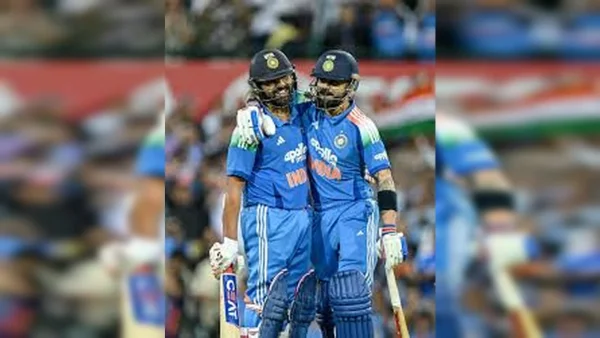
Virat Kohli and Rohit Sharma who were the main faces of A+ last year will now be called Grade B this year having withdrawn from two forms of the game. The two stopped playing T20Is after winning the 2024 World Cup and quitted Test cricket early 2025 leaving only ODIs. The refresh of the structure is specifically designed to cater for individuals who are multi-format players.
New Grade A Core: Gill, Bumrah, Jadeja
In the highest performers category, there are only three exceptional player that is Shubman Gill, Jasprit Bumrah, and Ravindra Jadeja. The entry of this section embodies the results-oriented nature in all formats and positions.
Gill has been made captain for India in both Tests and ODIs but also had the T20I vice-captaincy before he was surprisingly left out of the 2026 T20 World Cup squad. His elevation to the top tier of the cricketers contracting explains the standing the captain maintains and the output of colours of red and white never misused.
Bumrah remains the best in his role and perhaps the best in Indian bowling. even though he changes formats repeatedly to protect his body, his performance across series stands tall. He has not played an ODI since the 2023 World Cup and is only expected to halt T20I after the on-going, before beginning ODIs in the continuing season and upto 2027.
Jadeja, who has a liking for the longer format and 50-over game, has played more Test cricket in this camp since the retirements of Rohit and Kohli. It is from their ability to face unique situations and provide effective solutions that makes a contribution to the Indian team to win and where they should be even as one-day numbers remain a strain.
Grade B: Senior Stalwart Specialists
Grade B has clarity in the players who warrant experience and the ones who handle contests amid the white ball. They include Rohit Sharma and Virat Kohli, Suryakumar Yadav the captain in Twenty20 matches, the spin all-rounder Washington Sundar and the wicket-keeper-batsman K. L. Rahul.
The fast bowling group is lead by Mohammed Siraj, and the position of seam-bowling all-rounder is played by Hardik Pandya. In Grade B is batsman Rishabh Pant who was announced to be India’s Test vice-captain in 2025 and performed the role of a captain against South Africa despite playing only a few ODIs and that too at irregular intervals since 2024.
The group is supplemented by wrist-spinner Kuldeep Yadav, one day and test opening batsman Yashasvi Jaiswal and Shreyas Iyer respectively. Although suffering from a back problem, Iyer remains a vital cog in the team structure, making appearances frequently however, for the team as the one day international vice-captain. The class accentuates individuals of expertise who deliver wherever they are fit to play.
Grade C: The Emerging Core and Next-Gen Depth
Grade C leaves formal mailing and functionally unauthorized selection to India: They praise Axar Patel, Tilak Varma, Rinku Singh, Shivam Dube, Sanju Samson, Arshdeep Singh, Prasidh Krishna, Akash Deep, Dhruv Jurel, Harshit Rana, Varun Chakravarthy, Nitish Kumar Reddy, Abhishek Sharma, Sai Sudharsan, Ravi Bishnoi and Ruturaj Gaikwad.
In this escape, the spate rewards public consistency, the rewards(s) IPL transaction and situation appropriateness. It also promotes selection cooperation strategies as it allows the team to have different specialists during the phase of the contracts.
Notable Omissions and Selection Signals
Two large names have been left out in the mens list: Mohammed Shami and Ishan Kishan. With Shami not best seen in the recent plans and Kishan’s absence despite having been included in the 2026 T20 World Cup team.
Looking at all the changes, the revised contracts are geared toward being available rather than carry over and adapt to or prior positions. The removal of Tier A+ will never be restored for the following season because cross interaction and workload mix 2025-26 is the biggest demand.
Clarification: Women’s National Contracts. Probable Mount. Other Support.
Yes, the women mind like men: it does not exist. In Grade A the cricketers who are marking their territory include the flamboyant Harmanpreet Kaur, Smriti Mandhana, Jemimah Rodrigues and Deepti Sharma. Harmanpreet continues as the captain in the three formats with Mandhana as the vice captain in the three formats. Rodrigues climbs another step in the ladder after her impressive performance in 2025 Women’s ODI World Cup.
Grade B: Renuka Thakur, Shafali Verma, Richa Ghosh, Sneh Rana, Radha Yadav, Amanjot Kaur, Pratika Rawal, Kranti Gaud, Uma Chetry, Arundhati Reddy. This is a good mix covering all areas of the game like fast bowling, spin and power hitting.
Indiana’s season lists Shriya, Yastika, Harleen, Kashvi, G, Vaishnavi and Tejal (*). It heralds the attempt to go beyond the standard approach, that is, the resort to a rotation of players and a given tactical solution.
With everything that has been said, the contracts coming out of the BCCI in 2025-26 for men and women are relevant in terms of a performance-pay tactic. Even under a busier calendar, the point is clear that attempting to win matches in white ball cricket is more likely to bring success than the red-ball game and the teams will be selected commensurately on the basis of availability, strength and form.