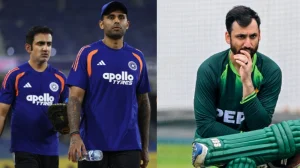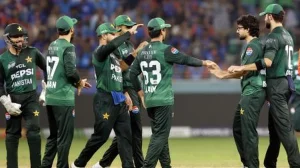
Sunil Gavaskar has contributed to the most hearted sports and got down to business as per the course in a real sense of the word and was candid in his criticism about the way the IND-PAK stands-off is being projected by what he described as ‘jaundiced’ quarters in the media pack. Although he mentioned no one by name, the voice of India gave the audience who claimed that the ICC is a ‘dragon’ armored to protect India a proper lesson about age old historical facts, circumstances and a fine cricketing example.
Gavaskar contradicts negative attitude in the context of the IND-PAK debate
In an uncompromising language, Gavaskar stated that the so-called ‘old powers’ continue to resent the fact that India has began to monopolise the cricketing affairs. He contended that there are those who would throw in the issue of ICC penalties for India for failing to go to a test before China but do not show concern regarding the different time zones, insensible security and even the institutional conduct of the ICC of that period.
He noted that India had informed the ICC that they would not be able to tour Pakistan for the Champions Trophy a long before. The meetings were then rescheduled to another venue where the fixture will be hosted in the UAE. SIMP was an intergovernmental administrative remedy that also addressed past experience and public security concerns, for instance that such rule it was prompted by the ICC’s findings about the nature of outstanding notice and therefore did not need to be implemented as the ICC had findings that approved the outdated notice processing.
Consistency versus complacency is the dilemma that Gavaskar zeroed on. In other words, whenever autonomous people have led organizations hardship came about less out of organizational and more out of personal convenience.
Hussain’s assessment of ICC’s consistency
What caused a backlash in the ICC, was a particular segment in which Nassir Hussain disapproved how ICC addressed a protest of a boycott. Hussain identified Bangladesh’s disinterest in playing due to security reasons, while also complimenting Pakistan’s mindset. He noticed the apparent difference in approaches the ICC would present to India and advised what the BCCI had therefore applied this power should take into account.
He would also reprimand the regulator for its refusal to act on a request from Bangladesh and simply relocate matches to the tournament venues. His requirement rang out from the pages: treat Bangladesh, Pakistan and India in the same way regarding events and venues and let there be order.
India’s record on neutral venues and security
Gavaskar denied the suggestion that India was a special case and had separate rules. He explained that the government of India has a long standing policy against traveling to Pakistan, which minimized the need for any special rules. This advance notice feature allowed the tournament to be played without any deviations.
He made a case for security concerns rather than recommendations for particular grounds to prevail in decisions regarding which venues should host the events. Whenever timely information is availed by the touring sides and the host government afford a way forward, the provision of neutrality becomes a reasonable recourse all within the set rules and guidelines.
The guilty of double of cricket in the history
The ex-skipper bemoaned the fact that mistreatment was also very evident in the various eras. In particular, he recalled the English team’s refusal to play in Zimbabwe during the 2003 World Cup for political reasons and still remaining in the tournament. He cited the example of Australia’s non-participation in 1996 during the tournament held in Sri Lanka due to serious security threats.
He also expressed concern on the fact that even after the completion of investigations on the attack that took place in 2009, Sri Lanka managed to play against Pakistan, whereas in some other countries like India, it was difficult to have business with Pakistan except when it was a home game.
As far as Gavaskar is concerned, however, the exception as a rule for the powerful boards is a part of the norm, as Occupational Health and Safety Science (OHSS) is often practiced whenever there is a risk of danger. He expressed apprehension that the ICC is notoriously known for camouflaging their prejudice campaign in the name of a process.
From umpiring controversies to pitch censure and voting blocs, he argued, governance inconsistencies predate India’s financial rise. To pin today’s problems solely on the BCCI, he said, is an old habit wearing new clothes.
Regarding the growworm ’bullying remark’ and its effect, this will not be the case.
Gavaskar proceeded with his speech, but returned the cricket to the conversation using the direct dry point. He praised 14-year-old Vaibhav Sooryavanshi who scored a breathtaking 175 runs off just 80 balls in the Under-19 World Cup final against England. India posted an impressive 411 and won thanks to the 100 run margin even after bowling with an impressive 311 England’s spirited score.
Referring to the game as ‘real assault’ on the pitch, he understood that the manner of winning this game would be dependent upon skill, courage, and the scoreboard at the end of the game. This was a dig at him and most of the other critics who he thinks confuse healthy competition with peer pressure in decision making.
The undercurrent was simple: let the acts determine the course taken and not necessarily utterances.
What this interaction portends for Asia Cricket Confederation and Indian Cricket Association especially
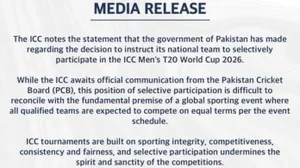
Despite all the noise and efforts, that is what this matter comes down to: so far, there has not been a formal set of guidelines regulating requests from the countries for changes of the location, their withdrawals and consideration of neutral alternative venues. It cannot be that the ICC applies certain penalties to some boards continuously all year round while others are left scot free and there is nothing to reproach them for their improper actions.
The BCCI knows that power comes with weight. Definite responses and clear positions along with identification of which good cricket options are beneficial espacially can do the trick. For Pakistan and Bangladesh, reassuring processes of lodging security concerns would go a long way in accepting decisions that are not in favor of them.
With the T20 World Cup and the upcoming India-Pakistan match scheduled in the future, it is essential that there are clear and fair rules in cricket. Gavaskar’s rebuke of ‘jaundiced’ perspectives may not conclusively win the debate, but it serves to sharpen the playing field: consistency, accountability, and keeping the game above all the noise.