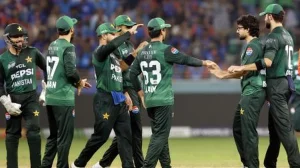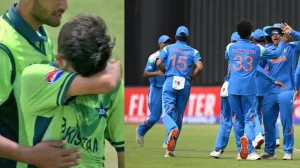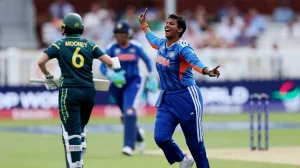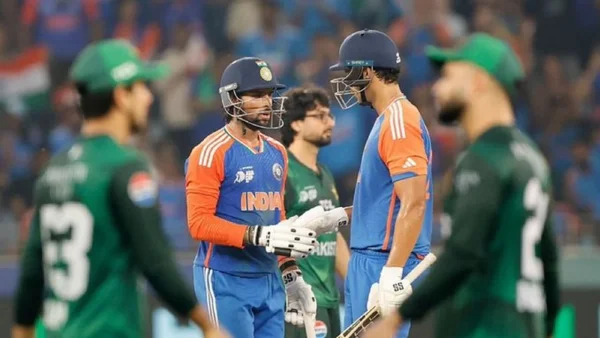
With regard to the first sentence, the ice has broken: the exhibition matches will continue. Pakistan has finally has toed the line instead of standing by its boycott talk thus making it possible to hold the World Cup T20 India vs Pakistan encounter which was supposed so many times to be played in Colombo on 15 February. Fed up with all these mind games, the stakeholders of 2026 have bitten the government bullet; not only that, but they have once again counted the match as one of the set events.
How the U-turn happened
Pakistan initiated the opponent boycott on solidarity grounds claiming if Bangladesh is not playing in India there is no way they will. This small protest, however, turned out to be more than a handful of high-level policymakers as Pakistan’s resolve got audiences because of the political significance of the India-Pakistan clash to advertisers, investors, and the general public.
The week began with a resolution in Islamabad. The Government of Pakistan issued an official note on 사자’s channel to the effect that the Pakistani national team should be present in the playing arena on the 15th day of February, 2026 for the concerned fixture against the visiting team – India. This decision was premised on upholding the ‘spirit of cricket’ and supporting the endeavour to develop the sport worldwide.
The communication explained that such a decision was occasioned by consultations with “friendly countries.” A reference was made that such a Govt direction followed a meeting with the PCB Chairman, Mohsin Naqvi in which he talked about the ICC meetings and the Bangladesh Cricket Board. In this action, Sri Lanka’s President spoke over telephone and demonstrated that problems from the region are looked east for a solution.
It was interpreted by the officials that it was the regional imperative to come together as opposed to personal hurt. That imperative is still valid; however, the very execution of the same calls for a different orientation to be attended first: fulfil the promise of attending the match, locate the match in Colombo and ensure operational continuation of the tournament.
Inside the ICC-PCB-BCB negotiations
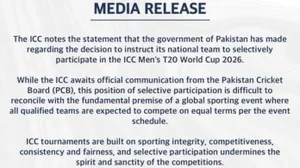
With the interests well-evaluated, the diplomatic fronts have been predominant. An instance was the high level representation by ICC representatives along with the BCB President Aminul Islam flew to Lahore to hold a meeting with the PCB authorities in person. The ICC also demonstrated a positive ‘united, committed and purposeful’ attitude, and stated that all the members should conform to the terms of participation in the ICC events.
A point of departure was reached owing to the reconciliation formula for Bangladesh. Therefore, the ICC declared that there was nothing to worry about BCB choking either financially, in terms of gameplay or administrative wise with regard to the non-participation in the 2026 event. This again does not stop the board applying to the Dispute Resolution Committee in conformity to the stipulated regulations as they are.
Significantly, over the years, their ICC noted extended backing to the country of Bangladesh in terms of cricket, a place where sports they said is their religion. To this end, Bangladesh will stage an ICC event during the 2028 and 2031 period, subject to the normal procedures. In this championship, Scotland came into the picture instead of Bangladesh to sustain strong levels of competitiveness.
Islam lauded Pakistan’s efforts and asked the PCB to organize the India match ‘for the sake of the common cricket interests.’ The atmosphere at the table was changed from opposition to cooperation and prepared the ground for Pakistan’s return to the original plan.
The considerations on finance and oversight
Beyond the public view, the norms and the cut-off balance mattered. ICC showed the financial implications if Pakistan were to walk away at the last minute and cite Force Majeure. Despite the fact that the clause ostensibly is for unforeseen circumstances that make it impossible to perform contractual obligations, utilizing the clause in the context of the biggest cricket match was also seen as having potential risks to all the parties.
The game of India vs Pakistan is the most lucrative part of the tournament – T20 World Cup. It brings elevation of viewership, availability of advertising space for promotion at premium cost and high importance sponsorship agreements. The cancellation would have an adverse consequence even for the broadcaster commitments, the hosting agreements and the tournament wide commercial guarantees.
For these very reasons, there are rules governing participation. These bind individuals to the asset, respect fairness, and protect shareholders from unnecessary surprises. Through yet another clarity especially in regard to the ICC, PCB and BCB did not provide for one risk to lead to another one over contracts but refocused on cricket.
For the tournament and the fans
Comes even as the specific date of the event nears. The Group A match in Colombo remains, however, when weighed against other, equally important fixtures, a crucial part of the plan, which is tournament’s rhythm and fairness. Logisticians in Sri Lanka may now plan all match operations of any given day with much serenity.
It will be a thrilling and well-organised atmosphere at the location. The way the safety measures, family entertainment and the transport infrastructures provided shall be handled shall be entirely different, bearing in mind the magnetism of the match. The tickets will be highly sought, and the overall audience will grow on both traditional and online platforms.
This also means indirectly regulates the cricket practice calendar being too tight. As long as major cookout is maintained, the repeating advertisers are able to promote their brands, the media continues with the publication of specific program and the viewers can enjoy the emotion that only an India-Pakistan match can bring. The repercussions cover more than that single night in Colombo.
Form, stakes, and strategy within a competitive context.
In Pakistan’s tactical planning, everything has order: to focus only on the things that can be controlled. As stated by a member of the team fast bowler Salman Mirza, “We will compete against or with anyone who comes our way, being their level or any standard set by the government.” Within the near future, the attention of Pakistan’s team shall be on the immediate group; as for the long term, there is the showdown on February 15th.
But the concealed battle is one of numbers. Qualitatively, the differences will revolve around strategic tenets. Evenings in Colombo are definitely inclined to high humidity for the most parts, yet with a late dew factor. Captains may regard the decision of batting first against chasing under lights differently. There is not much lost if missed ball does not swing the hammer, thus the capacity to avoid damage during the powerplay and the spinning of over’s in the middle are both okay.
India has excellent top and wrist-spinners who bank on the availability of grip, whereas in Pakistan most matches are still won in the last few balls with the sheer force of their bowlers. Additionally, it is worth noting that the degree of tension on the field or the relative game ‘toughness’ will come into play, which is often not the case only in the build up to a major two-over cricket competition.
Earlier lack of momentum inside the group may as well define any prospects in terms of resources’ allocation in the future. Teams struggle to be the most adaptable to the very surface requirements at each given opportunity during a course of tournament and this criterion may give many teams an edge in Colombo. Extra selection considerations include the depth on the bench, players who hit the ball to lead from about middle overs and those who come in to bat towards the end of the innings.
The Impact of Regional Diplomacy and Soft Power of Cricket
The host country’s inclusion in the formula of the Kampala resolution has brought in diplomacy. The interaction between the Pakistan’s Prime Minister and the Sri Lanka’s Head of State pointed to the considerable explanatory work covering reasons for the necessity of the smooth and safe execution of the tournament. The theme was further endorsed through the letters of endorsement received from the UAE and other members.
It became clear that Pakistan supports Bangladesh as much as it appreciates the country’s efforts, despite the renewed involvement in ICC telecons. In such cases, elevated facilitation is increasingly preferred over coercion which helps cool down the tensions. Consequently, the parties have managed to avoid often binary outcomes that can be devastating in their long-lasting effects by rather giving prominence to interests and future video graphics preparations For the Language of the Summer is Capetonian: Cultural and Identity Competence of English Speaking Africans with Reference to Two Bored Cities and the United States.
Pakistan will play against India and all is right in the world. The deep-divide between the nations don’t mean they won’t agree to stop do anything to intertwine their paths. But the point of rivalry in Colombo will take on a certain meaning – not only of sports rivalry.
Everything has been changed, the line is there, everything is restored and people’s anticipation is augmented over the week. The week is over regarding the sensational news of the world and the attention which was directed to the off-stage is coming back to the stage. About the countries’ first encounter, where India and Pakistan will confront for the forthcoming edition of the Twenty20 World Cup in Sri Lanka, February 15 marks significant – almost the entire world is waiting to be an audience of the match.