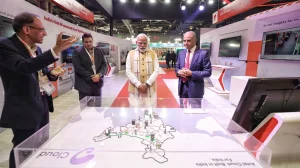
At the AI Impact Summit 2026, India presented a wide range of new artificial intelligence and digital technologies, showing its effort to update the country’s public distribution system. The show’s area, 'AI-Empowered Innovations for Public Distribution’, was at Bharat Mandapam and featured technologies designed to make the food supply chain more efficient, open, and focused on the people it serves.
Working together and what the country wants to do
The Department of Food and Public Distribution arranged the area with help from the World Food Programme. Leading people in the government made it very clear that the goal was to go past just being open about what’s happening, to being able to react quickly by putting AI into all parts of the public distribution process. Officials said that AI could be a single power for buying, storing, moving, giving out, and paying out subsidies. Putting all these things together helps make quicker choices and creates greater responsibility, and helps the almost 800 million people who get help each month.
New ideas that are changing how things work
The show had grain ATMs – machines that give out what people are allowed, using fingerprints to prove who they are – which offer quick, correct delivery without any paper. People showing the systems explained that having everything be digital lowers losses and speeds up how quickly people who need help can get their food.
Clever warehouse systems used sensors and worked out what was likely to happen, to cut down on food being wasted and to make the best use of where food was stored. Live shows had automatic grain testers for checking quality when food was bought, and AI robots showing how things could be automated in warehouses and in getting food to people.
Planning routes, lowering costs, and being environmentally friendly
Anna Chakra, a tool to work out the best routes using AI, was shown to make transport plans better, lower how much things cost to run, and lower carbon emissions. Officials said that better routes directly meant using less fuel and getting deliveries there on time.
People at the summit could see how looking at data could make the carbon footprint of distribution smaller, while making sure resources got to the final places on schedule. The technology promises to save money and help the environment – a very strong thing for big government programs.
Digital systems making a single strong base
Important systems on show included SMART PDS, a single national digital base that puts together ration card control, buying, storing, transport, fingerprint proving of identity, and dealing with complaints. Dashboards that changed in real time gave administrators ways to watch things and make choices.
Depot Darpan gave clever watching of warehouses, looking at buildings, cleanliness, and safety of storage. Systems that worked with these – SCAN for clever processing of documents and ASHA for handling complaints in many languages – showed effort to make things easy for people to use and good for administration.
Increasing effect and how things are governed
Officials and partners stressed that first results already showed subsidies being paid more quickly and quicker reactions to what was happening. But making these tools work on a bigger scale raises questions about policy around how data is governed, how well different systems can work together, and how ready the workforce is – all of which need to be dealt with as the tools are put in place.
A ‘hackathon’ – a competition to write computer code – started at the summit, asking new companies to deal with gaps in nutrition at the last stage, and a number of new firms showed pilot projects. Working with agencies from many countries was seen as important for building ability, making standards, and making expansion based on proof.
People of the public and what comes next
The area was open to the public from February 17 to 19 at Bharat Mandapam, giving live shows and tours for those involved. The show for the public allowed government officials, people who know about technology, and the public to work with the systems directly and give their ideas.
In the future, the people in charge plan to put things in place in steps, to keep working with groups that help development, and to regularly look at what happens. The summit showed a sensible approach: put AI in place where it gives results that can be measured, manage risks by governing, and give priority to services that really make food security and delivery better for millions.