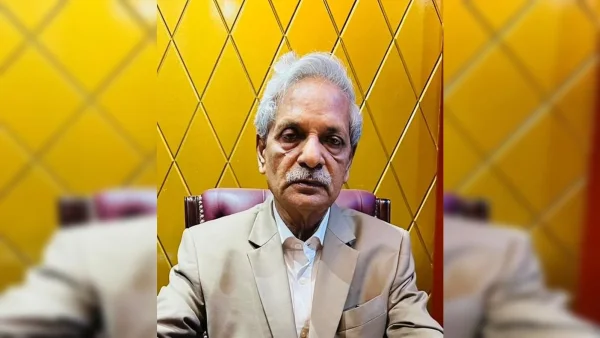
Nitai Roy Chowdhury became a prominent person when Tarique Rahman chose his new government – Chowdhury was the only Hindu appointed to be a minister. An experienced BNP politician and attorney, Chowdhury’s wins in voting, work with party planning, and history of being in public service make him a main person to speak for minorities in Bangladesh’s government.
Political work and what he does in the party
Chowdhury is a Vice Chairman of the Bangladesh Nationalist Party and a main advisor to the party’s leaders. Inside the party, he’s thought of as someone who helped make BNP policy and pick candidates for the recent election. Being a public face for the party, Chowdhury has done both work with the organisation and spoken up for the public. His background shows he’s connected to people in Magura, as well as having power in BNP’s main groups, where he helps with talks about policy and planning for elections.
How he’s done in elections and who he represents
In the latest general election, Nitai Roy Chowdhury won the Magura-2 seat as a BNP candidate, beating someone from Jamaat-e-Islami. His winning helped BNP get a clear majority in parliament, and showed he still had local support in the west of the country. Magura-2 is a political area for Chowdhury, where he keeps links with voters and leaders in the area. Doing well in elections makes him look right as an MP and a minister who should speak for minority groups in a country where most people are Muslim.
What he studied, his education and work as a lawyer
Chowdhury was trained as a lawyer and finished his higher education at Dhaka University, after first going to Magura Government College. His legal work gives him experience in court cases, understanding the law, and looking at what policy does. That legal base has made his name as a politician who is careful and can deal with hard law and constitutional issues. It also lets him give BNP advice on legal plans in a country where politics is very tense.
What government work he’s done before and what job he might get
Chowdhury was Minister of Youth and Sports for a short time in 1990 during the last months of the Hussain Muhammad Ershad government. He later joined the BNP after the government changed, and went up to be a senior person in the party. News says he might be in charge of the Ministry of Cultural Affairs in the new government – a job which would fit with his work speaking for minority culture and social worries. His past roles as a junior minister in education and law show he has experience in running things.
Speaking for minorities and what he believes in
Chowdhury is one of only a few minority MPs in the new parliament – including two Hindus who were voted in on the BNP ticket. As Hindus make up about eight percent of people in Bangladesh, him being in the government is important, both as a sign and in what he can do. He has strongly criticised the last government led by Sheikh Hasina, saying it was deeply badly corrupt and didn’t act in a democratic way.
He’s made this criticism often in what he says to the public, linking him with BNP’s work to show where the government has failed in how it governs. Chowdhury’s family is also into politics; his daughter, Nipun Roy Chowdhury, has had roles as a party leader at a district level. This family being involved shows both local links and continuing political work within BNP networks.
Chowdhury being in Tarique Rahman’s government puts together political experience, legal knowledge and speaking for minorities. As Bangladesh goes into a new part of its political story, his role will be watched to see how he balances being a minister with speaking for a government which includes everyone and protecting the rights of minorities.