You can no longer do without AI skills when looking for work in India. The numbers from a new Coursera report are telling: 89% of local employers make extensive use of skills-based hiring for those coming in at an entry level. And 100% of them will pay a premium to a graduate who has a micro-credential. It is a straightforward case for any freser: show you are ready for the job and the better offers will follow.

India’s hiring pivot: what the data shows
Put simply, India is going for verified skills. That is the conclusion of the Micro-Credentials Impact Report 2026 from Coursera, which put some 3,500 people in seven countries on the record. While 82% is the world average for making heavy use of this in entry-level recruitment, the figure here is higher – nearly every employer has some form of it in place.
The survey also has 98% of Indian employers admitting to having brought on at least three micro-credential holders in the last 12 months. Once a candidate is in the running, 81% of employers find that one with a credential gets through the process in less time. Then there is the matter of results: 97% see a sturdier first-year showing from these kinds of hires.

AI is shifting pay decisions
Generative AI has put a sense of urgency on things. An employer does not have the time to train someone for months; they want a graduate who can get to work. “As AI continues to reshape the workplace, employers increasingly value candidates who can demonstrate practical, job-ready skills from day one,” says Ashutosh Gupta of Coursera.
Salaries are a reflection of that. Every one of the Indian employers in the report is open to a higher starting offer for a graduate with the right micro-credentials. It is a way of making sure the incentives are in line with what can be shown and done.
How graduates can act now
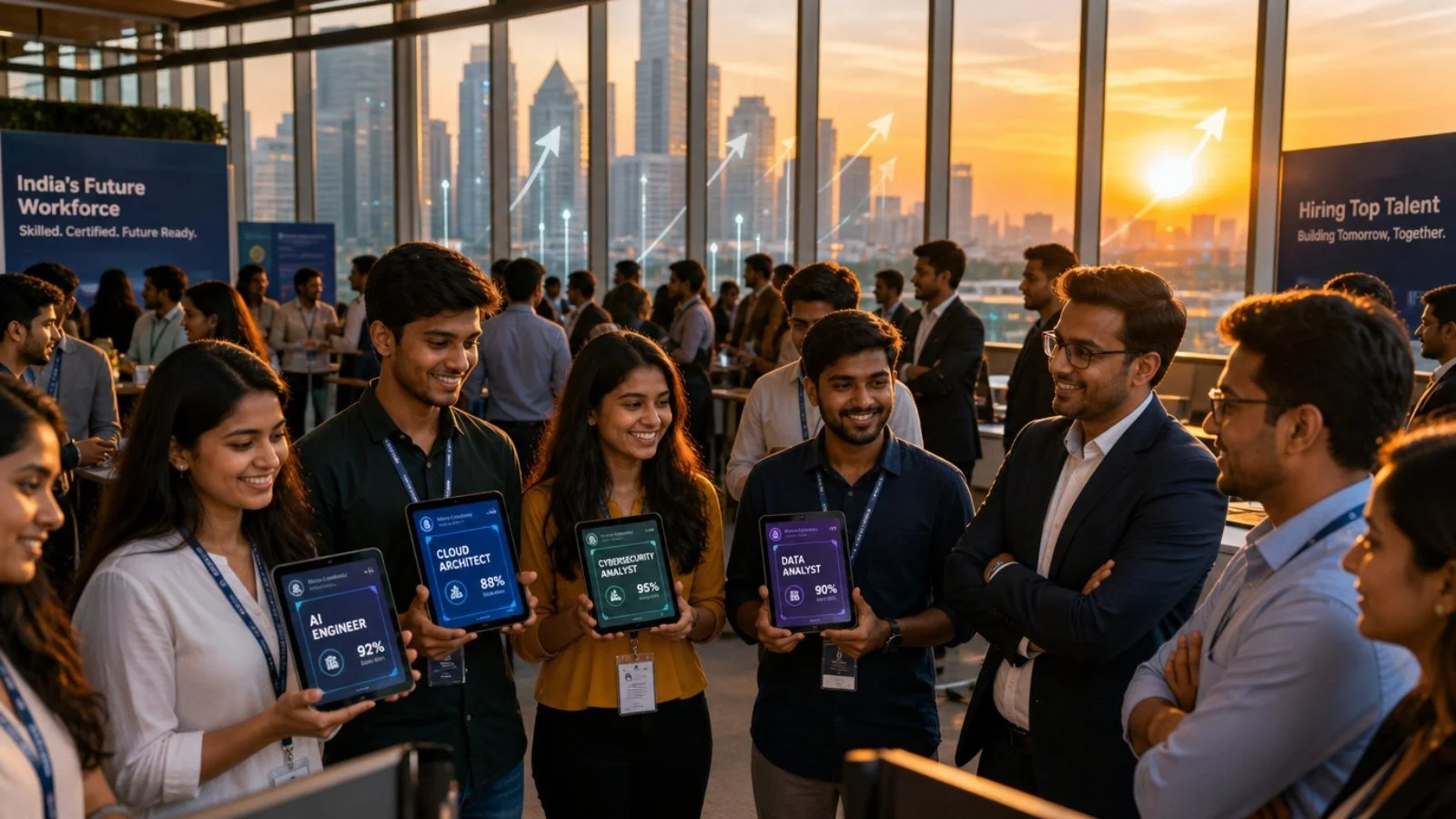
For the learner, the returns are real. In India, 91% of those with a micro-credential have been in a role in their field within a year, and 84% will tell you the credential had something to do with it. When it comes to the next step, it is worth piling on some industry-recognised evidence to go with the degree.
Then there is the student side of the equation. They like a credential that means something for their degree. The report has them 3.4 times as likely to go after one with a formal credit recommendation. If there is credit involved, 73% will sign up; without it, only 21% do.
Here is how to go about it:
– Put your efforts into AI, cloud, cybersecurity or data analytics
– Go for the ones with credit if you can
– Make industry-partnered certificates a priority
– Let your projects and applied assessments do the talking
Pick credentials employers trust
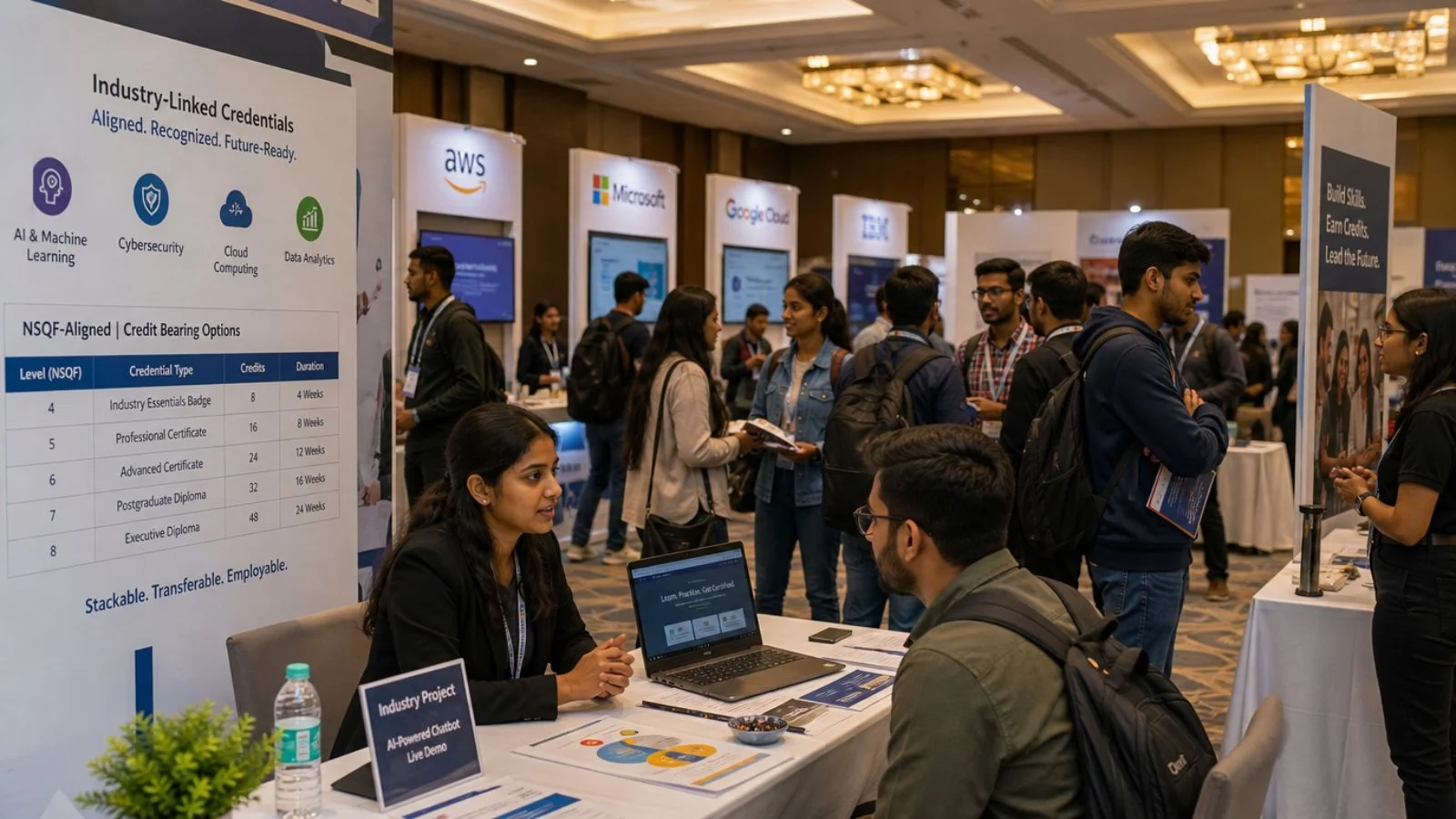
In India, 95% of employers put more stock in a micro-credential put together with an industry partner than one that is purely academic. You will see learners in India gravitating towards the likes of Google IT Automation with Python, the Digital Marketing & E-commerce course, or the Microsoft Power BI Data Analyst.
There is also a move to tie in with national standards. Coursera has 20 more Professional Certificates from the likes of Google, IBM and Microsoft that are in line with the National Skills Qualification Framework, for a total of 30 on the site. It covers the full range from AI to project management.
Universities and global context
The policy environment is on board. With the NEP 2020 and the National Credit Framework, universities are being nudge to make room for industry-led learning in their degrees. On the ground, 79% of higher ed leaders see micro-credentials as the link between the classroom and the outside world, while 70% have noticed an uptick in retention where they are used.
But there is a downside to sitting on the sidelines. Half of those in charge say an institution is in for some strategic risk if it does not make space for micro-credentials. There is still a hole in the system, though: 71% would like to see external credit-recognition to help scale, which is a few points off the 79% you see globally.
Around the world, employers are of one mind on this. Some 98% have some version of skills-based hiring in play, 86% of them in a big way for the new recruits. And 94% will put down a higher salary for a micro-credential. Of the graduates with one, 87% have a job in their field after a year.
Learners are following suit. Enrolment is twice as high for a programme with a credit-bearing option (71%) as for one without (35%). Even the 81% of Indian employers who say credentialed candidates are hired faster is ahead of the 73% mark for the rest of the world.
It is a simple equation for anyone in the market. Add some well-chosen, industry-validated micro-credentials in AI to your degree, make sure they carry credit, and have a portfolio to back it up. In a climate where employers are looking at skills, it is the best way to put speed and a good starting salary in your favour.