From Ribbon-Cutting to Repair Work—How Did a Brand-New Bridge Run Into Trouble So Quickly? Public infrastructure is meant to last for decades.
Bridges are built so that generations can use them—not so that headlines can.
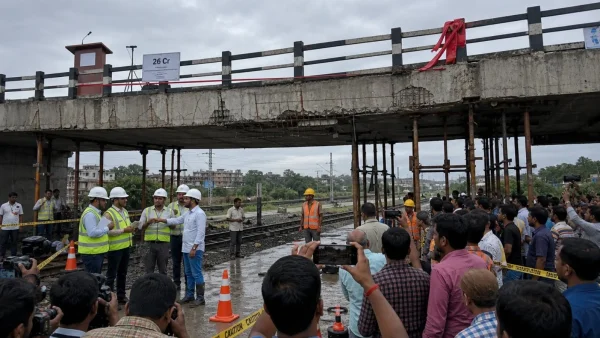
But a railway overbridge in Bihar, reportedly built at a cost of ₹26 crore, has found itself at the centre of controversy after reports that it developed serious issues within days of its inauguration.
For many citizens, the bridge has become more than a construction story. It has become a question about governance, quality control, and accountability.
A Bridge That Made News for the Wrong Reasons
Infrastructure projects are usually celebrated when they reduce travel time, improve connectivity, and boost local economies.
This time, however, the discussion is about how long the bridge remained trouble-free.
Social media users responded with biting humour:
“The bridge survived the inauguration better than the traffic.”
Another quipped:
“Maybe the ribbon was stronger than the concrete.”
Behind the jokes lies a serious question: How does a newly inaugurated public project reportedly develop problems so soon?
Who Checks Quality Before the Ribbon Is Cut?
Every government project passes through multiple stages—planning, tendering, construction, supervision, inspection, and final approval.
If defects appear almost immediately, people naturally begin asking:
Questions That Demand Answers
Were all technical inspections completed before opening the bridge?
Were construction standards independently verified?
Was there any compromise in materials or workmanship?
Will responsibility be fixed if deficiencies are confirmed?
These are questions that any public infrastructure project should be able to answer transparently.
Taxpayers Paid for a Bridge, Not a Photo Opportunity
Infrastructure is funded by public money.
Citizens don’t invest in bridges so they can trend on social media for the wrong reasons.
They expect roads that don’t crack after one monsoon, bridges that don’t require immediate repairs, and projects that are remembered for reliability—not for becoming viral within days.
The Public’s Frustration
People are not merely asking why a bridge reportedly developed defects.
They are asking whether the system that approves public projects is working as intended.
If a project worth crores develops issues almost immediately, confidence in oversight naturally comes under scrutiny.
Governance Isn't Measured by Inaugurations Alone
Every new bridge, highway, hospital, or school is a welcome development.
But governance is ultimately judged not by the number of plaques unveiled—it is judged by the quality and durability of what is built.
A successful project should disappear into everyday life because it works.
When it becomes the headline instead, citizens want to know why.
The Bigger Question
This is not just about one bridge.
It is about whether quality assurance keeps pace with ambitious infrastructure goals.
Public projects are long-term investments, and public trust depends on them delivering long-term value.
If technical investigations identify faults, people will expect corrective action and accountability.
Because while inaugurations last a day, infrastructure is expected to serve for decades.
And perhaps that is the real benchmark every public project should be judged against—not how impressive it looked on opening day, but how well it stands the test of time.