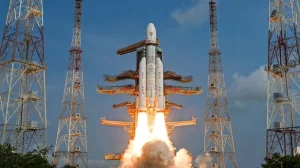
India’s space programme has never been more ambitious.
With missions like Chandrayaan-3, Aditya-L1, the upcoming Gaganyaan human spaceflight programme, and plans for an Indian space station, ISRO has become one of the country’s greatest scientific success stories.
But behind every rocket launch and satellite mission is a team of scientists, engineers, technicians, and researchers.
Now, reports indicating that nearly 30% of sanctioned posts at ISRO remain vacant—the highest manpower shortage in around 25 years—have sparked an important debate.
Can India’s biggest scientific dreams be achieved if one of its premier institutions is struggling to fill its workforce?
A Space Agency Expanding Faster Than Its Workforce?
ISRO’s responsibilities have grown dramatically over the last decade.
Today, the organisation is simultaneously managing:
Human spaceflight missions.
Satellite launches.
Deep-space exploration.
Defence and communication satellites.
Commercial launch services.
International collaborations.
Yet, questions are now being raised about whether recruitment has kept pace with these expanding responsibilities.
For many experts, rockets require fuel—but space agencies require people.
Why Is ISRO Facing a Manpower Shortage?
The reasons are likely to be a combination of administrative and structural challenges rather than a single issue.
Recruitment May Not Be Keeping Pace
ISRO’s workload has expanded rapidly, but recruitment cycles in government organisations are often slower than in the private sector.
Every delay in hiring means existing scientists must manage increasing workloads.
The Private Sector Is Offering New Opportunities
India’s growing space-tech ecosystem has opened exciting career options.
Private companies often offer:
Higher salaries.
Faster promotions.
Flexible research opportunities.
Modern work environments.
Young engineers who once viewed ISRO as their only dream destination now have many alternatives.
Retirement of Experienced Scientists
Many senior scientists who helped shape India's space programme have retired over the years.
Replacing decades of experience isn’t simply about filling vacancies—it requires training, mentorship, and knowledge transfer.
Is This a Policy Challenge?
Many observers believe the issue deserves policy attention.
As India’s space ambitions grow, experts argue that investment in human resources should grow alongside investment in rockets, satellites, and launch infrastructure.
Questions being raised include:
Should Recruitment Be Faster?
Can recruitment processes be streamlined without compromising quality?
Should sanctioned posts be reviewed to match ISRO’s expanding mission portfolio?
Can long-term workforce planning become a larger part of India’s space strategy?
These are policy questions that are increasingly part of the public discussion.
Is Politics Behind the Shortage?
There is no publicly established evidence suggesting that internal political interference is responsible for ISRO’s reported staffing shortages.
However, recruitment, budgeting, and staffing decisions in government institutions are influenced by administrative and policy processes. As a result, discussions often focus on whether existing systems are adequately equipped to support an organisation whose responsibilities are expanding rapidly.
What Can the Government Do?
Experts suggest several possible steps:
Accelerate Recruitment
Reducing delays in hiring could help fill vacancies before they affect future missions.
Strengthen Research Careers
Providing competitive research opportunities and career growth may help attract and retain talented scientists.
Build a Strong Talent Pipeline
Closer collaboration with universities, research institutes, and India’s growing space sector could create a steady flow of skilled professionals.
Long-Term Workforce Planning
Major space missions take years to prepare. Human resource planning should be aligned with those long-term goals to ensure staffing keeps pace with scientific ambitions.
Social Media Reacts
The reports have also sparked discussion online, where users mixed concern with humour.
One comment read:
“ISRO reaches the Moon on time, but recruitment seems stuck in Earth’s orbit.”
Another joked:
“India has enough engineers to build apps for food delivery—but not enough scientists to build the next Mars mission?”
The humour reflects a serious concern: people admire ISRO’s achievements and want the organisation to have the talent needed to sustain them.
The Bigger Question
ISRO has repeatedly demonstrated that it can achieve extraordinary results with limited resources.
But as India sets its sights on becoming a leading global space power, technology alone will not be enough.
Every successful launch begins with a scientist at a desk, an engineer in a laboratory, and a technician on the ground.
The challenge before policymakers is not just to fund ambitious missions—it is to ensure the people who make those missions possible are available in the numbers required.
Because rockets may carry India’s flag into space, but it is scientists who make the journey possible.