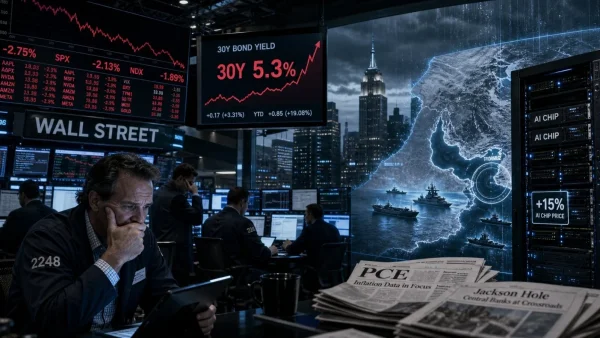
Wall Street futures gave up ground as investors were put in a bind by stubbornly elevated Treasury yields and the situation in Iran. With a pivotal week ahead for US inflation data, Federal Reserve cues and marquee AI results, the uneasy combination has dampened risk appetite across the US stock market and left tech under pressure today.
Bonds, not earnings, are steering the market
Equities have been on the defensive this week following the 30-year US Treasury yield’s move above 5.3% last week. That near 20-year high has reset equity risk premiums. When long-term rates get that high, they can draw capital away from stocks and into bonds, while driving up the cost of financing for both companies and households.
It is a global phenomenon. Yields on government bonds in Germany, France and Japan have reached multiyear levels, fuelling worry over tighter financial conditions in major economies, says CNBC. Growth stocks, being the most vulnerable to discount rates, have seen a swift and wide rerating.
Washington made an attempt to check the trend but any relief was short lived. Treasury Secretary Scott Bessent put forward some measures to steady the long end of the yield curve. David Zervos of Jefferies compared the expanded buybacks to an ‘Operation Twist’ as opposed to fresh quantitative easing; they do not put reserves on the table but can have some of the same effect, per CNBC.
Futures, megacaps and chips flash caution
The pre-market read was lower. Dow Jones Industrial Average futures were down 18 points (0.03%), with S&P 500 and Nasdaq-100 futures slipping 0.1% and 0.3% respectively. Some other feeds showed the Dow off 11 and the S&P 500 down 0.1%, while the Nasdaq-100 was 0.5% in the hole.
There was a mix in the megacaps before the open: Apple put in a 0.40% gain while Nvidia and Alphabet fell 0.72% and 0.40%. Amazon was flat. Sentiment on the chip side has softened, evidenced by Sandisk dropping 5.35% and Seagate 3.95%.
Alibaba’s US-listed stock was down 2.04% on the news of a $10.2 billion share sale at a steep discount to bankroll its AI push. It is a sign of how selective investors have become when it comes to AI capital outlays and the need for financing in the ecosystem.
Iran risk revives the inflation debate
Geopolitics has muddied the waters on disinflation. There is concern among investors that a protracted war with the US would leave energy markets tight and inflation in place. Should oil prices run higher, it will put more strain on the Fed’s hand by lifting costs for fuel and goods.
US officials have taken a hard line. In the Financial Times, Scott Bessent characterised the prospect of sanctions as an ‘economic D-Day’, the most formidable financial offensive one can mount against an opponent. The action could well entangle nations that do business with Tehran.
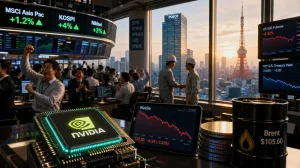
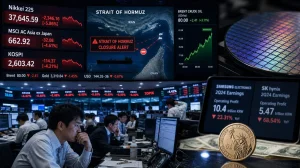
Oil took a breather as the talk of new US sanctions was digested, with WTI crude sliding past 3% to $84.79 a barrel. Tensions are also running high around the Strait of Hormuz; Reuters reports Iran has put 45 tankers on a blacklist for rule violations there.
AI trade faces an earnings and pricing test
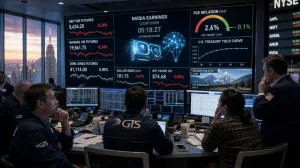
For the AI complex, it is a critical time. With Nvidia to report on Wednesday and Marvell Technology putting its numbers in front of the market Thursday, investors are looking for some reassurance that AI demand is robust enough to offset mounting capital costs and valuation headwinds.
There is reason for caution on the cost side. Bloomberg has it that Nvidia has put clients on notice of price hikes in excess of 15% for servers running its Vera Rubin and Blackwell chips. Such a move would put upward pressure on AI infrastructure spending and is sure to be a topic of conversation when it comes to earnings and the longer-term margin picture.
Then again, even a strong set of results may not be enough to spark a rally. Market commentary suggests investors have become leery of stretched valuations and the kind of financing required to keep up with AI buildouts while rates remain elevated.
What last week signalled about risk appetite
The theme of rates over returns held sway in August, and all three major US indexes wound up lower by Friday’s close. The S&P 500 and Nasdaq put an end to three weeks of gains, down 1.4% and 2% respectively, with the Dow off 0.8%, per CNBC.
The weakness was not limited to this side of the Atlantic. Asia’s Monday trading was mixed at best, if not weaker, as the same cross-currents were at play. China’s CSI 300 fell 1.21%, South Korea’s Kospi 3.12% and Japan’s Nikkei 225 closed 0.74% in the red. Australia’s S&P/ASX 200 was an exception, rising 0.49%.
For now the rate debate is an open question. It is a matter of whether the Treasury, the bond market or the Fed will be the one to anchor the long end of the US curve, a dynamic that will determine sector leadership and valuation multiples through year-end.
Inflation prints and Jackson Hole stakes
This week brings another inflation checkpoint in the form of the July Personal Consumption Expenditures price index on Wednesday. The Fed’s gauge of choice has been showing consumer inflation to be a stubborn 3% or more of late, making the path back to 2% all the more complicated.
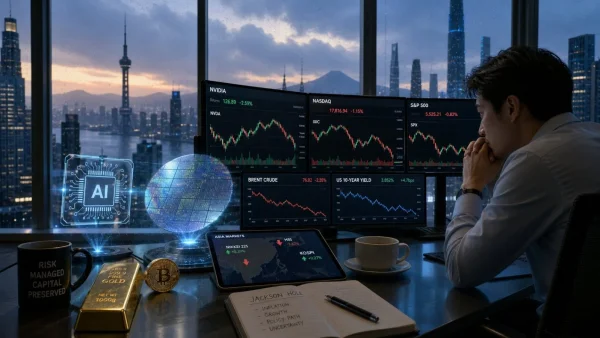
Policy context may come from the Fed’s Jackson Hole symposium. Investors will be poring over any remarks from Chair Kevin Warsh for clues on his stance on inflation and Treasury volatility, says CNBC. The outlook has been clouded by worries over government debt and energy prices.
LSEG data shows traders are pricing in just one 25-basis-point hike before 2026 is out, which is more of a slow grind than a pivot and keeps the cost of capital top of mind for growth equities.
Key catalysts to watch now
Investors’ attention is fixed on a few developments this week:
– The PCE data and what it means for rates
– Any policy cues from Warsh at Jackson Hole
– Earnings from Nvidia and Marvell as a barometer for AI
– Where long-dated US Treasury yields are heading
– Oil prices in light of US-Iran tensions
Strategy lens: market leadership at a crossroads
Market leadership is being redefined by the tussle between AI fervour and higher yields. You see the effect when the 30-year yield goes above 5.3%; the growth premium on megacaps narrows and there is closer scrutiny of cash flows and capital intensity.
Treasury buybacks might take some of the edge off volatility, but as Jefferies points out they are no substitute for QE. In the absence of a lasting drop in long rates, the support for long-duration tech valuations is thin and rallies are likely to be selective.
The short-term course is plain to see. Inflation figures and Jackson Hole will do their work on rate expectations, and we will see if Nvidia can make a case for AI spending in the face of server price increases of 15% or more. Until then, patience is better served by the risk calculus than momentum.