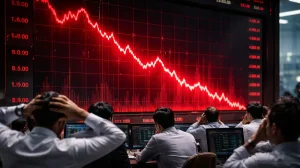
It was a case of resetting risk appetite. With some hope of headway in Washington-Tehran, you could see it in the bonds and the stock market. It has been a tight contest for the top spot in this rally between the AI darlings and the export heavyweights in Asia.
Asia’s rebound resets the leaderboard
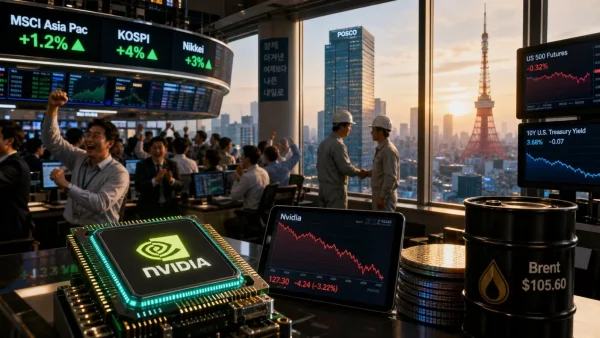
South Korea made the most of it. Local shares were up more than 4%, and Samsung Electronics as much as 7% once a last-minute deal with the union put an end to any talk of a walkout. The mood in the region was solid, enough to put 1.2% on the MSCI Asia Pacific.
Japan was no slouch either, the Nikkei 225 notching a 3% gain. It was a welcome change after four days of being in the red, as yields ticked up and people wondered if the AI run-up had made valuations a little too rich.
Chip trade at a crossroads
Then there’s Nvidia. For all the good feeling around semiconductors, its stock took a hit in extended hours after the sales numbers came in. Not so for the rest of the chip sector; earlier in the week a broad index of them was up 4.5% on the back of data centre optimism.
Why the mood turned
Some of the risk aversion is gone now that President Trump has put the US in the ‘final stages’ with Iran. That kind of comment does wonders for the idea of open water in the Strait of Hormuz. Brent, which was down hard the day before, inched to $105.60.
You can see the same thing in the bond market. Treasuries had a good day on Wednesday, making up for some of the selling we saw when inflation was on everyone’s mind. Easier yields are a relief for growth stocks and the exporters in the neighbourhood.
Caution has not vanished
US futures, though, were down half a percent. Traders are a little on edge about what the Fed is up to. They’ve dialed back some of their wagers on a year-end rate hike and let the dollar slide a touch, but they still figure the central bank will be raising rates.
Here are the day’s key moves investors flagged:
– South Korea stocks jumped over 4%
– Samsung Electronics rose as much as 7%
– MSCI Asia Pacific Index gained 1.2%
– Nikkei 225 advanced 3%
– Brent crude stood at $105.60
– US futures slipped 0.5%
Wall Street’s lead and the policy read-through
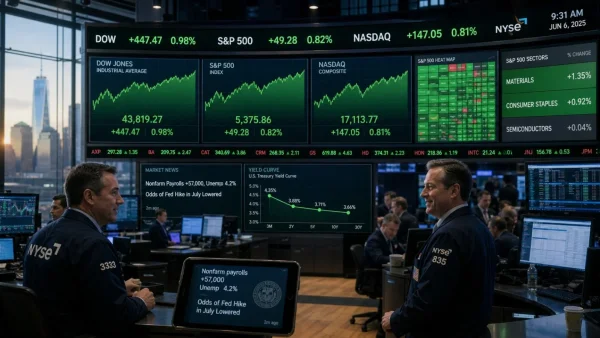
The close in the US on Wednesday set the pace. S&P 500 was up a point or so, Nasdaq 100 1.7%. It was a better environment for Treasuries to find some support and for the rate worries to subside.
Part of it is how you read the oil situation. When prices are this high, you have to put the brakes on rate-cut dreams and start to think about whether borrowing costs are going to go higher if the energy squeeze doesn’t let up.
What to watch next
Tech is where the eyes are. Even with Nvidia’s little stumble, the AI hardware crowd is hot. Toss in SpaceX’s IPO plans and you have a lot of attention. But the real question is how to position for the pull between momentum and the macro.
Louis Navellier, who has been around the block, says to hold your horses. The two sides in the Middle East are still a world apart and each is waiting for the other to make the first move. And even if they do, he says, the market may have to get used to it.
Put simply: if the Middle East cools off, the exporters and the rate-sensitive names have room to run. If oil starts to move again, we’ll be talking inflation and policy, and whether the AI trade can keep up.