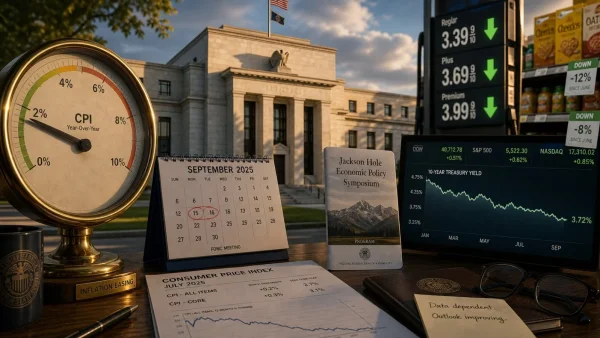
The Bureau of Labor Statistics has the numbers to back up the expected easing of US inflation in July, which in turn eases the way for the Fed ahead of the 15-16 September gathering. Headline CPI was 0.1% higher month on month and 3.4% year on year; core CPI put in a 0.2% monthly and 2.5% annual gain.
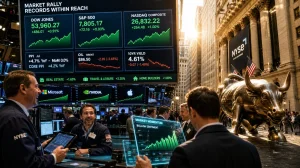
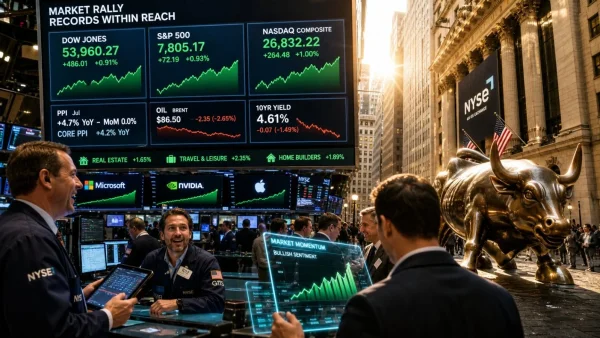
Traders have been in a risk-on mood since the release. US stock futures are up and Treasury yields have come down across the board as wagers on a September hike were pared back. Prior to the report, CME’s FedWatch had priced in about a 46% probability of an increase.
Fed calculus shifts ahead of September
There is no sign of fresh overheating in the July figures; the disinflation trend holds. The 2.5% core number is the slowest we have seen since March 2021 and makes a case for patience while officials put price stability against what is clearly softer hiring.
But the direction of policy is not yet decided. Officials are still waiting on August employment and inflation. And there will be close attention paid to any clues from Fed Chairman Kevin Warsh when he speaks at Jackson Hole later this month.
The Fed left the federal funds target range at 3.50%-3.75% last month. Given that the latest CPI is in line with what was called for, one could say the bar for a near-term hike has been raised, if not put out of reach entirely.
What the CPI mix reveals
For policy purposes, the make-up of July’s move is dovish. Shelter was up 0.1%, making up the bulk of the monthly rise, but there is relief in some cyclical areas. We have seen a second straight month of lower energy and gasoline, and grocery prices have given back for the first time in months.
Then there are the goods. After two months of declines, prices for goods outside of food and energy have rebounded. Services minus rents and energy ticked up 0.2%, a sign of stickiness but nothing accelerating. Medical care and airfares moved forward while motor vehicle insurance did not.
A few of the data points that defined the print:
– A 0.1% rise in CPI for July, following a 0.4% drop in June
– Yearly CPI has cooled to 3.4% from 3.5%
– Core CPI is up 0.2% on the month and 2.5% on the year
– Two-thirds of the gain came from shelter, up 0.1%
– Food was 0.1% higher on the month (0.3% for food away from home)
– The energy index fell 1.5% in July though is 14.7% up year on year
– Grocery prices took a hit, with lettuce seeing a record fall
– 0.2% advance in services ex energy and rents
Energy remains the swing factor
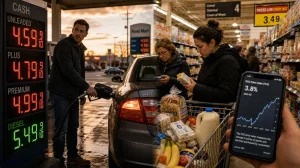
You can trace the volatility in the headline back to oil. While the shock from the Iran war seems to have dissipated in July, US gasoline has crept back over $4 a gallon now that the ceasefire has fallen apart. On average for the month, however, it was lower than in June.
The energy index is 14.7% higher on a yearly basis, a reminder of how fast crude-sensitive items can reaccelerate. Some economists point to inventory drawdowns and the US position as a net exporter as having absorbed the earlier impact, but those stockpiles will need to be put back at some point.
The 0.4% monthly dip in June was the first since May 2020 and came on the back of softer oil and the ceasefire. The fact that July reversed course to a 0.1% increase puts the question of whether energy will remain a headwind back in focus.
What to watch next
Policymakers have two more things to consider before September: the August employment and CPI reports. Economists are calling for a pick-up in inflation in August to reflect recent oil activity, and a rebound in job growth once the seasonal distortions are behind us.
The Fed is also looking at its Personal Consumption Expenditures price indexes for the 2% target. The all items less food and energy index was 0.2% in July and 2.5% for the year, down from 2.6% in June. The CPI-U is at 333.918.
In the end, the stakes are plain to see. The Fed has been given some room by the cooler core numbers. What happens with energy will probably be the deciding factor on whether they hold or raise rates in September.