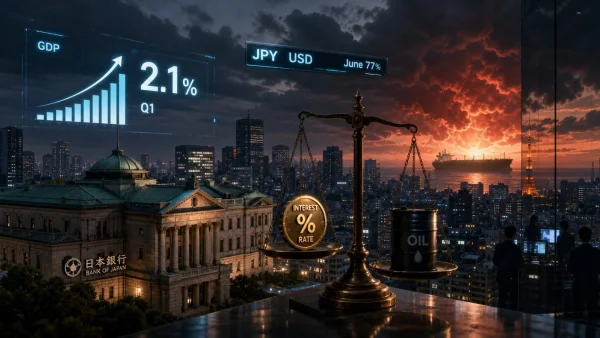
On paper, it was a solid start to the year. Real GDP for the January-March quarter put in an annualised 2.1%, well over the 1.7% we were told to expect and a step up from the 0.8% of the prior period (which had been revised down). Even on a quarterly basis, 0.5% was better than the 0.4% call and sturdier than what we saw at year-end.
Then there is the matter of the Iran war and the ructions in the energy markets. The strength we are seeing is before that has fully taken its toll. Traders haven’t moved much; overnight swaps have the odds of a June hike at about 77%, even as the yen eases a bit against the dollar in the wake of the print.
What powered the upside
Consumption, which is more than half of what Japan puts out, inched up 0.3%. You have to put that down to some government utility handouts and wages that are finally running ahead of inflation. But don’t be fooled: consumer sentiment has been on the wane since the fighting started, and that could be a headwind down the line.
The rest of the world has been a source of good news too. March trade figures show exports moving along, helped by a pickup in China, and net exports chipped in 0.3 of a point to GDP where we thought it would be 0.2.
As for the companies, they are investing, if not with a lot of fanfare. Capital spending was up 0.3% – a bit of a letdown after last quarter – but you can see the five straight quarters of healthy profits and the kind of outlay you get with AI and digital projects, not to mention the tightness in the labour force.
Three forces stood out this quarter:
– Household spending held up at 0.3%.
– Net exports added 0.3 percentage point.
– Capital expenditure rose 0.3%.
Of course, the scene outside has turned for the worse. With Iran having made a show of closing off the Strait of Hormuz in the aftermath of the US and Israel’s strikes on February 28, oil has gone up and the prospect of supply hiccups for a country like Japan is very real.
Energy shock resets the debate
The BOJ made no bones about it in May: higher crude is going to make life hard for corporate bottom lines and household paycheques. “The rise in crude oil prices is expected to push up prices, mainly of energy and goods,” they said, and we’ve seen inflation tick up in March for the first time in a while.
BOJ’s evolving path
They have already adjusted their view, dialling back the 2026 growth number to 0.5% and upping the core inflation call to 2.8%. This latest GDP result makes a good argument that the economy can stand some higher costs, but the energy situation muddies the waters.
You can see the pull in the market. There is a 77% implied chance of a rate increase in June, but the way the yen has drifted suggests some are left wondering how quickly policy can be brought in line.
Politics and policy choices ahead
It is a fine line for Prime Minister Sanae Takaichi to walk. She has to have both the investors and the public with her. Inflation is stinging, so you can count on calls for an extra budget to cover emergency relief and energy, even if some in the market are nervous after a change of heart on funding.
Expect Tokyo to put some new measures in place to insulate the economy and to put out more debt to pay for it. It is the old trade-off: you want to prop up demand now without making anyone lose faith in your fiscal housekeeping.
Key near-term policy signals to watch:
– Details of energy subsidies and relief.
– Guidance on June rate decision.
– Any fiscal package funded by new debt.
What comes next
The Q1 figures tell us 2026 is off to a steadier start than we thought, but that is before the full brunt of the energy problem. From here, it will be down to whether holding power in consumption and the flow of goods to China can be sustained.
For the BOJ, it is a no-brainer and a conundrum at the same time. The growth is there to justify normalisation, but the oil is a threat of a little stagflation. We will have to wait for the June meeting to see if they put more weight on the data or the risk of imported inflation.