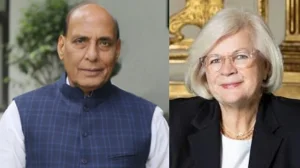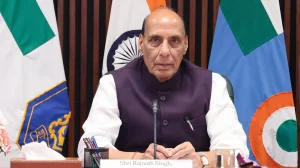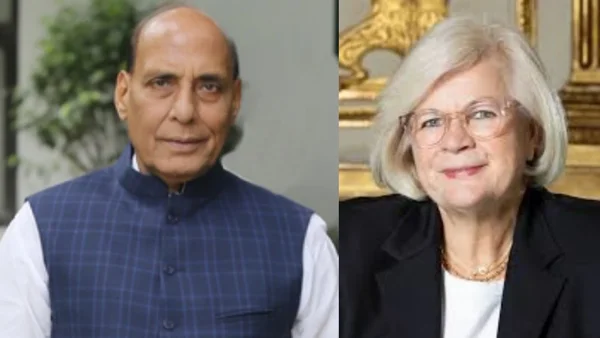
The Ministry of Defence reports that Defence Minister Rajnath Singh, along with his French opposite number Catherine Vautrin, will together lead the 6th India-France Annual Defence Dialogue in Bengaluru on February 17th. The ministers will go over all areas of defence work the two countries do together, with a specific focus on building up cooperation in industry and a continuing, long-run alignment in strategy.
What will be talked about and what is likely to come of it
Those in the know say the most important result will probably be renewing the defence cooperation deal for ten more years, which would give a ten-year plan for working together. People representing the two countries will also talk about improving forces, training, logistical help, and sharing intelligence, all to make their armed forces work better as one.
A deal to make Hammer missiles as a joint effort is expected to be signed while the two defence ministers are there. It is also expected that an announcement will be made about the Indian Army and French Land Forces sending officers to be with each other, to show the two are becoming more closely linked in how they operate.
Working together in industry and making things jointly
The dialogue will make clear the increasing cooperation in defence industry, like the Tata Airbus H125 Light Utility Helicopter final assembly line at Vemagal in Karnataka. Prime Minister Narendra Modi and French President Emmanuel Macron will open the facility online, to show how important joint making of things is.
Joint projects, such as the planned deal to make Hammer missiles, are meant to make India’s own making ability and supply chains stronger. These projects go with India’s wish to make more at home, and give France a way to make its industrial links deeper and get to regional markets.
Bringing operations together and military exercises
India and France regularly hold large two-sided exercises across all the services – Exercise Shakti for the Army, Exercise Varuna for the Navy, and Exercise Garuda for the Air Force. People who know about these things point out that these events have grown in size and difficulty, improving how the forces can work together and their tactical agreement.
Officers being sent to each other’s armies would make professional exchanges wider, and allow both armies to learn each other’s ways of fighting, logistics, and command, from first-hand experience. Such sending of people often leads to quicker agreement during joint or many-sided exercises.
The strategic setting and the building up of diplomatic drive
Defence links have for a long time been a key part of India-France relations, made stronger by recent high-level exchanges. These included visits to each other’s national days, which showed a deeper strategic understanding between the two governments and their armed forces.
The meeting also comes with wider efforts, such as the India-EU Security and Defence Partnership, which has made the range of strategy for working with European partners larger. The Bengaluru dialogue gives a focused place to turn political drive into real defence results.
What this means for security in the area and exports
A ten-year cooperation plan and new making projects could make security in the area better by making it harder for enemies to act, and strengthening logistical partnerships. For Indian industry, joint projects may create platforms ready for export, and give chances for technology to be passed on.
For France, continuing work together makes certain long-run industrial partnerships and a strategic place in the Indo-Pacific. Both sides are set to gain from clearer plans for making things, standard training, and a certain legal plan for defence work together.
The India-France Annual Defence Dialogue is a planned ministerial place to guide defence and security cooperation. With key deals and openings expected at the Bengaluru meeting, the dialogue could set the course for a deeper, more industrially linked strategic partnership over the next ten years.