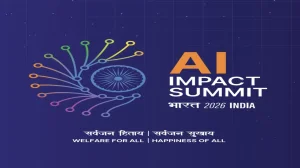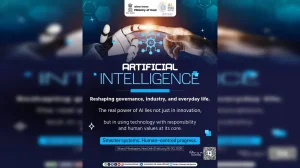
The India AI Impact Summit 2026 will be held in Delhi on 16-20 February-the largest conclave on artificial intelligence across the Global South. The summit will be based on a tripod of three foundational ‘Three Sutras’ being People, Planet, and Progress accompanied by expectations of more than 700 sessions and heads of state, ministers, and top business leaders converging on Bharat Mandapam.
Summit exhibit
The Summit is expected to bring India right into the midst of discussions, among other things, on AI governance and deployment, together with policy, industry, and civil society. The central themes laid down by the organizers include AI safety, data protection, ethical use, and India’s pearl approach to sovereign AI.
All sessions would include various plenaries, sectoral showcases, one-on-one roundtables, with the summit hosting a large AI Impact Expo to showcase real-world AI applications. The program will commence with a grand opening ceremony and CEO’s roundtable in the presence of the Indian Prime Minister.
Tech CEOs and Indian industrialists might be willing to attend: a promising lineup already!
Notable global technology leaders expected in Delhi include Sundar Pichai (Google & Alphabet), Sam Altman (OpenAI), Jensen Huang (Nvidia), Demis Hassabis (Google DeepMind), Brad Smith (Microsoft), Cristiano Amon (Qualcomm), and Bill Gates (Gates Foundation).
India’s corporate delegates include Mukesh Ambani (Reliance), Natarajan Chandrasekaran (Tata Sons), Nandan Nilekani (Infosys), Sunil Bharti Mittal (Bharti), K. Krithivasan (TCS), Salil Parekh (Infosys), and Roshni Nadar Malhotra (HCL Tech). Senior officials from international organizations will also be on the agenda.
High-Profile Guest List: Heads of State and Ministerial Delegations
The Summit will witness the participation of 15-20 heads of government and over 50 ministers. Confirmed include Luiz Inácio Lula da Silva (Brazil), Emmanuel Macron (France), Pedro Sánchez (Spain), Aleksandar Vučić (Serbia), and Petteri Orpo (Finland).
The list of recognized speakers includes Tenzin Choklay (Bhutan), Edmand Lara Montano (Bolivia), Andrej Plenković (Croatia), Alar Karis (Estonia), Kyriakos Mitsotakis (Greece), Dr. Bharrat Jagdeo (Guyana), Olzhas Bektenov (Kazakhstan), Alois of Liechtenstein, Navinchandra Ramgoolam (Mauritius), Peter Pellegrini (Slovakia), Anura Kumara Disanayaka (Sri Lanka), Sebastien Pillay (Seychelles), Guy Parmelin (Switzerland), Dick Schoof (Netherlands), and Sheikh Khaled bin Mohamed bin Zayed Al Nahyan (UAE).
Summit Timetable and Main Sessions
The five-day summit is a mix of high-level policy dialogues, technical workshops as well as sectoral immersion. The Prime Minister is expected to be present at the Inaugural Session and convene a CEOs Roundtable on Public-Private Partnerships and Investment in AI.
Sessions will concentrate on AI safety frameworks, governance models, data protection, and operationalizing sovereign AI. Expect thematic tracks on healthcare, education, climate action, and inclusive technology deployment, with structured dialogues involving ministers and technical experts.
AI Impact Expo and national skilling initiatives
The AI Impact Expo will exhibit applied AI projects across sectors like healthcare, agriculture, education, climate, energy efficiency, and accessibility. It is the organizers’ view to demonstrate scalable solutions that governments, businesses, and civil society could adopt.
The event will also draw attention to national skilling initiatives like AI for ALL, AI by HER, YUVAi, and India AI Tinkerpreneur which are meant for AI literacy, youth entrepreneurship, and greater involvement of society in the AI economy.
Implications for policies, economy, and international cooperation
The mobility of this summit could place India as a leader in global AI governance; one in which the countries of the Global South would feel more comfortable participating. Bringing heads of state, ministers, and industry even could influence faster consensus on issues concerning governance on safety standards and cross-border data norms and capacity building.
The summit had the potential to sow the seeds of AI infrastructure and skills investment and to impact public policies so as to make them in tune with the developments in technologies. With prominent sectors displayed and precious ministerial pledges, the summit really aims at solarizing and creating joint AI paths and frameworks that have to be taken in the long term.
This summit offers a unique opportunity parallel to the official ones, where history is made or moved by such AI strategic decisions. You are invited to keep following the official summit-related Media channels and daily schedules, which are likely to provide full updates and details at the event from Delhi screen language AI Impact Summit 2026.