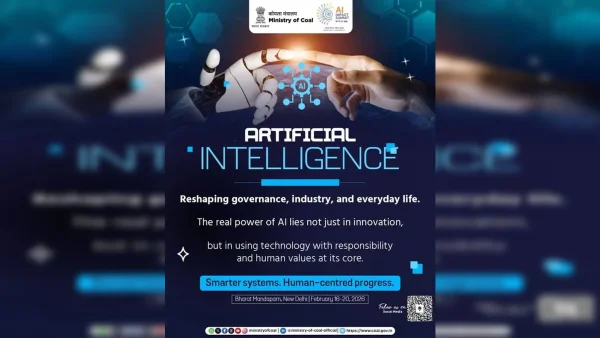
From 16 to 20 February, India is to be the location for the fourth AI Summit, and it will bring together over fifty countries of the Global South to have a discussion which alters the concentration from safety rules to development which considers people. The fact that there have been more than 200,000 people register for the meeting shows there is a large amount of interest around the world in getting artificial intelligence to go along with growth and empowerment for everyone.
A change from safety to development which considers people
The summit shows how global talks about AI are developing – going past technical safety to make systems that give more chances to people. India has made the event about three main ‘Sutras’ – People, Planet and Progress – which put importance on skills, being able to continue for a long time, and everyone moving forward together.
Those who are organising the event say the plans will give priority to investing in people’s abilities, making it easier to get to AI tools, and making certain the technology helps development aims. A document with the results is expected to show agreement, useful advice and a system for governing which will allow wider use.
The summit changes how AI is governed, thinking of it as a set of policies which must be made democratic. Instead of letting a small number of people make the rules, the event looks for ways which allow countries which are developing to control, use and gain from AI in a responsible way.
Seven Chakras made to turn ideas into action
The centre of the summit is seven groups working on themes – or ‘Chakras’ – each of which is about a part of AI which includes everyone. These groups want to turn broad aims into plans which can be used by governments, industry and the people in society.
The Human Capital Chakra will deal with quick changes in the workplace by giving importance to being able to use digital tools, learning new skills and being able to change. It wants to make certain AI adds to people’s ways of earning a living rather than taking jobs away, making routes for a lot of people to take part in an economy which is run by AI.
The Inclusion for Social Empowerment Chakra is about language and cultural showing, pushing for models and data sets which show local situations. The aim is to reduce not being seen in the digital world and to build AI which respects different cultures and the needs of areas.
The Safe and Trusted AI Chakra will make governance tools and the ability to control stronger, especially for countries which are developing. It wants to make watching what is happening easy to do and technically strong, so countries can balance new ideas with being responsible.
Other Chakras deal with using resources efficiently and being able to recover, the effect on the environment of large AI systems, and the growing difference in technology. The AI in Science Chakra wants to make research systems wider across the Global South, encouraging science which people work on together and new ideas which are shared.
Lastly, the Democratising AI Resources Chakra will face the concentration of data sets, computer power and advanced models. It supports fairer access to the main parts of AI so a more different set of countries and organisations can build and gain from complex abilities.
Political showing and the programme of the summit
The summit will be one of the AI meetings which has the most political people at it so far, with about 20 heads of state or government, 45 ministers and 30 vice-ministers expected to be there. Groups from about 65 countries of the Global South are planned to go.
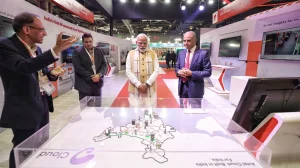
A show for the public opens on 16 February, and this is followed by a hackathon on 17 February which will have 2,500 women taking part. The main summit on 19-20 February will have general meetings, a high-level CEO Forum and a dinner which the Prime Minister is holding.
These events are made to mix policy, leadership in industry and new ideas from the grass roots. By getting different people who are involved together, the summit wants to bring out actual projects and partnerships which can grow across areas.
What is expected to happen and what it means for the Global South
People who are at the meeting want to make a short document with the results which shows a useful system and main advice. Things which are expected to be included are building abilities, shared research buildings, how to govern and money for AI plans which include everyone.
For people who make policy, the summit could speed up national plans on learning skills, looking after data and AI which is in the public’s interest. For industry and researchers, it might unlock partnerships which make it easier to get to computer power and data sets while protecting the needs of local people.
If it is successful, the summit could change how the Global South takes part in the development of AI – from being people who just take what is given to them to people who actively make the rules, tools and technologies. The problem will be turning promises into money, standards which work with each other and continued working together.
The fourth AI Summit in India wants to put the development of people at the centre of technological progress, sending a clear message: AI must empower many, not just a few.