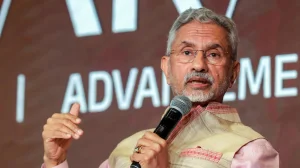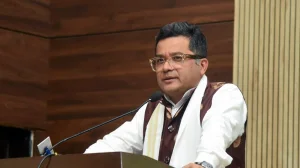
External Affairs Minister S. Jaishankar made it clear the QUAD summit wasn’t ‘called off’, as there hadn’t actually been a definite plan for one, even though the leaders didn’t get together last year. What he said at the Munich Security Conference showed why India still thinks the group is important, given changes in world politics and the new government in the US.
What Jaishankar Said
Jaishankar was asked about how the QUAD was doing while he spoke with the German foreign minister at the Munich meeting. He warned people not to make too much of the leaders not meeting, saying that a ‘cancellation’ would mean a meeting was already set.
He also pointed to the QUAD continuing to work through its normal processes; there have been two QUAD Foreign Ministers’ Meetings since the new US Secretary of State began in January 2025. He implied this showed the group was still working together, even if there weren’t big summit meetings getting news headlines.
How the QUAD Works – and What It Does
India prefers to focus on working groups, plans for supply chains, and continuing links between institutions – all of which go on regardless of when the leaders can meet. These groups deal with things like important minerals, working together on technology, safety at sea, and help with disasters.
Keeping these things going helps the QUAD do things, keeps lines of communication open, lets experts exchange ideas, and makes it possible to agree on policy when the leaders do decide to have a summit.
Why the QUAD is Good for India’s Plans
For India, the QUAD Leaders' Summit is a chance to get closer to the US, Japan, and Australia in both economic and security matters. Having the leaders’ meeting in New Delhi would show that India wants to have a say in what happens in the Indo-Pacific region.
Jaishankar also repeated that India has the right to buy the energy it needs, based on what’s best for the country – showing New Delhi wants to be in charge of its own policies. Balancing working with allies and keeping its freedom to choose its own course is still at the heart of what India does within the QUAD.
The World Situation and What’s Been Happening
The QUAD became well-known partly as a way to deal with the growing competition for influence in the Indo-Pacific. How useful it was was put to the test when US policy changed during the second term of the last president, which changed trade and safety in the region.
Because there wasn’t a leaders’ summit in 2025, China was able to show its influence at meetings in the area. However, a recent trade agreement between the US and India, and US politicians from both parties asking for the QUAD leaders to meet again, show that the group’s members are starting to work together more again.
What the QUAD Can Do For India’s Economy and Technology
As well as security, the QUAD gives India chances to deal with weaknesses in supply chains, get access to important minerals, and work together on new technologies. Working together on these things can help India’s industrial plans and what it wants to achieve with its technology policy.
This sort of cooperation could help find more suppliers, bring investment into high-tech industries, and make sectors such as semiconductors, batteries, and parts for green energy more reliable.
What India Has to Weigh Up – the Good and the Bad
Working with the QUAD clearly has advantages, but India has to deal with compromises. Getting closer on security or technology could cause problems in world politics, or make things harder with other countries.
The careful way India uses language in diplomacy shows it’s trying to work together in practice, while avoiding formal alliances that would limit its freedom to decide what to do. This careful approach lets New Delhi follow its defence and economic goals without putting its energy supplies or its freedom in policy at risk.
Conclusion
Jaishankar’s point was practical: not having a summit doesn’t mean the end of cooperation. For India, the QUAD is still a useful group to work towards common goals in the Indo-Pacific – particularly around supply chains, technology, and safety at sea. As New Delhi gets ready to have the next leaders’ meeting, it will probably focus on turning the work of the institutions into real economic and strategic results.