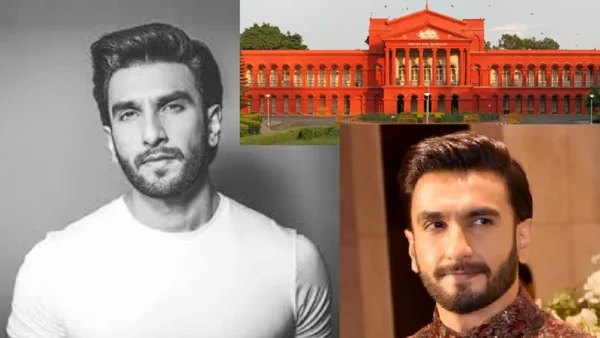
The Bollywood actor has asked the High Court of Karnataka to dismiss both a complaint made by a person, and the FIR at High Grounds Police Station in Bengaluru, relating to him supposedly insulting the important Daiva custom shown in Kantara: Chapter 1. He says that what he said at the closing of the 2025 IFFI in Goa was misunderstood, and that he was complimenting Rishab Shetty, not making fun of a god.
Case Filed in Karnataka High Court
Singh made a criminal request to the Karnataka High Court, challenging the private complaint which was with a city Magistrate’s Court, and the FIR that the High Grounds Police Station in Bengaluru had begun. The police at High Grounds and the person who made the complaint – lawyer Prashanth Methal – are the people the case is against.
Singh’s lawyers, appearing for him on Monday, February 23rd, before Justice M. Nagaprasanna, asked for the case to be heard quickly. They said the police had sent the actor two notices after the FIR was made, and this was causing him immediate worry and the possibility of being forced to do something. The court said it would hear the case the following day.
Request for a Quick Hearing and What the Court Said
During a short discussion, Singh’s lawyers said the actor had been praising Shetty’s acting, and that his comments had been twisted and made to look ‘criminal’. They asked the court to speed up the case to avoid the actor being bothered.
The court asked why it needed to be quick, and if being famous should mean getting a case heard first – saying that everyone who asks for something from the court must be treated the same, no matter how well-known they are. The court would not hear the case that day, but said it would put it on the list for the next day.
What Led to the FIR and Complaint
This all began with Singh’s remarks on stage at the IFFI 2025 closing event. While he was giving praise to Kantara: Chapter 1 and the Daiva scene at the end, Singh acted out a moment and talked about a ‘woman ghost’ going into the character. This video went all over the internet, and some people who saw it were critical.
Rishab Shetty, who was at the event, seemed to tell Singh to be careful on stage. This made the discussion even worse. Because people were upset, Singh later said sorry, saying he had not wanted to offend anyone and that he really liked the film.
What the Police and Courts Have Done, in Order
The person who complained says he first went to High Grounds Police on December 3, 2025, but they did not make an FIR. He then went to senior officers, and then made a private complaint in a Magistrate’s Court.
On January 28, 2026, the Magistrate ordered an investigation under Section 175(3) of the Bharatiya Nyaya Sanhita (BNS), and told the police to act. After this order, High Grounds Police made the FIR and sent notices to Singh.
What the Complaint Says and the Laws Involved
Lawyer Prashanth Methal says that Singh made fun of the holy Daiva custom, called the god a ghost, and hurt the religious feelings of millions of Hindus. He specifically mentioned Goddess Chamundi and said that such talk was against religion and disrespectful to Hindu beliefs and ways.
The complaint uses BNS Sections 196, 299, and 302, which the complainant says are crimes that can be investigated without a warrant, and carry punishments of up to three years in prison, a fine, or both. Singh’s request argues against both how his words were understood, and using these sections, saying there was no bad intention and that the things needed to make up the crimes he is accused of did not happen.
Singh’s lawyers say that the comments were part of him praising Shetty’s acting, and were not meant to be about any god or custom. They say that criticising or copying something in art, if there was not a deliberate attempt to offend, cannot be a crime.
What the Custom Means and What People Have Said
Daiva customs – including the performances in Kantara – are very important in the culture and religion of coastal Karnataka. People who support the complaint say that even accidental mistakes in how these are shown can hurt people’s feelings. Others, however, think this was a misunderstanding that came from an excited moment on stage, and a reference to the film being taken out of its original meaning.
Social media made both sides of the argument louder. Some people called the acting out disrespectful, while others pointed to Singh quickly saying sorry and his record of supporting films from the area. The debate is about the balance between being free to say what you think, how famous people affect things, and being sensitive to faith.
What Happens Now
The Karnataka High Court will now decide if the FIR and complaint are good enough to be criminal cases. The main questions are what Singh meant, what the situation was, and if the things he said – when understood completely – are a crime under the BNS.
A decision on stopping the FIR could affect how courts deal with similar problems with cultural customs and artistic expression. For Singh, the main thing now is to be released from the FIR and to be clear about how far the investigation can go. For the film business in general, the case shows how important it is to be careful when talking about holy customs in public.
As the court deals with the case, both legal people and film fans will be watching closely. The result might give direction on how to balance respecting custom with what happens in live performance and what famous people say.