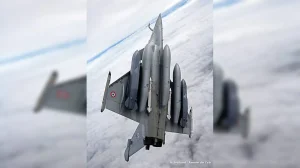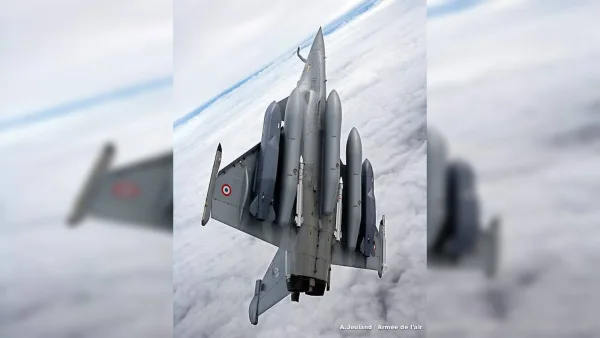
According to sources in New Delhi, India is now completing the purchase of a significant number of SCALP cruise missiles from France for approximately €300 million or less. These missiles were tested during Operation Sindoore and will be equipped on the Indian Air Force’s Rafale fighter jets. Negotiations have begun and a definitive decision shall be arrived at very soon.
Synopsis on the Proposed $300 Million Acquisition: Procurement Parameters and Present Status
Per confidential information, SCALP cruise missiles will boost the long-range striking capability of the Indian Air Force, and the $300 million figure would encompass a considerable stock of SCALP cruise missiles in associated set-up configuration. Whispers down the corridor with specifics tallying total missiles and exactly how many container units have not been heard yet.
Paris and New Delhi are in a spin with all out talks, with factors like intergovernmental clearance and integration deadline for the Rafale jets, working like a seesaw for intense deliberation concerning the $300 million SCALP missile baggage. Defence planners think a formal nod may come within weeks, after getting the groundwork done with last updates on the technical and commercial side.
SCALP Operational Capabilities Unleashed during Operation Sindoor
The SCALP missile-critical reports keep writing about its absolutely operational use during operation Sindoor-Rafale jets launched it along with BrahMos missile. Authorities in particular said that the strikes were carried out with high precision on the assigned target.
The long-range standoff profile and precision guidance are cited for the increased potency. With SCALP, the BrahMos missile offers planners-of-strategic targets-of infiltrating defended airspace with minimal risk to crewed platforms.
Integration With Rafale Fleet and Naval Variants
The incoming missile will integrate with Indian Air Force’s Rafale fighters to multiply their long-range strike. To mention, the integration will require software updates, weapon pylons, flight clearance tests, and mission planning adaptation.
Meeting the plan, there must extend the said system to the 26 marine Rafale fighters ordered by India’s naval service. These jets will come in stages over the next three to four years, and the SCALP integration will broaden India’s maritime as well as land-strike potency.
An Array of Weapons: By Connection – Meteor and BrahMos
Against the SCALP, the country’s Air Force is contemplating the acquisition of a vast number of Meteor beyond-visual-range air-to-air missiles for the Rafale platform to boost the air-supremacy role and complement SCALP in range of long strikes.
The supersonic cruise missile BrahMos deployed from various platforms has been serving as one of the most crucial components in the layered Omnibus Strike Doctrine, contributing SCALP, BrahMos, and Meteor to enable a diversified set of capabilities aimed at deterrence and offensive operations.
Technical and Tactical Ramifications of SCALP Integration
With an operation profile offering high-speed penetration to drop submunitions FB-type, or cluster warheads, SCALP boasts certain low-signature features called Standoff Land Attack Missile
[SLAM]
. That missile carries true firewhacking to the assault on hard targets, having delicate guidance systems that track and target the foe.
For the budget, the deal is another step towards a modernization planning in anticipation of more Rafale purchases, potentially another 114 aircraft, and further missiles. Defence planners will have to weigh some immediate operational needs against fleet expansion and the fiscal constraints.
India had obviously made a choice to prioritize SCALP, a stand-off capable missile, and thereby goes back to its roots of selecting indirect strikes with crew-safety in mind; this will be a joint-held thought as discussions progress In the future of Rafale role in regional deterrence and operational doctrine in years to come.
The basic line of this SCALP deal of €300 million would thus be seen as a deliberate step of enhancing India’s long-range strike portfolio with deep integration of advanced munitions on Rafale platforms and solidifying further the cooperation in defense with France. The pace of their induction into active service depends on final approvals and associated integration milestones.