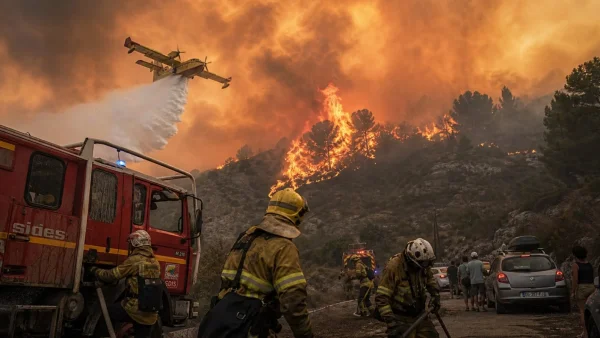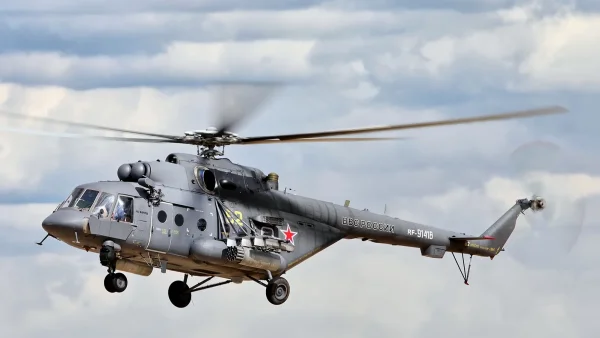
To put out the fire, more than 12,000 liters of water were thrown by the crew of Mi-17V5 Indian Air Force helicopters near a rapidly growing forest inferno in the Lohit valley of Arunachal Pradesh. Almost 9,500 feet is the altitude at which the operation was launched and specific precautionary measures were taken due to the steepness and the more or less Himalayan thickness of the air to protect the forests from fire damage and the humanity in and around the forest areas.
Aerial firefighting operation in Lohit Valley(Topic Title)
IAF helicopters did many well-planned activities to stop the fire that was very close to the Lohit River and far off forests and settlements. More precision work was required from flyers to carry the water over a landscape of difficult terrains in ideal locations where narrow ridges and strong winds made it very physically demanding to make every pass.
The IAF’s operation was sanctioned after there was a call for help by the waves of the starting response teams that was met by great difficulty. In those circumstances, the air and ground units coordinated their activities to contain the fire and stop its spread in the direction of the settlements.
Coordination between air, army and local agencies (Topic Title)
Bodies of officials from the state forest and regions, as well as the local DRT, was part of the operational exercise and the IAF assets were utilized considering the accessibility of the field for air-dropping. The efforts of the red troopers of the Eastern Sector also helped as they carried out clearing operations and provided ground assistance.
In other situations also, the IAF has brought home males and materials and shepherd Air Traffic Control personnel and equipment to locations such as Baramati immediately after an aircraft mishap in order to immediately resurrect the Air Traffic Control (ATC) and met services facilities too. Such deployments confirm the ability of Air Force to offer rapid and support in terms of logistics and technical assistance in situations of crises, even to locations within and outside its bases.
Re Fighting operational difficulties when air-dropping boxes at an elevated location
Working with aircraft to fight a major fire at 9500 feet comes with a significant amount of technicality. The lift generated by the helicopters is reduced by the lower and thinner air, making it difficult to ensure thicker safety margins and having more cargoes, which carry less weight. The crews have to enhance the profiles of the approaches, the timings and the methods of releasing water in order to achieve the targets under such constraints.
Pilots and ground and medical personnel including air traffic controllers and firefighters were all obliged to rely on their experience and skill in managing dangerous situations. High-altitude combat plates further strain the already talented crew, reducing the tolerance to the smallest error
Why do fast fires spread, and what are the local effects?
Local authorities observed that the intensity of the fire on Pelling is attributed to the highness of the land slopes, dry winter, and strong atmosphere of the eastern Himalayas. Investigators also, make a remark that such fire activities can take place without any warning, and this is more likely to occur when there are no rains for certain periods or excessive human activity involving forests.
Certain dolje of the district was also evacuated by the district administration as a cautious step and relief and protective measures were prepared. There were no reports of loss of any human inhabitants or property being invaded as of now, let alone damaged in the hands of the armed forces, but conservationists are quick to point out that continued fires are a threat to the sensitive ecosystems and appearances among the wild animals and birds.
Continuous Hazards and Preventions
Firefighting teams are always ready to act because weather conditions and lack of humidity can lead to emergence of the string hot spots again in no time. In some point they noted that they would keep flying a plane or helicopter if there were any reason for new fires and appealed to the people not to indulge in any kind of rash burning but call them if they see any smoke in the area immediately.
More long term solutions are said to need proper detection of forest fires, islands building practices, and managing fire-making practices within communities. For example, the use of certain sowing techniques, making sure that fire does not occur, or any resources that can catch fire during a fire do not remain in the area of the possible fire can be protective.
Regional situation and experiences gained
Attention needs to be directed to the ongoing Lohit operation against the wildfires, and other burning points also include fires that have been breaking out in elevated valleys in the vicinity and causing very many evacuations. These events point out the connected risks that are faced in the eastern Himalayas during the dry seasons.
Due to the integrated air-ground defense process in Lohit, it is obvious that rapid and focused aerial firefighting capability can effectively act to suppress huge fires in unconquerable terrains. Ongoing effort in the elevation of capacity building, procurement of the facilities and their timely, judicious and effective utilization is vital in the interest of society, the economy and the ecological systems of the mountains.