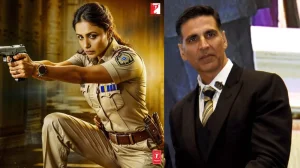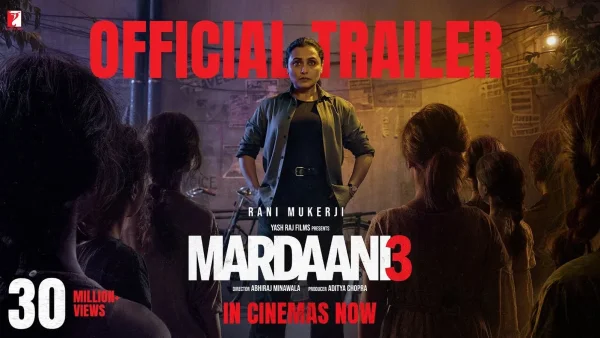
Rani Mukerji is back on the big screen in Mardaani 3, keeping the franchise’s strong beat going. The film came out in theatres today, and hopes to carry on a ten-year history of films about issues, with ACP Shivani Shivaji Roy as the main character. The first shows seem to have started slowly at the box office, although the first word-of-mouth is good about the acting and the film’s firm attitude.
On the first morning, the number of people going to see it was small in a lot of areas, though cities were doing a bit better than small towns. It’s a Friday which isn’t a holiday, and the film’s grim topic might stop people going in early. People in the trade say evening shows could get better as people who’ve been at work come in.
Interest beforehand was stable, but not amazing – showing that the film will do well because of what’s in it, not because a lot of people rushed to see it at once. This fits with what’s happened with the series before, where things usually get better as people tell each other about it. A slow start isn’t strange for a strong crime drama, especially one about people-trafficking and a female police lead.
Weekend outlook and box office trajectory
How the box office goes will depend on what people say after they’ve seen it. If what people are saying matches the early good comments on social media, the film can get better over the weekend. Cinema chains in the biggest cities might be very important – particularly the late-night showings which people who like thrillers with grown-up themes tend to go to.
What the story is about: a really bad trafficking case in Mumbai
Mardaani 3 goes into the dark parts of Mumbai, where a very well-organised trafficking network is responsible for 93 women going missing in only 90 days. The number is shocking; the feeling of needing to do something quickly is what drives the film. Shivani is put into an investigation against the clock which tests how strong she is, what her feelings tell her, and how much she can take morally.
The story makes the series look more closely at crime which is part of the system. Here, power is hidden behind curtains and in communities, making it hard to tell the difference between someone who hunts and someone who protects. Instead of making things seem more shocking than they are, the film looks at the way things are done, the pressure, and what it costs to fight an enemy which lives by keeping quiet.
The film also presents a difficult leader in the criminal world. Amma, played by Mallika Prasad, comes out as someone who is both physically and mentally against Shivani, and who isn’t easy to understand. The relationship between Shivani and Amma adds detail, and takes the story beyond just a cop against a criminal.
Acting which holds the thriller together
Rani Mukerji's Shivani is still shown as being quietly in charge. The acting is based on being tired, doing what you have to, and the feeling of being alone when you lead. Rani doesn’t try to be showy; she finds the character’s strength in being careful, which makes the final fights seem real, not put on.
Vijay Varma – who is known for making you feel uneasy – is a new shock to the series. People who’ve seen it early have said he’s the most creepy person on screen so far this year. He uses being still and how he looks, giving a threat which stays with you after the scene is over. What he does adds a mental coldness which makes the normal parts of the story better.
Mallika Prasad’s Amma is a chance. She isn’t just another part of a trafficking ring; she’s the ring’s sense of right and wrong, changed by having to live and by having power. The fact that the character isn’t clearly good or bad helps the film avoid making a cartoon of things. Janki Bodiwala, in an important part, gives feeling to a story which makes the stakes real because of what people have lived through.
Early reactions, industry support, and what it means
Good comments from other people in the industry have been given to Rani. Ranbir Kapoor has said she’s one of the greatest actors in Indian cinema, thinking about how she acts and what she’s done. Sonam Kapoor said she’s the greatest for a lot of people, celebrating her wanting to do well and how she always does. Karan Johar – who has worked with her a lot and is a friend – said Mardaani is a series he’s proud of, and that Rani is a very solid star.
Direction, craft, and franchise DNA
Abhiraj Minawala directs Mardaani 3 with a sense of haste and control. The camera is very close to people’s faces and documents, and isn’t much bothered with showy violence so much as with the widespread trouble within the system. The action seems real, building the story’s stress rather than being for show.
The script keeps the franchise’s direct style. Talk is short – often like police work – with feelings showing up at certain points. The film really does go to dark places when it needs to. The violence is not for looks; it shows how serious human trafficking, taking advantage of people, and the failings of institutions are – institutions that allow both to happen.
The sound and editing create a feeling of worry. Siren sounds, the noise of police stations, traffic at night, and footsteps in hallways all act as timekeepers of fear. The speed of the movie is tight during the middle section, only slowing down to let the human damage be felt. The music doesn’t use celebrating sounds, a choice that keeps the film’s realism.
In its heart, this part of the series fits with what the franchise believes. Mardaani dealt with the frightening network of trafficking. Mardaani 2 looked at what makes a violent criminal tick. Mardaani 3 comes back to trafficking, but looks at more of it, asking how crime becomes part of everyday life and why getting rid of it needs both the law and understanding.
People who saw the film early on social media have liked it a lot, saying it’s a dark, gripping thriller that is worth watching carefully. A lot of the talk is about Vijay Varma’s frightening acting and Rani’s strong, believable performance. People mostly agree the film is good, though emotionally difficult.
Rani’s own thoughts put the film’s release in a wider view. Marking 30 years in movies, she has called Mardaani less a series of films and more a duty. She has talked about taking Shivani’s courage with her away from the set, and how quiet bravery often feels lonely. That thought adds depth to the acting we see.
She also recently gave Mardaani 3 to the Indian police, especially the women, who, as she said, are judged more, asked about more, and still are stronger than fear. At a meeting about women being leaders, she said that women today make institutions and society, doing their jobs and taking care of their families with strength. These ideas show up in the film’s main story.
Rani was also given the Vande Mataram Puraskar, the West Bengal Governor’s Award of Excellence, at the same time as the film came out. For her, it felt like coming home. She talked about thankfulness, her background, and the duty to tell stories that show what society is like. That is a statement that goes with Mardaani 3’s support: making people aware, giving them power, and giving them hope.
Because it began slowly, the film’s success will likely depend on city movie theatres that stay open late and the talk after shows. A strong, A-rated thriller rarely starts with a bang. It grows with people talking about it. Good words about the acting and the film’s tough edge should help evening showings.
Whether people like the film’s darkness will be the deciding thing. If viewers understand what the film is trying to say, Mardaani 3 can do well over the weekend and into the week. As the country’s longest-running series of films led by a female police officer, it has built-in memory, and moving the release date to January 30 puts it before the competition in early February.
Mardaani 3 also makes a point of having a social message. The story asks viewers not just to have fun, but to care. The series has always put danger with purpose, and that can make people talk about the film after they leave the theatre. In a time when most films are about things for the eyes, this film fights back with realness and a sense of right and wrong.
In the end, the first-day picture is mixed: a careful opening at the box office with hopeful early reviews. But this series has never been about the first-day bang. It has been about a steady, important connection. If that happens again, expect the numbers to go up as the weekend goes on and people talk more.