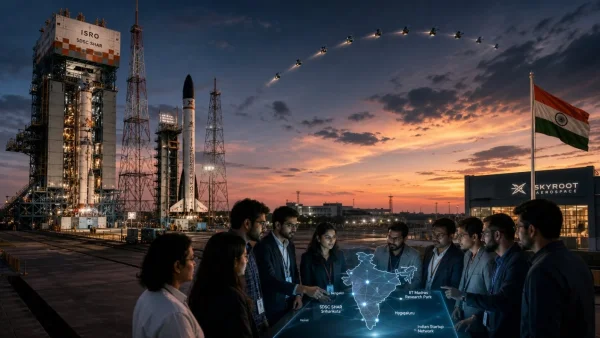
The private space race in India is moving from talk to action. You have Skyroot Aerospace with an orbital mission in the works and Jio mulling over a low-orbit constellation; in short, they are after a piece of the SpaceX story. The chasm in scale is there, though, and how policy is handled in the near term will tell if this energy can be made into market clout.
Then there is the matter of Starlink: with the government putting a hold on approvals, the emphasis is squarely on what we can do for ourselves. In the meantime, some of the younger companies are making inroads with global clients for their hyperspectral and all-weather imagery, a sign that even as they put together the means to launch, they can hold their own in certain areas.
A market opening with national stakes
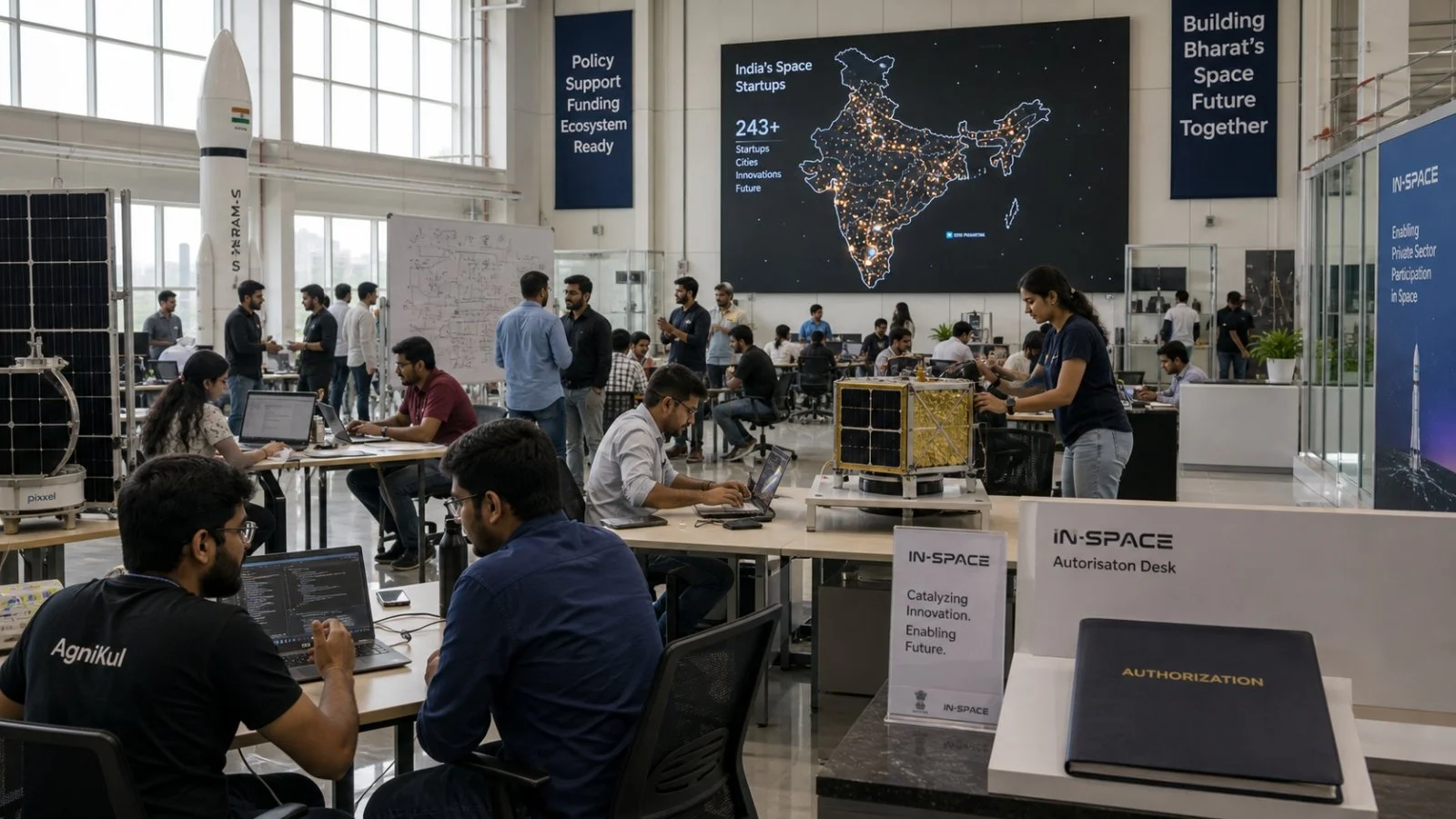
It has been three years since we let private entities have a go at owning spaceports, flying rockets and trading in remote-sensing data, and you can see the shape of an industry taking form. 2023 was when the rules were put in place, and the Indian National Space Promotion and Authorization Centre has around 400 startups on its books.
Tracxn puts the number of space startups in India at 260, with close to $730 million in funding, a good portion of it in the last year alone. It may not look like much compared to the big names, but it is on the upswing as these firms find takers for their work abroad and the state looks to its own.
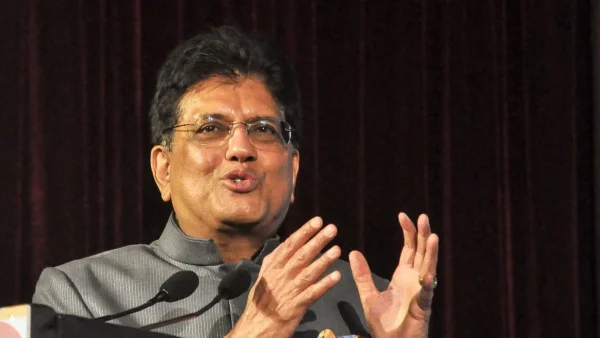
Pawan Goenka, head of the national space promotion agency, is for a quicker transfer of tech and more local uptake. He makes the case that we are behind in a market where the U.S. is now run by the private side. “At least a third of our revenue is coming from overseas,” he’ll have it.

India’s challengers and the SpaceX benchmark
Musk’s way of doing things is a reminder of the road ahead. To put 10,000 or so satellites in the sky for Starlink, you put in over $11 billion in three years. And then there was the $75 billion IPO in June that put SpaceX on the board and made Musk a trillionaire.
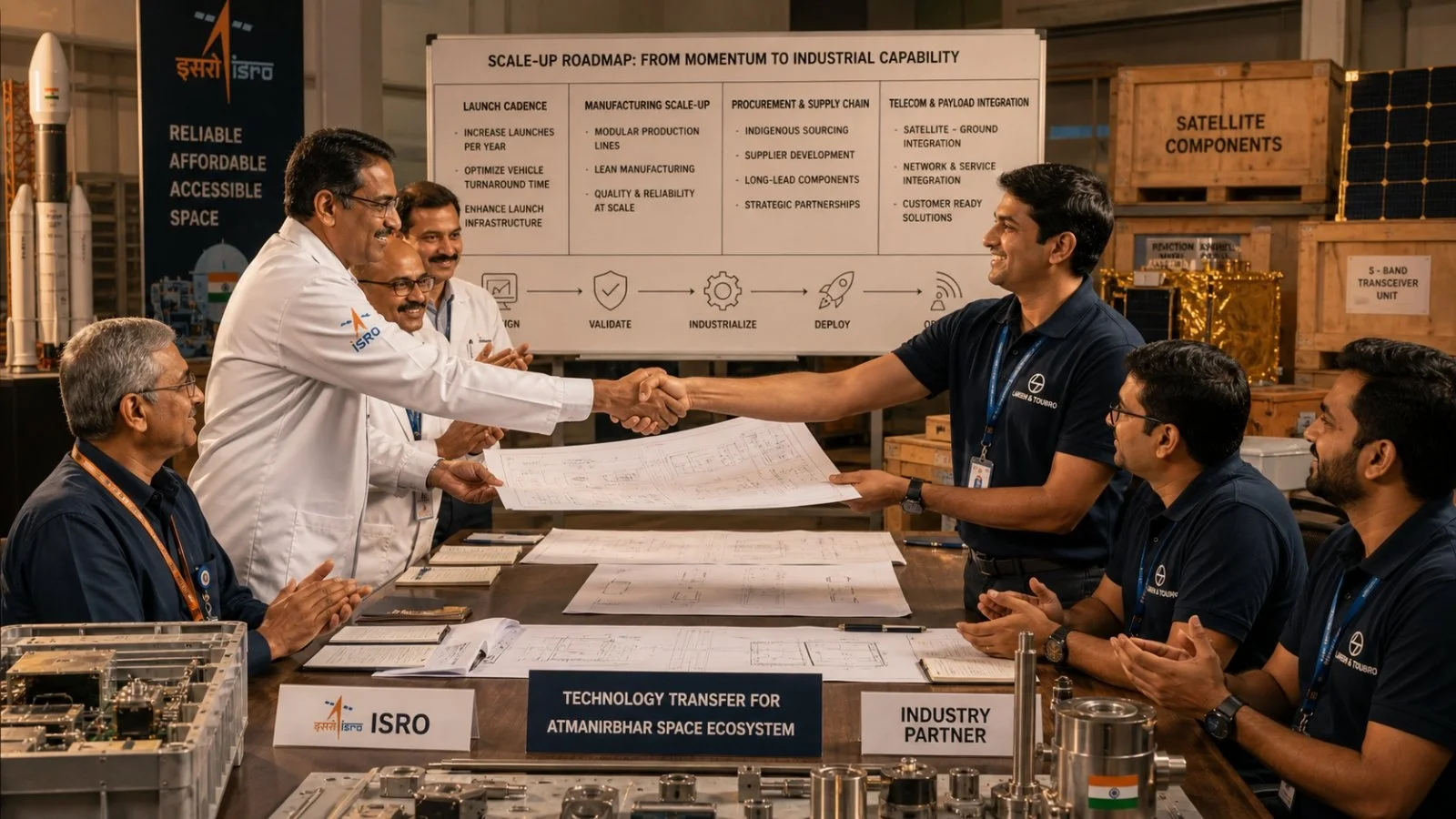
That is why there is a push for speed. ISRO has been at the vanguard of cost-effective missions, like the one to the south pole of the Moon, and is looking to put some of the know-how from its main rocket in the hands of the private sector. They are welcome to use ISRO’s set-up for the initial rounds of testing.
Some of this has been put in high relief by the military row with Pakistan and the war between the U.S. and Iran last year. It made plain that you don’t want your most vital infrastructure out of your hands. So domestic constellations and the ability to launch from here are as much about strategy as they are about business.
Capital and capacity bottlenecks
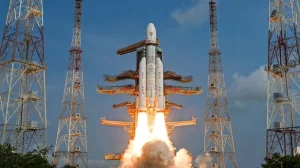
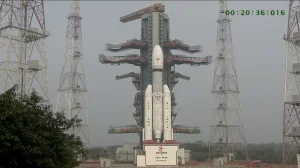
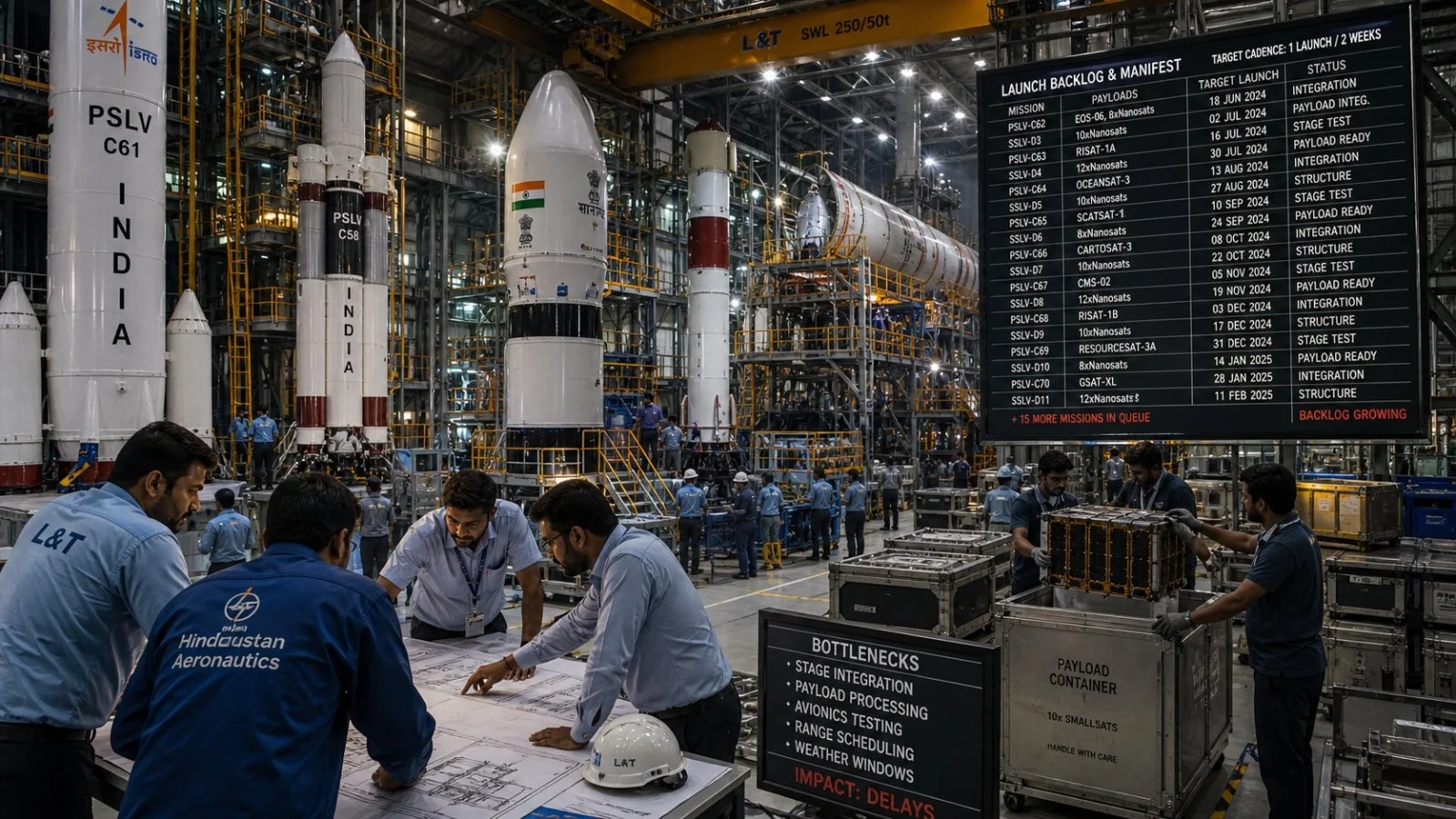
If there is a sticking point, it is in the launching. Beyond ISRO, you don’t have much. And the Polar Satellite Launch Vehicle has had two misfires in as many months. People in the know would have you believe it doesn’t spell the end for the PSLV, but it does put a premium on having other options.
We are in discussions with some of the larger private firms to make some of the PSLV tech available, says Goenka. You have Hindustan Aeronautics and L&T already on it with their own take, in order to build in some redundancy and get small sats off the ground without the wait.
Goenka is blunt about what it will take: we have to be the place to be for small satellite launches, with a lift-off every fortnight, and have the wherewithal to put up a constellation that can stand on its own. Do that and you start to see a cycle of new money, people and clients come in.
Startups pivot from software to space hardware
Ten years back, any good engineer was in software or on an H-1B. Not anymore. “The ecosystem in India is very open to deep tech right now,” says 34-year-old Suyash Singh, who runs GalaxEye Space Solutions. “There are issues with supply chains and the like, but you can feel the momentum.”
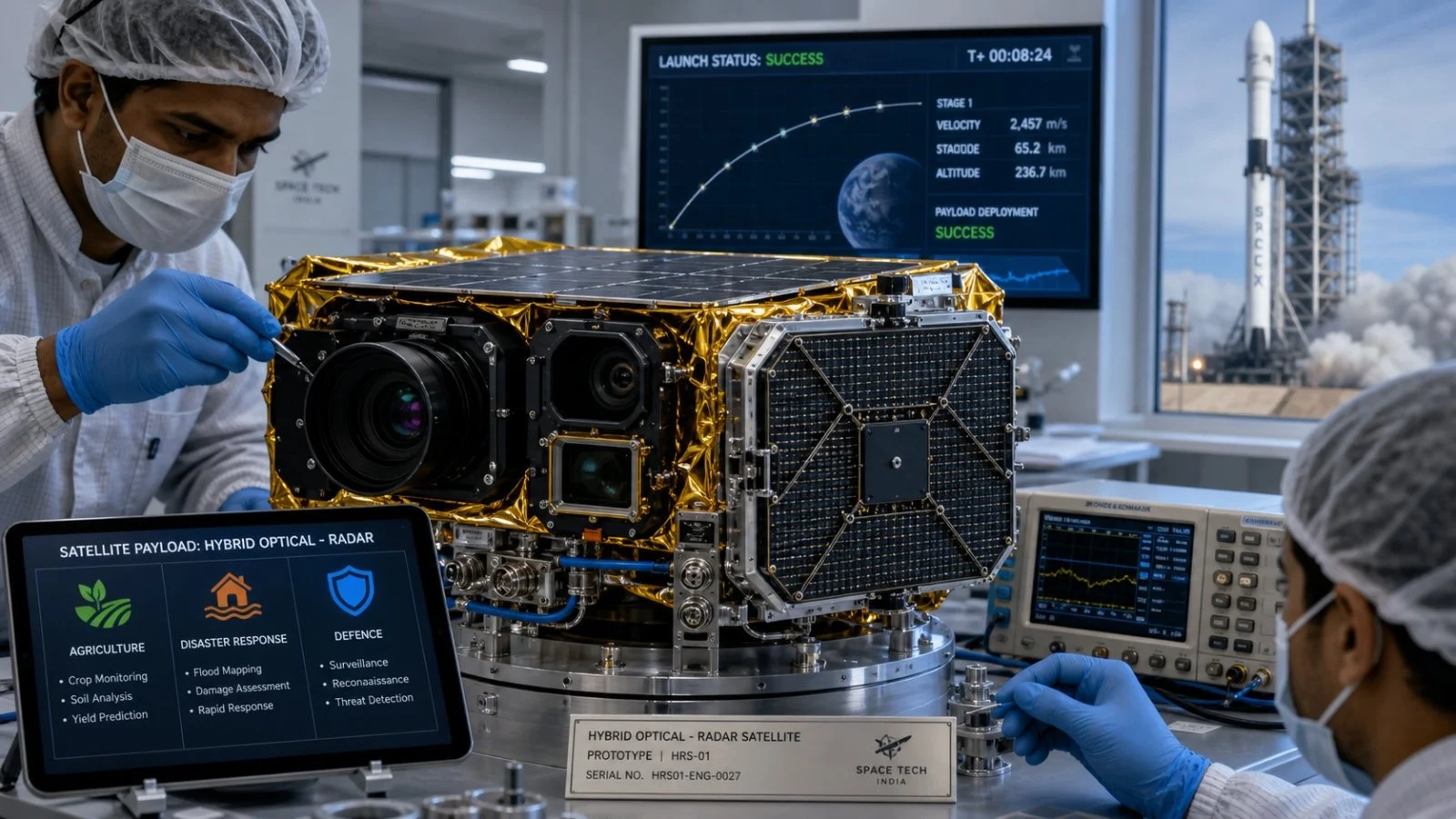
GalaxEye has put together a satellite, it claims, that is the first to put optical and radar in one package so you can see through a cloud cover or in the dark. The Mission Drishti, which went up on a Falcon 9 in May, has already got some early orders in from the defence and insurance sides, among others.
With Infosys in the corner, they are looking to have 10 in orbit in three years’ time before going for a full constellation. They are not in the business of selling a commodity; they are offering something with a bit more to it for those who need to see in all conditions.

Hyperspectral data as a competitive wedge
Pixxel Space India is the result of a hunch from the university that, with the exception of China, there was no one in the commercial world providing the kind of imagery you need to spot a crop blight or a subterranean leak.
You’ll find its hyperspectral data in the hands of some of the world’s top names, from NASA and Rio Tinto to India’s Ministry of Agriculture.
There are big plans for the Google- and Lightspeed-backed startup to more than quadruple its satellite-building capacity. “We’re on track for an operating profit this year and to be in the black by 2028,” says founder Awais Ahmed. An IPO is a few years out.
For India to make up ground, you need steady funding, more venture involvement and the kind of government buy-in that can’t be taken for granted, Ahmed will tell you. Look at China: they made a move on their space sector in 2014-15 and put money behind it. India has to be as consistent with its capital and demand if it wants to close the gap.
Skyroot’s push to orbit
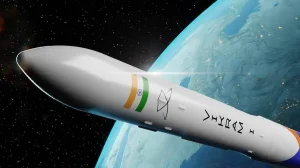
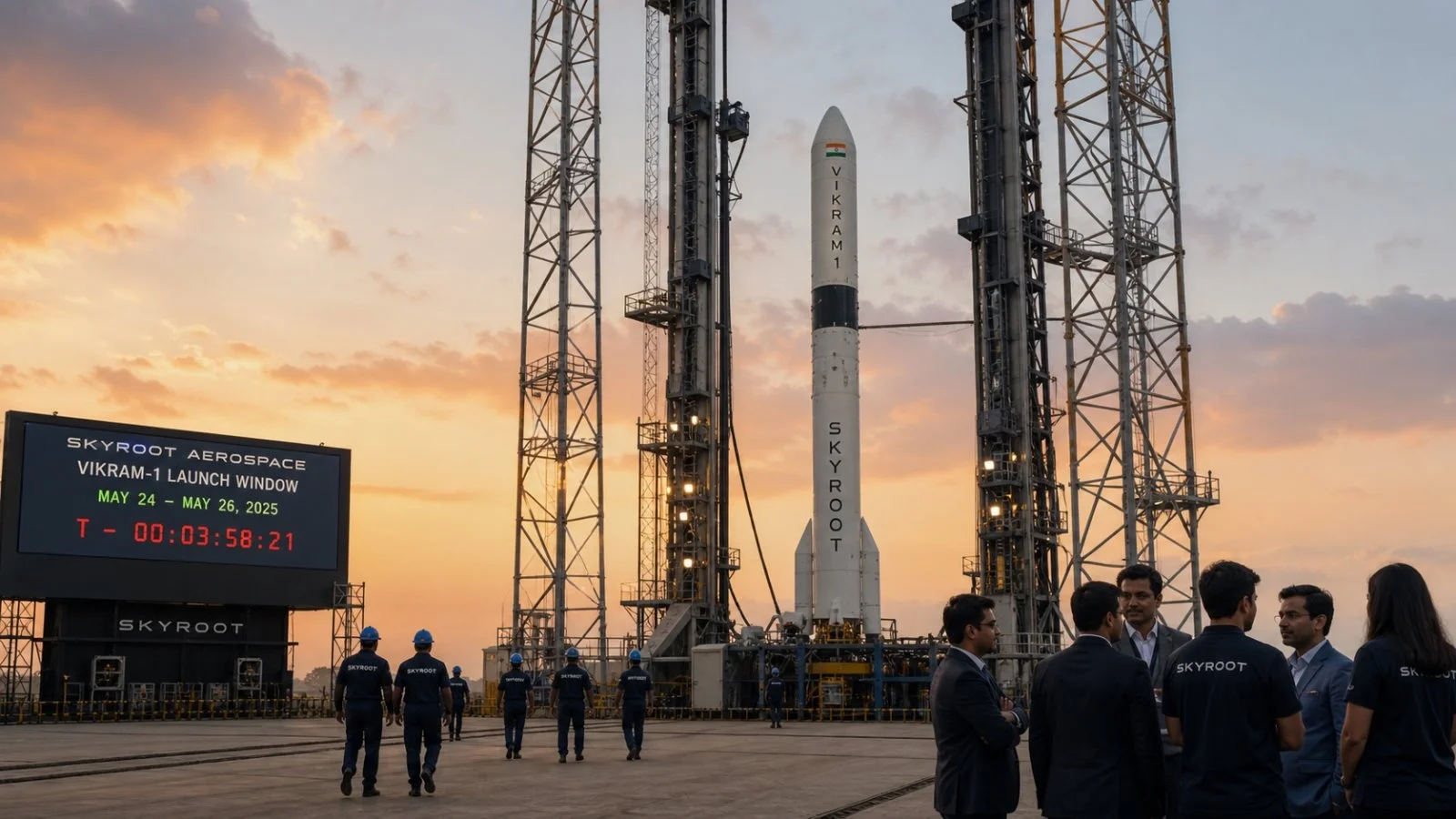
In Hyderabad, Skyroot Aerospace is getting ready to put its Vikram-1 rocket in the air later this month. The country’s first space startup to hit a $1 billion mark has put in work with GIC and BlackRock, and co-founder Pawan Kumar Chandana says there are more test runs before they go commercial.
They were the first private Indian outfit to have a rocket in the upper atmosphere for a time back in 2022. But the last mile is no easy task; the company has had to put off its first orbital mission three times since 2023. They’re now looking at a July 12 to August 4 window.
Then you have the likes of Pixxel and GalaxEye. All three came on the scene around 2020 when India said it was opening up the sector. If they can put together programs that are repeatable, they’ll be the ones to underpin a homegrown supply chain, be it for payloads or the launches themselves.
The telecom angle
Space is on the radar for India’s telecom heavyweights too. Jio Platforms is mulling over a low-orbit network to keep a tight rein on the nation’s comms infrastructure. It has even made a deal with Starlink, though regulators have put a hold on any new approvals for Musk’s company over war-time worries.
Satcom is the biggest part of the market worldwide. But policy types say India’s space economy won’t see real growth until the industry makes the jump to 6G. Some of that is being tested right now to see how well satellites can be woven into the terrestrial mix.
And with the government putting in place constellations for both civilian and intelligence needs, you’ll see fresh demand. Of course, it comes down to whether you can put in the work: you need a reliable launch schedule and services that are hard to beat on price and quality, not just because they’re local.
What it will take to get there
ISRO is no longer the only one in the room; it’s an enabler now. You can use their facilities for your early tests, and they are about to let some of the secrets of their main rocket be known to the outside world. “As we show we can handle it, the tech transfers become more of a thing,” says Goenka.
It’s a matter of building fast with what you have. SpaceX is the obvious point of reference for the kind of scale you need. Yet with the kind of interest we’re seeing in multi-sensor imaging and a line-up of test launches, the market is moving forward.
Clear the bottlenecks on the launch side and the rest of the picture becomes clear. There’s a lot of appetite for good data, not just the box it comes in.
Keep an eye on these in the short term:
– How Skyroot’s Vikram-1 does in its test window
– ISRO handing over PSLV tech to the private side
– Where Jio goes with its constellation and 6G
– Any government orders that put teeth in the early constellations
India’s own SpaceX moment
The idea is to be more than a cheap place to put something in the sky. You want an ecosystem that can put up a launch every couple of weeks, run a profitable constellation and sell your wares to the world. That’s how you set the price in the smallsat game.
Right now, the market is being put to the test. We’ve had a couple of PSLV stumbles in the last 12 months, but in a way they have pushed for more variety in the industry. With Hindustan Aeronautics and L&T in on a PSLV-type vehicle, you don’t have a single point of failure.
So you have your well-funded startups with the better sensors, a unicorn with its eyes on orbit, a telecom giant and a public agency ready to pass on what it knows. Making all of that work is the next order of business for India.