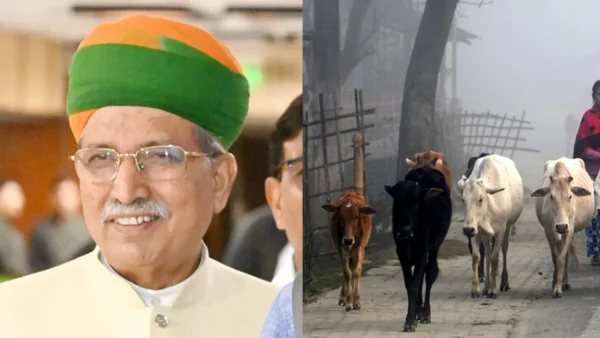
The old argument over cow protection is back in the news after Meghwal’s remarks that the government is not looking into any such proposal. It is a way of putting to rest the kind of appeals and demands we see time and again from a range of religious and social bodies.
What the minister clarified
Representations for a nationwide prohibition and for the cow to be given national animal status are still coming in to MPs and the government, he said. You have all kinds of organisations that will put in a formal submission and ask for something to be done.
But as far as the Union is concerned, we haven’t come to a decision. “There is no proposal before the Union Cabinet at present,” was his way of putting it. Should one ever come along that needs to be considered, the Centre would say so.
He was also quick to note that while there is plenty of talk about it in public and on social media, nothing has been set in motion within the government so far.
Why the debate persists
You can expect to see campaigns for a total ban on slaughter from some Hindu groups. Then you have Muslim clerics and organisations making their own case, arguing that a national ban or status for the cow might go some way to defusing the friction around it.
Jamiat Ulama-e-Hind’s Maulana Arshad Madani has put his weight behind the demand in the name of social harmony. Even former vice-president Hamid Ansari has been on board with the notion, saying if it can put an end to these disputes, it is worth a look.
Ansari has even told Muslims to forgo the sacrifice of the cow, since Islam doesn’t insist on any one animal. And you have someone like Maulana Khalid Rashid Farangi Mahali of the All India Muslim Personal Law Board, who has given the nod to it as a show of respect for what many Hindus feel.
State laws and a recent enforcement push
Meghwal is pointing to the fact that when it comes to the constitution, it is the states that have the final say on how to handle this. They make calls based on what makes sense for them, not by following some one-size-fits-all rule from the top.
Take the BJP in West Bengal, for instance: they have moved to be more of a stickler for the 1950 law on cattle. It shows where the action is right now – with the state governments.
What changes now
Not much, in reality. There is no inter-ministerial process or a note to the Cabinet, so don’t expect a change of course at the national level. The back-and-forth in the legislature and in the streets will carry on, but any legal shift will be down to the states unless we decide to do something.
To put it in a nutshell, here is where we stand per the minister:
– The Centre: nothing before the Cabinet
– States: they call the shots on local merits
– Advocacy: the representations keep coming
– In the public eye: very active, online and off
Meghwal says if and when a proposal is ready for us to act on, we will let you know. In the meantime, it is the state statutes and how they are put into practice that will govern things.
What to watch next
The pressure groups will be sure to keep this in front of the public, particularly when a festival or some other flashpoint is near. We have seen it with the run-up to Eid-ul-Azha, for example.
A real change of tack would have to start with a formal proposal. Failing that, you will have a mix of state rules, some periodic enforcement, and community leaders trying to head off trouble with a bit of symbolism or a firmer line.
So for those keeping score, the answer is plain: there is no national ban or designation being tabled. The question of how to square off religious feeling with the law and federalism is one for the state capitals and the public to sort out for the time being.