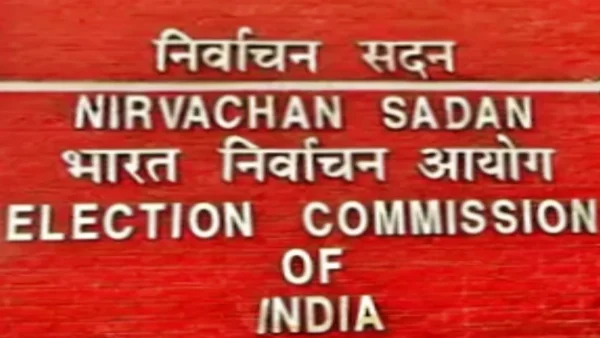
It’s time for some Upper House maths. The ECI has put forward a timetable for a June 18 vote that is set to put 27 seats in the Rajya Sabha and State Legislative Councils on the table. Come evening, we should know who has what kind of influence, and in the meantime, it’s making for some hard-nosed haggling over candidates and alliances.
What the June 18 vote will decide
You have 24 Rajya Sabha seats in 10 states due for their biennial election, and three more to be filled in by-elections, says the Commission. Then there are the members for the Legislative Councils in Bihar and Karnataka. All told, 27 seats are in the running.
There is only balloting where there is a contest, but the mere fact of the schedule is enough to get the gears turning on party discipline and outreach. A few new terms are starting up, so this is as good a numerical test as any for the months to come.
Key deadlines and process
Nominations were open for business at 11 am on June 1 and run through 3 pm on the 8th. The Commission has put out its notifications, put in place the Returning Officers and you can find the fine print in the Gazette of India and the State Gazettes.
If you want to pull out, you can do so until June 11; they’ll be looking over the papers on the 9th. In a way of saying let’s get on with it, the Commission has put up a post to mark the start of nominations and for those who want to read up on it.
As for the day of the vote, the Commission has been specific:
– Balloting: 8 am to 4 pm, June 18
– We start counting: 5 pm on, June 18
Where seats are in play
The ECI has the biennial Rajya Sabha seats listed in Karnataka, Rajasthan, Madhya Pradesh, Andhra, Gujarat, Jharkhand, Mizoram, Manipur, Meghalaya and Arunachal Pradesh. It’s the normal ebb and flow of sitting members’ terms that has us here.
On the by-election side, there is one seat apiece in Maharashtra, Tamil Nadu and Odisha. Vacancies like these, before a term is up, make for an element of the unknown and give the state units something to work with at the negotiating table.
Legislative Council contests
These are limited to two states. The Commission has it down that Bihar will be putting nine members in, plus a by-election, and Karnataka seven. We’ll have the numbers for these on the 18th as well, and they will have a say in how local committees are made up.
Put them together with the Rajya Sabha figures and you have the full picture for a party’s strategy, whether at the state or national level. There isn’t much room for error when the calendar is this tight.
Why the schedule matters now
For one thing, it gives you a straight answer on procedure so you can put your candidates in place and get the backing of the legislators whose votes count. Miss a step on the paperwork and it could be expensive, with the way the Commission has set the windows for scrutiny and withdrawals.
Having the count on the same day means a lot for the quick reaction teams in any party. They have to be on top of preference orders and any cross-voting. With 27 seats in question, a small change can make a difference in how things go in Parliament or the state Houses.
What comes next
In the coming days you’ll see the rosters take shape as parties figure out who they can put up and what the alliance math allows. The 9th and 11th will sort out the final list of contenders for the 18th.
Should the races get hot, it will be a matter of making sure the MLAs and MLCs are in line. When the counting gets under way at 5 pm on June 18, we’ll see who has turned process into a win and how the map has been redrawn.