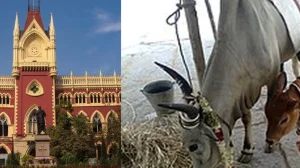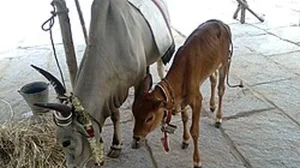
The court has called for a state-wide stand-down on the issue, harkening back to a Government Order from August 30, 1976 that had been on the shelf for some time. Dated May 27, 2026, the order is firm: no cow or calf is to be slaughtered on or after the day of Bakrid, May 28, 2026.
Why the court stepped in
A public interest petition was the catalyst, drawing attention to some unseemly sheds in Coimbatore put up for the festival. The Bench had words for a police affidavit that made mention of temporary spots for the work, saying in no uncertain terms that the police don’t get to make those designations.
As the court put it, only the proper local bodies have the say in approving such places. Under the 2023 Urban Local Bodies Rules for the state, you can only do business in a licensed abattoir. And that goes for goats and sheep, too – they can’t be put down outside of where they are allowed to be.
The legal and constitutional frame
Justice G.R. Swaminathan, joined by Justice V. Lakshminarayanan, grounded the judgment in Article 48 of the Constitution. It’s the part of the document that tells the State to step in and stop the killing of cows, calves and other working cattle for the good of the land and its people.
You will find in the order a nod to the Constituent Assembly, to what Gandhi thought on the matter, and even to Dharampal’s writing on the colonial period. The court also pointed to the Supreme Court in saying that for a Muslim, offering a cow on Bakrid is not a requirement of the faith.
What the order requires now
This isn’t for show. The onus is on the Chief Secretary and the DGP to see that it is done right in every corner of Tamil Nadu. They’ve been told to put out clear instructions and make sure they are heeded at every level.
Even if the case came out of Coimbatore, the court has made it a matter for the whole of the State.
On May 29, 2026 the Registry is set to put the case back on the docket for a compliance report, making this an on-the-spot test of how well things are being coordinated in the field.
In the meantime, you can make of the ruling what you will, but here are the salient points:
– A moratorium on cow and calf slaughter, effective from May 28, 2026 and beyond
– Only licensed abattoirs are to be used for any animal
– Statewide orders to be handed down to all enforcement arms
– Any kind of temporary shed is to be considered an illegal place of slaughter
What is and isn’t lawful
The court has made it plain: while Tamil Nadu law doesn’t issue a across-the-board ban, it does allow for some leeway, provided you follow the rules. The 1958 Animal Preservation Act is clear on this. Section 4 says you need a certificate from the proper authority before you go about your business.
According to the Bench, a cow can be put down only if it’s past its prime-say, over ten and no good for work or breeding-or if it’s been left with a permanent disability from an injury or some ailment that can’t be fixed. You have to read the provision with a fine-tooth comb, in light of Article 48.
The 1976 order is the law of the land
You can’t get around the 1976 policy. The court put a lot of stock in the Government Order of August 30 of that year, which was put in place to protect milk production and the rural economy. The executive and the legislature are one in the same here. So when the government says no to cow slaughter, it is enforceable. “It has the force of law,” the court put it. To make sure there was no ambiguity, the Bench also pointed to a 2020 Division Bench decision.
Enforcement, come what may
This judgment puts a stop to any kind of ad hoc deal-making. If you want to slaughter a goat or a sheep, you do it in an authorised facility with the right local body licence. No more pop-up operations for the holidays.
The way the police have put their affidavit on record suggests we’re in for a bit of a tightening of the screws. How they handle the next festival in terms of policing and licensing will be measured up to the court’s standards.
Why it’s in the news
For all intents and purposes, the order is a return to 1976, but with today’s kind of urgency. It makes the case that preserving animals is as much about the rural economy and milk as it is about anything else.
Then there is the matter of religious freedom. Citing the Supreme Court, the court has drawn a line: sacrificing a cow on Bakrid is not a requirement of the faith. That should take the edge off any run-ins between those making claims on religious grounds and the enforcers.
And then?
With the date of May 29, 2026 on the calendar, the court has called for a quick accounting. The onus is on the district, the municipality and the police to get on the same page. They’ll have to close down the unauthorised sheds and make sure every certificate stands up to scrutiny.
Put simply, the state’s enforcement machinery is being put to the test, and the court will be watching.