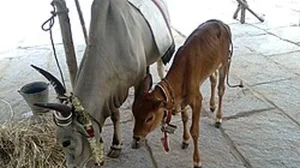
With Bakrid just around the corner, a group of Muslim organisations has put on the table a request to the Centre: make the cow the national animal. They see it as a means to stem mob lynchings and even out the law books. It is a call that is resonating in UP, and with the 2027 Assembly elections on the horizon, it only adds to the political and social weight of the matter.
Why they want a national animal tag
To those behind it, this is more than a gesture. A firm national stance, they say, would take the wind out of the sails of those who like to use the cow for political gain and put a stop to the kind of violence done in its name.
You will hear the same from heads of both Sunni and Shia outfits: when you have ambiguity in how the law is applied, you get trouble. They are asking the government to put its money where its mouth is with a steady policy, instead of what you have now – a hodgepodge of rules from one state to the next.
The ones behind the scenes
This is not coming out of nowhere. It follows a line drawn by Maulana Arshad Madani, head of the Jamiat Ulama-e-Hind (Arshad Madani wing). In a statement he put out a few days before Bakrid, he made no bones about wanting the cow to be given national status and for there to be zero tolerance for the trade in cows and their meat for slaughter.
Then you have Maulana Shahabuddin Razvi, the National President of the All India Muslim Jamaat, who is turning his support into action. He is set to put together some of the leading Muslim bodies in Delhi to put pen to paper on a joint note for the top brass, PM Narendra Modi included.
Even some in the meat business are on board. Siraj Qureshi of the All India Qureshi Jamaat says if need be, he will be the one to ask for an audience with the prime minister to make their point.
What’s in the works to get everyone on the same page
Here is the plan of attack from the organisers:
– Get the major Muslim organisations in a room in Delhi
– Put together one memorandum with all the demands
– Hand it over to the leadership at the top
– Try to get in to see the prime and chief ministers
– Make sure every religious body is part of it
One law to replace the patchwork
There is a lot of talk about having a uniform law. Take Maulana Khalid Rashid Farangi Mahali of the All India Muslim Personal Law Board, for instance. He is for a single law on the book for the whole country, which in his view would cool things down on the ground.
Maulana Yasoob Abbas, with the All India Shia Personal Law Board, puts it in terms of making sense of things. He doesn’t like the idea of a policy where you can have your way with a cow in one place and put a life in danger in another for the sake of it.
Kausar Hayat Khan of the Indian Union Muslim League will tell you it is a divide. You have Goa or Assam where people eat beef without a second thought, and then you have the other side of the coin in UP, Uttarakhand and, of late, West Bengal, where the politics of it are very different.
A matter of timing
They didn’t pick this moment at random. It is the last Eid-ul-Azha before the 2027 polls in UP, and it is a sector that hasn’t been in the vanguard of such requests. In a place where you’d usually hear this from Hindu groups, the fact that it is coming from here is something to be noticed.
Those in favour of it would have you believe that stepping in before the Muslims’ second big festival is about de-escalation, not riling things up. The way they put it, the initiative is a way to let up on some of the friction you see when the subject of animal sacrifice comes up.
Qureshi will tell you that West Bengal is just the most recent case in point of how the issue has a way of flaring up ahead of Bakrid. In his view, if you had some form of national recognition, it would cool things down, especially in places where the politics of it can get out of hand.
A longer campaign with little state response
This isn’t a new line of thinking for Madani. Maulana Kaab Rashidi, who is the legal advisor for the Jamiat’s UP wing, remembers Madani making the same point at an All-Faith Conference in Mumbai back in 2014. And he’ll note that there have been Hindu groups in recent times making a play for the cow as the national animal, too.
But from what these leaders see, no government has really moved the needle. That kind of stand-off is what fuels the debate every festival season and gives rise to the kind of flashpoints you could do without.
Rashidi and like-minded people also think a firm national position would put a lid on those who are quick to exploit the grey areas in the law.
The argument for a policy reset
Those in favour of the move are after some consistency in policy. They don’t just want the symbolism; they want the enforcement to be even-handed. A national status, they feel, would provide a basis for one approach and not leave it to the states to be at odds with one another.
Look at Uttar Pradesh: in 2017 the state put a stop to all unlicensed slaughterhouses. Later on, they handed out permits for buffalo meat, but with a lot of strings attached. To their supporters, that’s proof you need a clear plan rather than a haphazard crackdown.
Why the stakeholders believe it matters
You have a good number of Muslim organisations behind this. Razvi is on record saying a prompt call on this would go a long way to take away any excuse for lynchings or other forms of intimidation over the cow.
Then there is Khan, who calls the proposal sound in theory and wants the government to get on with it. He figures the demand will only have real force if the community puts its weight behind it together.
Abbas is of the mind that you should be able to read the Centre’s intentions in its rules. If you have a straight line from the top, it limits the room for political posturing and helps keep the peace.
Shifting ground and what to watch next
We’ll see in the near future if this unity holds. Razvi is putting together a meeting in Delhi to put the finishing touches on a memorandum. It could be the first time they make a coordinated overture to the national leadership to put in a request for a hearing.
Should the government come to the table, the backers want to know two things: is the title of national animal being considered, and is there a plan for a uniform law on cow slaughter to make sure the rule of law is the same in every state?
As for the other side of the coin, we haven’t heard much of it in the statements these groups have put out. But anyone who has followed the history of this in North India knows a new idea is going to be put up against the hard facts of politics and administration.
In the end, what transpires may well set the tone for the coming Bakrid. A settled position from the top, as they see it, would leave less room for trouble.
A bid to recast an entrenched debate
In supporting the cow as the national animal, these groups are in step with a deep-seated feeling in the country, but they are also trying to find a new footing for the Muslim community in a divided conversation. It is, they say, a matter of pragmatism: to have the same rules for everyone and to do some good.
The whole point of the coalition’s approach is to get away from the hot spots and towards some clarity. You can tell if they’ve made headway by whether there are fewer run-ins on the street and the law is applied openly, not by what is said in public.
Be it a formal designation or a more general harmonising of the law, the onus is on the state to make the next move. For now, the work of getting together and putting forward a common front will define a debate that is with us year in and year out, and for much more than just the festival.